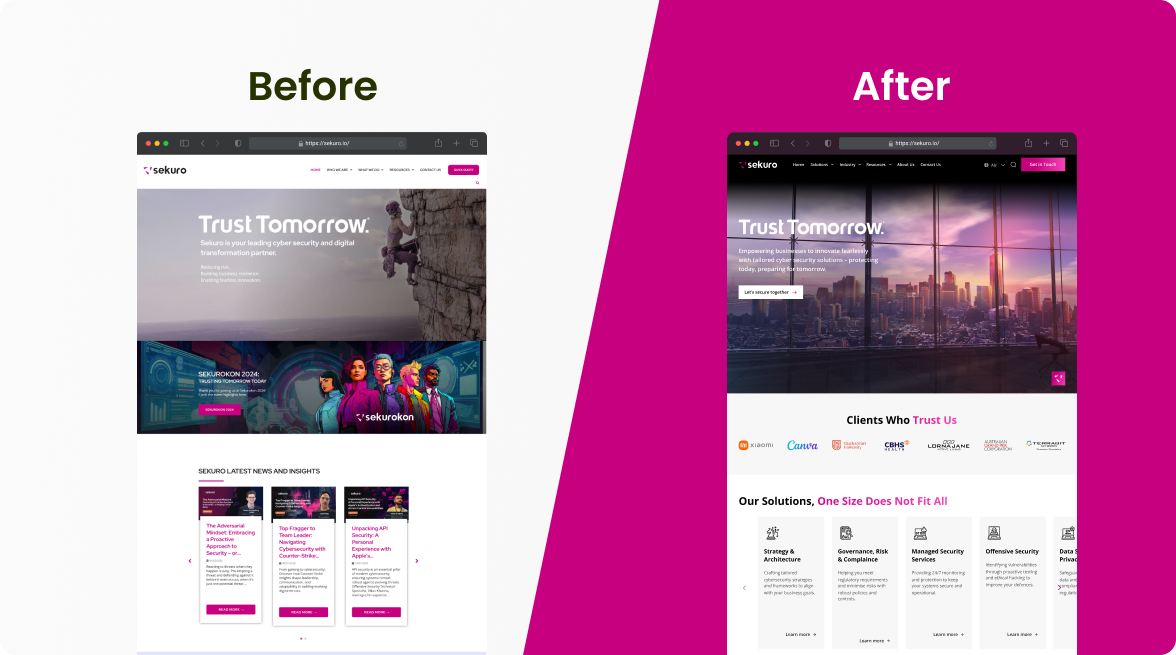
Marketers & Business Owners

“You can’t improve what you don’t measure.” As marketers, we live by that rule, but it is easy to forget that what you measure matters just as much as how you measure it. We’ve seen businesses chase traffic spikes that never turned into leads or obsess over social likes while sales stayed flat. The solution isn’t more numbers, it’s better numbers. Tracking the right marketing KPIs shines a light on what’s working, what’s not, and how we can optimise.
In this article, we’ll share the KPIs we report to our clients, the ones that matter most and how we interpret them to drive real results.
The Marketing KPIs We Track in Our Reports
Each business’s KPIs are slightly different based on their goals, but some key indicators never change. Here is the typical setup:
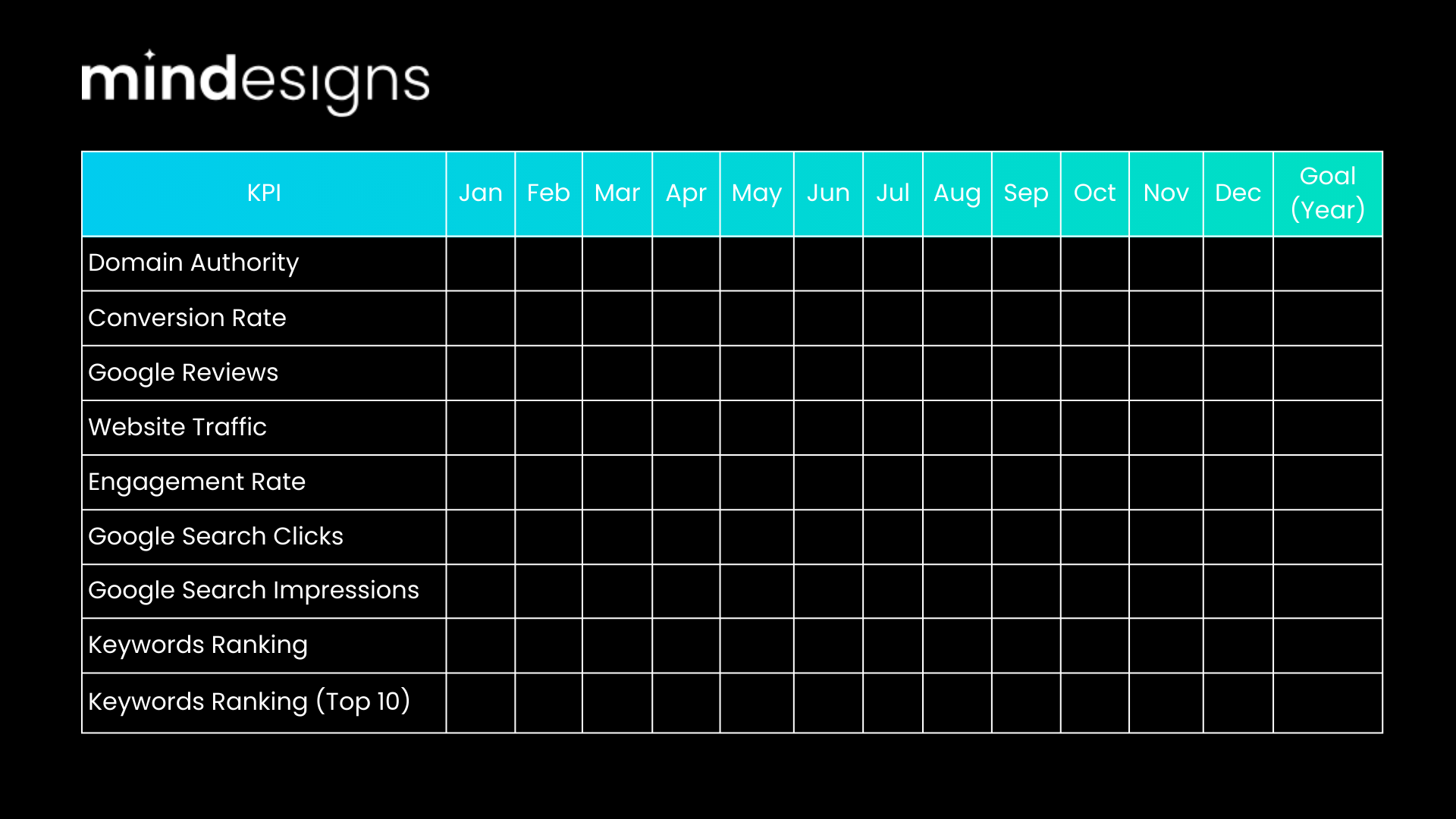
Each KPI we track is chosen because it helps make better decisions to achieve long-term business success. Let’s discuss the core ones we measure, and more importantly, why they matter.
1. Domain Authority
Domain Authority is a metric (scored from 0–100) that estimates a website’s level of authority and its ability to rank in search engines. While Google doesn’t use DA as a direct ranking factor, it shows how your website’s authority stacks up against competitors and, most importantly, reflects the quality of backlinks your content attracts from other sites.
| Domain Authority (Semrush) | Grade |
| 0-20 | Poor |
| 20-30 | Low |
| 30-50 | Good |
| 60+ | Excellent |
2. Conversion Rate (Website)
Website Conversion Rate is the percentage of visitors who take a desired action, like buying a product or filling out a contact form. It shows how effective your website is at turning traffic into leads or sales.
Most marketers place a lot of focus on this KPI as it has a direct effect on the business’s bottom line. A low rate suggests there are barriers such as broken pages or poor navigation that prevents users from converting.
3. Google Reviews
Google Reviews are customer ratings and feedback on your Business Profile, tracked by total reviews and average star rating (1–5).
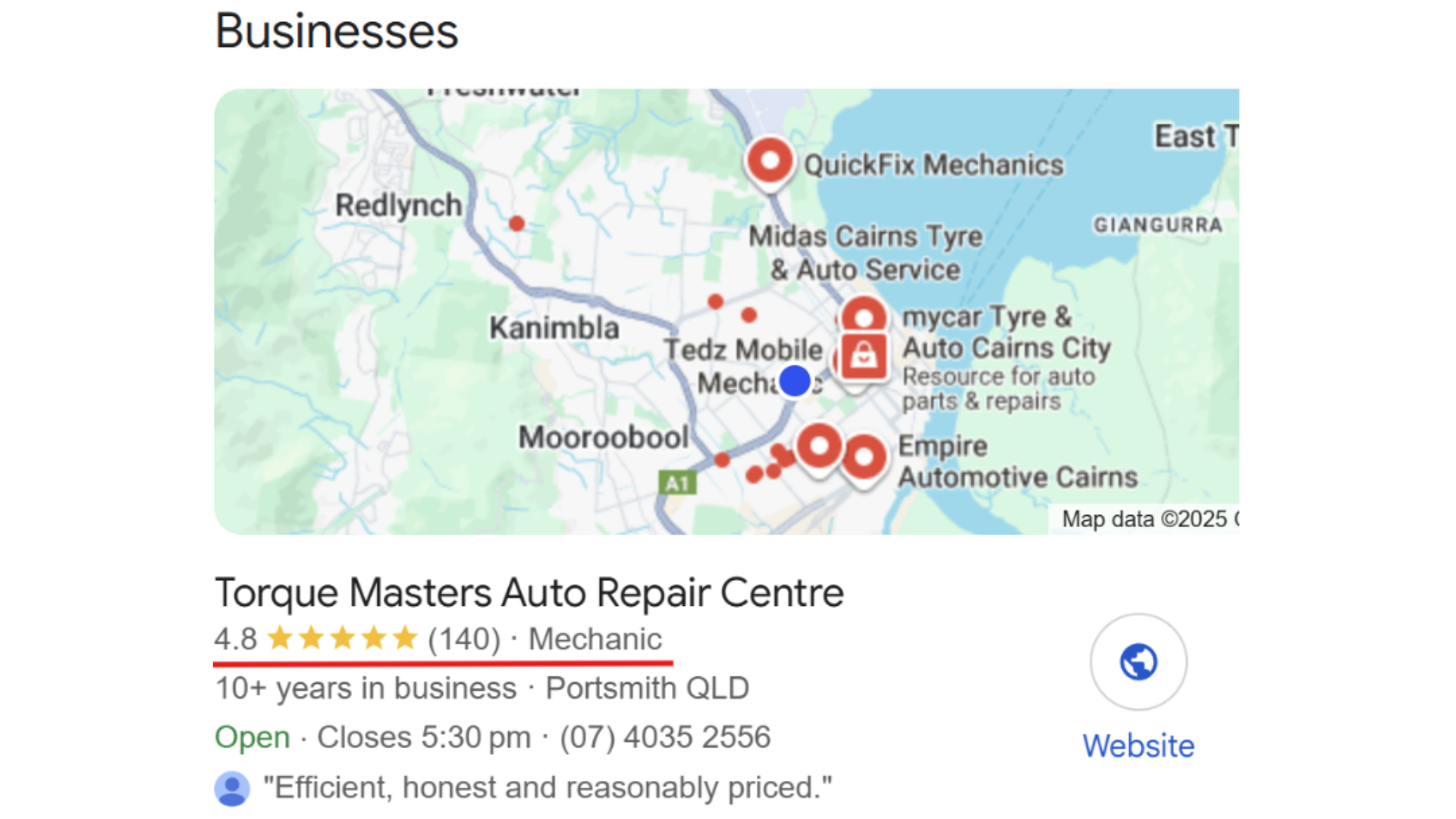
The number of reviews a business has is one of the top 3 factors (along with distance and relevance) that affects how high up your listing will be on Google’s local map options.
This is particularly important for service-based SMEs that rely on local traffic like trades or clinics. Getting more reviews from accounts within the same locality carries more weight as opposed to accounts from people that don’t live in your area.
4. Website Traffic
Website traffic measures the total number of visitors who come to your site within a set period of time. This metric sets a high-level view of your website’s online visibility and provides clues about where customers are discovering your brand. For example, if most of your traffic is coming from organic search, it suggests that your SEO strategy is performing well.
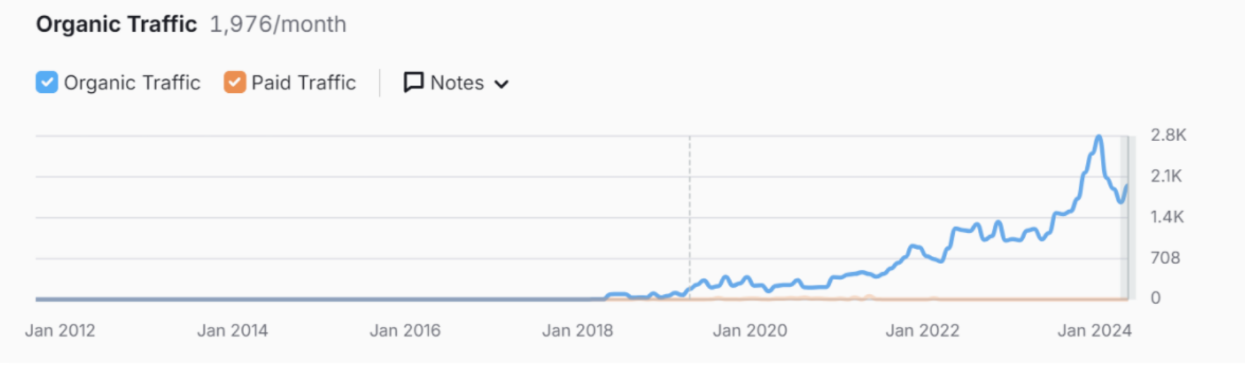
Moreover, this metric is valuable when segmenting pages during a website audit. High-traffic pages should be updated first, while revenue-driving pages with low traffic should also be prioritised.
5. Engagement Rate
Engagement rate measures how actively users interact with your content, based on Google’s criteria for an engaged session:
- The page session lasts 10+ seconds
- Includes a key event – such as a long scrawl or additional on-page clicks
- Has 2+ page views in one session
We track engagement rate at both the domain and page level to see if our on-page efforts are resonating. Domain-level tracking shows overall health, while page-level insights reveal where specific improvements are needed and whether to adjust our approach or stay the course.
6. Google Search Impressions
Search impressions represent the number of times a page from your website appears in Google’s search results for a user’s query. An impression is counted whenever your site shows up, even if the user doesn’t scroll down to see it or click on it (technically it could be on page 8 of Google Search results and still be counted as an impression).
We track this KPI at the page level to gauge content quality. High-quality content earns more visibility in search, while low impressions signal that the page is not even ranking and the need for better keyword optimisation or content improvements.
7. Google Search Clicks
Google Search Clicks measure how many times users click through to your website after seeing it in Google search results.
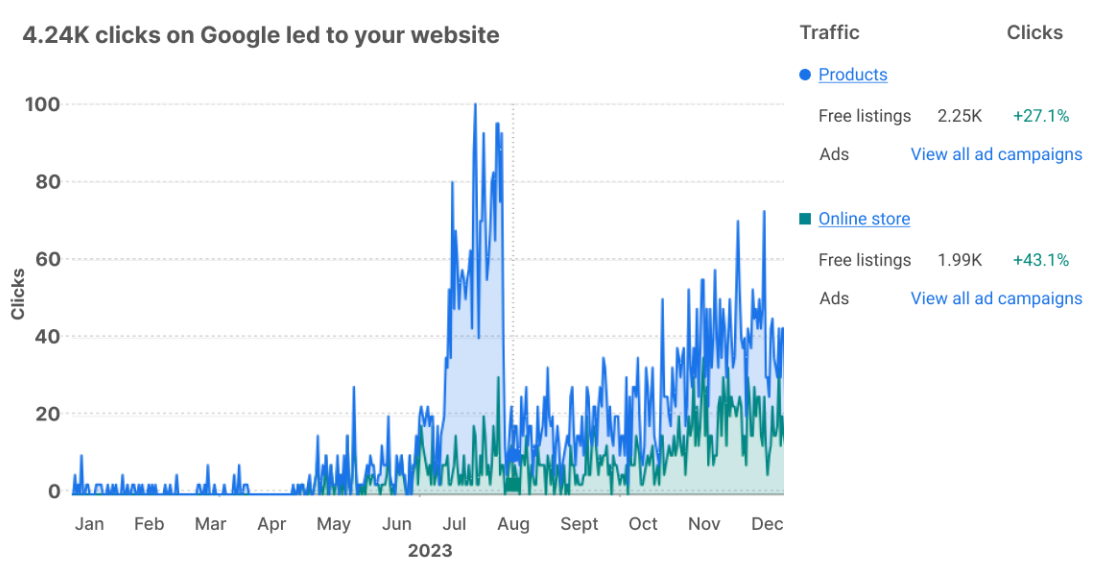
We track this KPI at the page level and pair it with search impressions to identify opportunities for on-page improvement. For example, if a page has high impressions but low clicks, it signals that the meta titles and meta descriptions may need refinement.
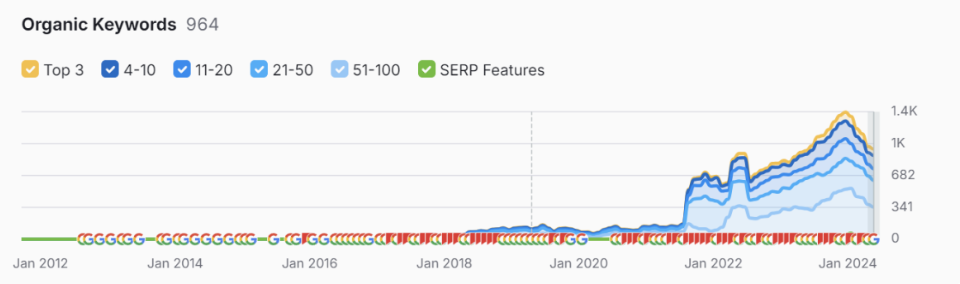
8. Keyword Rankings (overall + Top 10)
Keyword rankings show where your website appears in Google for specific search terms. Overall keyword rankings provide a broad view of visibility, showing whether your site is gaining or losing ground. But the real impact comes from movements within the Top 10, since the first page of Google captures the majority of clicks and drives the most traffic.
Paid Ads KPIs That Matter
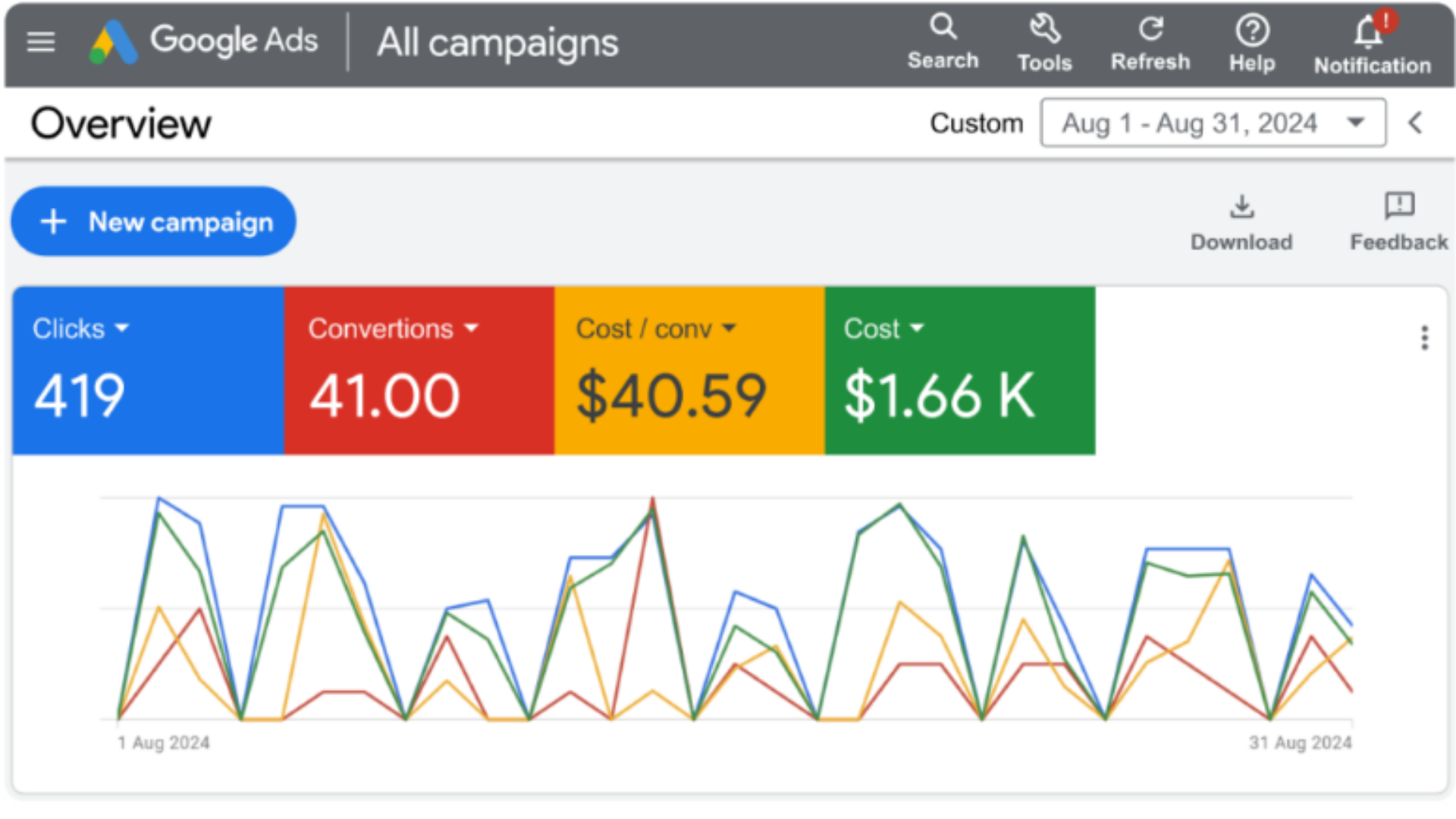
Paid advertising performance is tracked through a set of core KPIs that show both efficiency and impact. Each one gives insight into how well campaigns are engaging the right audience and delivering returns.
9. CTR (Click-Through Rate)
CTR measures the percentage of people who click on your ad after seeing it. A high CTR indicates that audiences find your offer relevant, or that your messaging and visuals are effective (or both!)
In 2025, the average CTR across all industries is 6.66%, though the real benchmarks depend per industry. If your CTR is consistently below the benchmark, your ads may need better targeting, clearer messaging, or more compelling visuals.
10. CPC (Cost Per Click)
CPC is the average amount you pay each time someone clicks on your ad. The goal is to make your CPC as low as possible to reach audiences more cost-effectively.
Negative keywords, audience segmentation, and bidding strategies play a key role in ensuring that your ads reach the right people at the right time. Basically, the more targeted your audience is, the more efficient your ad will be.
11. Conversion Rate (Ads)
Conversion rate in ads measure the percentage of ad clicks that result in a desired action.
Across industries, the average conversion rate is 7.52%. If conversion rates are below benchmark, it’s often a sign of friction in the customer journey that needs addressing through conversion rate optimisation.
12. ROAS (Return on Ad Spend)
ROAS tracks how much revenue is generated for every dollar spent. In practice, we use this KPI not only to gauge whether ads are generating revenue, but whether they’re doing so profitably. A ROAS ratio of 4:1 is often considered a strong benchmark.
To track this KPI more effectively, you must assign a dollar value to your conversions. Once values are set, we can prioritise campaigns that attract higher spending customers or optimise landing pages to encourage more valuable purchases.
13. Ad Frequency
Ad frequency shows how many times a single user sees your ad within a set period. By optimising how often ads are shown, we can ensure that budgets are spent efficiently without wasting money on excessive exposure.
It’s important because exposure drives recall, but too much repetition can cause ad fatigue. In fact, studies show that people who saw an ad 6-10 times were 4.1% less likely to buy a product than those who saw the ad just 2-5 times.
Best Practices for Tracking Marketing KPIs
Tracking KPIs is only valuable when it leads to meaningful decisions. Doing these best practices will help you turn numbers into actionable insights that get results.
Set up your analytics properly
Before starting, you need to make sure your analytics are set up properly.
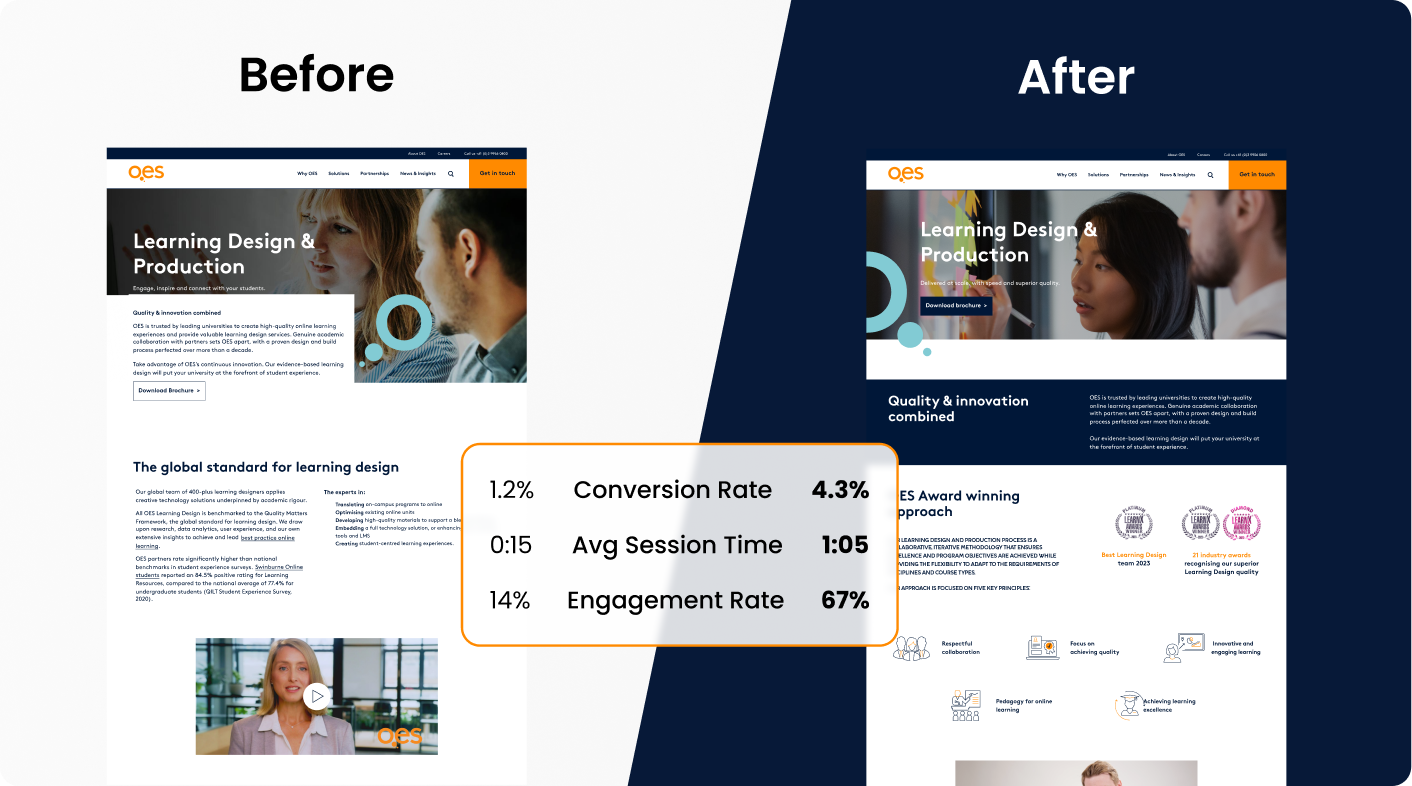
That is exactly the problem we faced when Online Education Services (OES) first approached us. Their tracking was incomplete, making it unclear which channels were working. After overhauling their setup, we gained a clear view of traffic sources, campaign performance, and conversions. This not only improved visibility but also allowed us to focus SEO on the channels delivering qualified leads.
Prioritise quality over quantity
Not all KPIs carry equal weight, and focusing on the wrong ones can create a false sense of success. A spike in pageviews or traffic may look impressive on paper, but if your business only serves customers in Australia and most of that traffic is coming from overseas, those numbers won’t translate into sales.
The fix is to look beyond surface metrics and focus on quality. This challenge often signals poor targeting or misaligned offers. These issues can be fixed by refining your campaigns, better segmentation, and aligning your message with what customers truly need. Understanding why this is happening can save costs and ensure conversions translate into real business growth.
Review KPIs regularly
KPI tracking should not be a once-a-year task, nor should you exclusively compare it to industry benchmarks. Monthly reviews allow businesses to identify trends early. This cadence also makes it easier to link KPI movements to specific campaigns or improvements, so you know what’s working and what needs adjusting in real time.
Don’t Look at KPIs in Isolation
No single metric tells the whole story, which is why KPIs should always be analysed together.
For instance, a campaign might show a high click-through rate (CTR), which at first looks like success. But if the conversion rate on those clicks is low, it suggests the ad is attracting attention, but the actual landing page needs to be improved.
The Tools We Use For Tracking and Monitoring Marketing KPIs
Accurate reporting starts with the right tools. Each platform provides a different perspective on performance, and together they give a complete view of how marketing activities are contributing to business growth. Here are the tools we rely on most often.
Google Analytics (GA4)
Google Analytics 4 tracks how visitors interact with your website, showing where traffic comes from, which actions people take, and where they drop off. Its event-based model also captures micro-conversions, like button clicks, alongside larger goals such as purchases or enquiries.
Google Search Console
While GA4 shows what happens after users land on your site, Google Search Console focuses on what happened before, and how your site performs directly in Google’s search results. Search Console is also where you can identify high-potential keywords that are close to breaking into the Top 10, making it an essential tool for content and SEO.
Google Business Profile (formerly Google My Business)
For local businesses, Google Business Profile is a critical tool. It controls how your business appears in local search and on Google Maps, including details such as reviews, opening hours, and contact information. Monitoring this profile ensures your business is visible for “near me” searches and competitive in local markets.
Semrush
Semrush is one of the most comprehensive platforms for monitoring your website’s performance. Unlike GA4 and Search Console, which focus on your own site, Semrush allows businesses to compare their visibility and authority against competitors. This makes it particularly useful for identifying gaps in keyword coverage and link-building opportunities.
How Marketing KPIs Turn Data into Business Success
The real power of KPIs lies in their ability to connect marketing activity with real business outcomes. Numbers on their own don’t drive growth, but the insights behind them and the execution thereafter do.
Instead of treating KPI tracking as just another item on the to-do list, it should be seen as an ongoing guide for decision-making. With the right tools and metrics, you can confidently determine which aspects of your digital marketing strategy need improvement and will give you clues on how to do it.
And when you move beyond surface-level stats to uncover deeper patterns, you will spot valuable opportunities and avoid costly mistakes.
Want help tracking and improving these marketing KPIs? Contact us today for expert assistance and proven strategies to maximise your ad performance.