For Marketing Leaders
Celebrity and creator partnerships can generate awareness, build trust, and help brands connect with audiences in ways traditional advertising often can’t.
But they can also be expensive, difficult to measure, and surprisingly easy to get wrong.
The challenge isn’t finding Australian talent. It’s identifying the right talent for your brand, audience, and business objectives.
A celebrity with millions of followers isn’t necessarily the best investment. In many cases, a creator with a smaller but highly engaged audience can deliver stronger results.
As Australian talent continues to gain global influence, brands have more partnership opportunities than ever before. The question is no longer whether to invest in celebrity or creator marketing, but how to make the right decision.
Why Celebrity Marketing Still Matters
Consumers are increasingly sceptical of traditional advertising, but they still trust people.
The right partnership can help brands:
- Increase awareness and reach new audiences
- Build credibility through trusted voices
- Create culturally relevant content
- Generate earned media and social engagement
- Accelerate product launches and brand campaigns
However, success rarely comes from choosing the most famous person available.
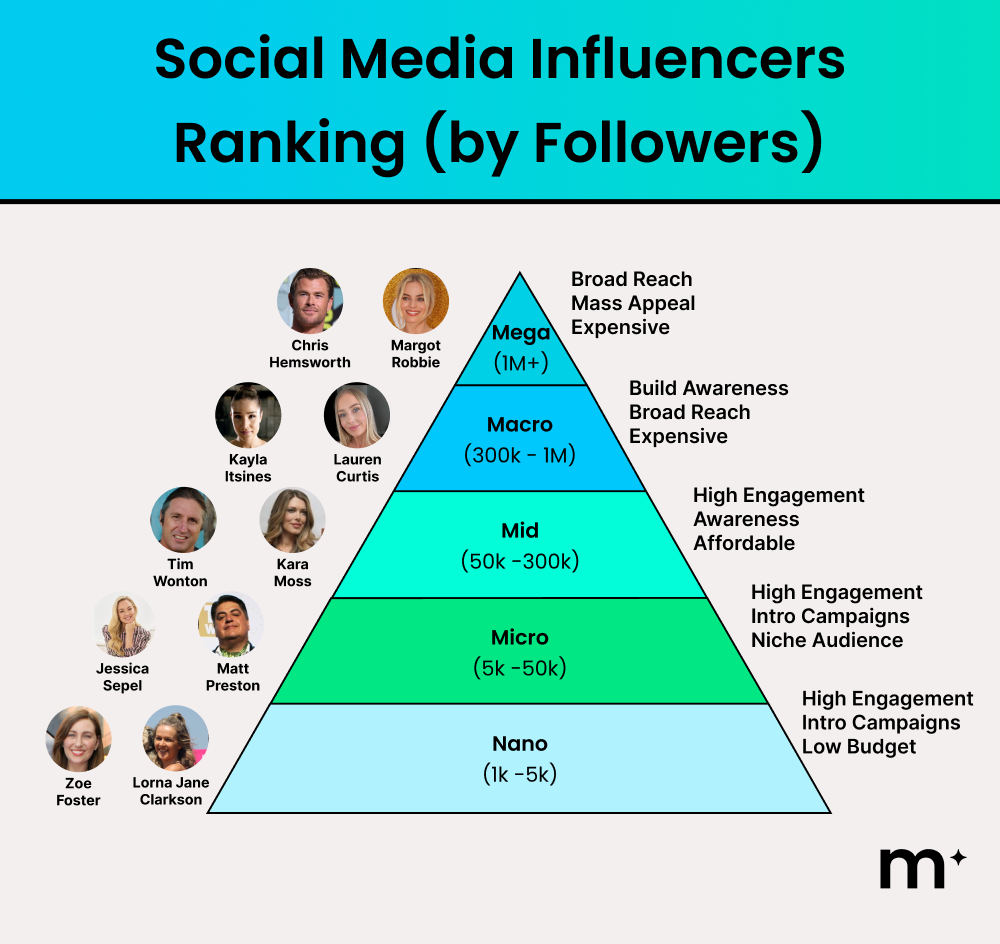
One of the biggest mistakes we see brands make is treating follower count as a proxy for influence. Reach matters, but relevance, trust, and audience quality are often much stronger predictors of campaign success.
That’s why talent selection should be approached strategically, not emotionally.
What World-Class Looks Like
The Kardashian brand wasn’t built solely on celebrity status. Its growth was driven by a deep understanding of audience motivations and cultural relevance, and by the ability to turn attention into long-term brand equity. It was so impactful that Mindesigns created a dedicated video breaking down the Kardashian marketing strategy in detail and unpacking the key drivers behind its sustained cultural and commercial impact.
The Kardashians built products and messaging around identity and belonging rather than simply promoting features. For marketers, the takeaway is clear: successful partnerships aren’t built on fame alone. They succeed when the talent reflects the aspirations, values, and behaviours of the audience you’re trying to reach.
This is precisely why audience alignment carries the highest weighting in the MIND Celebrity Fit Framework found below. Before evaluating reach, engagement, or commercial potential, Australian brands must first determine whether a celebrity or creator genuinely resonates with the audience they want to influence.
The MIND Celebrity Fit Framework
We developed the MIND Celebrity Fit Framework to help brands evaluate talent beyond popularity metrics.
Before committing budget to a celebrity or creator partnership, score potential partners across five key dimensions.
| Evaluation Criteria | Key Question | What to Assess | Weight |
| Audience Alignment | Does their audience match your target customer? | Demographics, interests, location, purchasing behaviour | 30% |
| Brand Alignment | Does the partnership feel authentic? | Values, public image, campaign relevance | 25% |
| Engagement Quality | Does their audience trust them? | Engagement rate, sentiment, community loyalty | 15% |
| Commercial Performance | Can they drive measurable outcomes? | Previous partnerships, content quality, conversion potential | 20% |
| Risk Profile | Could this partnership create reputational risk? | Brand safety, compliance history, controversies | 10% |
Example Scorecard:
| Talent | Audience Alignment | Brand Alignment | Engagement Quality | Commercial Performance | Risk Profile | Total |
| Candidate A | 5 | 4 | 3 | 5 | 4 | 4.35/5 |
| Candidate B | 4 | 5 | 5 | 4 | 5 | 4.55/5 |
| Candidate C | 5 | 3 | 3 | 4 | 2 | 3.75/5 |
The goal isn’t to find the most famous person. It’s to find the best fit.
Celebrity vs Creator: Which Delivers Better ROI?
Over the past few years, we’ve seen many brands shift budget away from traditional celebrity endorsements and toward creator ecosystems.
The reason is simple: creators often offer greater audience trust, greater content flexibility, and clearer performance metrics.
| Tier | Strengths | Considerations | Best For |
| Celebrity | Mass awareness and PR value | Higher costs and less accessibility | National brand campaigns |
| Macro Creator | Reach with audience trust | More niche audience segments | Product launches and awareness |
| Micro Creator | High engagement and authenticity | Lower individual reach | Performance campaigns |
| Nano Creator | Strong community trust | Requires scale through multiple creators | Local and community-led campaigns |
For many brands, a combination of creators can outperform a single celebrity partnership.
The best choice depends on campaign goals, audience, and budget.
What Successful Australian Celebrity Partnerships Have in Common
Building Premium Brand Equity: Margot Robbie × Chanel
Chanel’s long-term partnership with Margot Robbie highlights an important principle of celebrity marketing: consistency.
Rather than chasing short-term visibility, Chanel aligned with a public figure whose image reflects the brand’s premium positioning and global appeal. Over time, that consistency has strengthened the association between ambassador and brand.
Content featuring Robbie on Chanel’s official platforms and in major fashion media (e.g., Vogue, Elle, red carpet coverage circuits) typically operates at multi-million impression scale per activation, amplified further through organic amplification, press syndication, and celebrity-driven sharing. The CHANEL 25 Handbag Campaign featuring Robbie garnered 300k views on YouTube alone. Her high-profile ambassadorship reinforces a luxury brand that generates $18.7 billion to $19.7 billion in annual revenue.
Best for: Luxury, beauty, fashion, and premium lifestyle brands.
Key lesson: The strongest partnerships reinforce existing brand values rather than trying to create new ones.
Representing Australian Heritage: Hugh Jackman × R.M. Williams
When R.M. Williams appointed Hugh Jackman as its first global ambassador, the partnership wasn’t simply about recognition.
Jackman represented the same qualities the brand wanted to communicate: authenticity, resilience, craftsmanship, and Australian identity.
As a globally recognised actor with a social following in the tens of millions (across Instagram and other platforms) and sustained visibility through film, Broadway, and international press, Jackman provided R.M. Williams with a scalable cultural bridge between Australian heritage and global luxury-adjacent positioning. Following the announcement and subsequent campaign activations, the brand reports strong spikes in retail sell-through during campaign windows (particularly in the US and UK), increased interest from global stockists, and support for its expansion into luxury retail channels.
Best for: Heritage brands, premium retail, and businesses expanding internationally.
Key lesson: Shared values often matter more than audience size.
Purpose-Driven Partnerships: Robert Irwin x Tourism Australia
Robert Irwin’s reputation for conservation, education, and authenticity makes him a strong fit for purpose-led campaigns.
For brands focused on sustainability, community impact, or family audiences, alignment can create credibility that advertising alone cannot achieve.
Robert Irwin was featured in Tourism Australia’s global “Come and Say G’day” campaign, which achieved approximately 1.06 billion global impressions and was reported to have significantly increased international interest and intent to travel to Australia, strengthening consideration of the country as a holiday destination across key global markets.
Best for: Sustainability initiatives, education brands, family-focused campaigns.
Key lesson: Purpose partnerships only work when values are genuinely shared.
Risks Every Brand Should Consider
- Compliance and Disclosure
Australian brands must ensure sponsored partnerships are clearly disclosed and comply with ACCC guidelines.
Transparency protects both the brand and the audience.
- Follower Fraud
Large audiences don’t always equal genuine influence.
Before entering a partnership, review audience authenticity, engagement quality, and follower growth patterns.
- Usage Rights and Exclusivity
One of the most common mistakes brands make is failing to define content ownership and usage rights upfront.
- Brand Safety
The wrong partnership can create reputational challenges long after a campaign ends.
Conduct due diligence before signing contracts and establish clear approval processes for campaign content.
Three Lessons Brands Often Learn Too Late
- Audience Fit Beats Audience Size
A smaller, highly relevant audience will often outperform a larger, less engaged one.
At Mindesigns, we’ve observed a significant shift in how different generations engage with brands. While Boomers were often motivated by status symbols and outward indicators of success, Millennials tend to place greater value on financial freedom, flexibility, and experiences.
This distinction has important implications for celebrity and creator partnerships. A personality who resonates strongly with one generation may have limited influence with another, even if they have substantial reach. That’s why audience alignment should go beyond age and demographics to consider the motivations, aspirations, and values that drive purchasing decisions.
- Authenticity Outperforms Forced Partnerships
Consumers can quickly identify partnerships that feel transactional.
The strongest collaborations feel natural and credible, with celebrities and creators promoting products or services that genuinely align with their personal brand and deliver real value to their audience, rather than appearing to be a simple moneymaking opportunity.
- Business Objectives Should Drive Talent Selection
Celebrity partnerships should support measurable outcomes—not vanity metrics.
The right talent should help achieve a specific marketing objective, whether that’s awareness, consideration, lead generation, or sales.
Choosing Talent Strategically
Successful celebrity and creator partnerships aren’t built on popularity alone.
They’re built on audience fit, authentic alignment, commercial potential, and risk management.
The brands generating the strongest results are those that evaluate talent strategically rather than relying on follower counts or cultural hype.
If you’re evaluating talent for an upcoming campaign, start by scoring your shortlist against the MIND Celebrity Fit Framework. A structured approach can help reduce risk, improve ROI, and ensure every partnership contributes to long-term brand growth.