For Marketing Leaders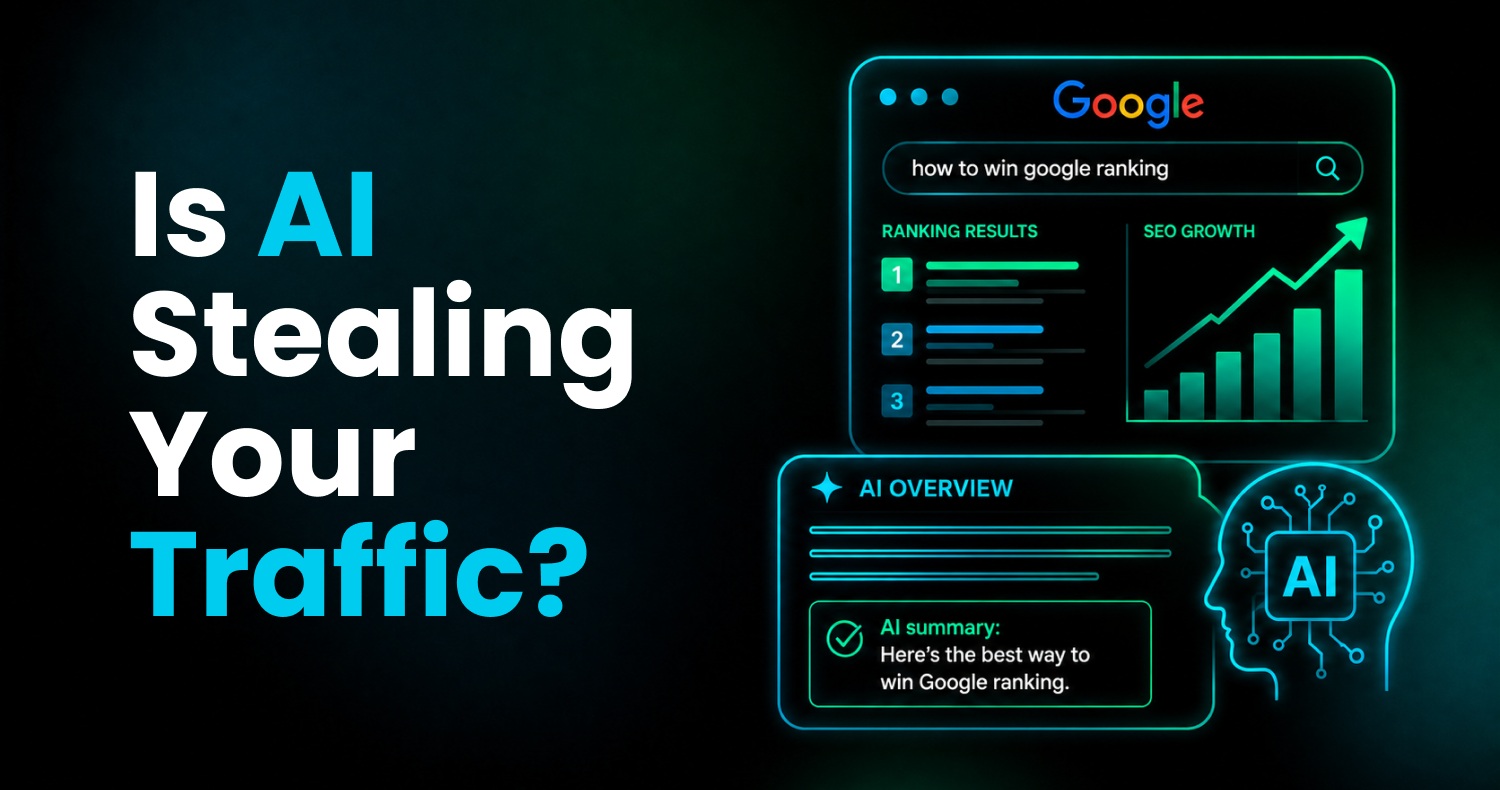
Enterprise SEO goes beyond ranking on Google. Today, it means building a digital presence strong enough that your business appears wherever potential customers are searching, from traditional search engines to AI-powered tools like ChatGPT, Gemini, and Google AI Overviews.
Most enterprise marketing teams we meet at Mindesigns have the budget for SEO. What they lack is capacity and current knowledge. In-house teams are juggling campaigns, events, and product launches, so SEO drifts down the priority list while organic growth quietly slows. Many are still working from an older SEO playbook, with little time to absorb Google’s newer guidance on helpful content.
If you’re a CMO, Head of Marketing, or senior marketing strategist looking to strengthen organic acquisition, this guide is for you. I’ll cover the SEO challenges we see most often inside enterprise organisations, how AI search is reshaping brand discovery, and the strategies we’ve used to help companies like OES and Sekuro build stronger technical foundations and long-term organic growth.
Which Enterprise Companies Should Prioritise SEO?
Not every company needs SEO services. Once your organisation reaches a certain level of complexity, SEO can become part of your long-term growth strategy, but only if your customers search for what you sell.
Architecture is a clear example of an industry that rarely relies on SEO. RIBA’s research found that almost two-thirds of new commissions come from a practice’s reputation, whether as repeat business or through word of mouth. Its Business Benchmarking report puts numbers on it: repeat business accounts for 38% of new commissions, client referrals another 24%, while advertising and web presence combined deliver around 10%. Developers keep a shortlist of architects they trust. Homeowners ask a friend. Nobody hires the first architecture firm they find on Google.
The same applies to large engineering firms. Their work often comes through long-standing relationships with government bodies, airports, and private infrastructure clients. Those clients don’t search “mechanical engineers in Sydney”; they already know who to call. For industries like these, credibility on the website matters more than organic volume or backlinks.
Meanwhile, Uniqlo sits at the opposite end. When winter hits, people search “thermal clothing”. When summer comes, they search “UV protection clothing”. Uniqlo built entire product lines around those needs, and every one of those searches is either a sale it captures or a sale it hands to a competitor. The same logic applies to SaaS: if you sell accounting or survey software, buyers are typing “best accounting software for small business” into Google and AI tools every day. Ranking for those searches is revenue.
If your leads come from relationships and referrals, you can park SEO for now. If your target audience searches online before deciding, then SEO belongs in your marketing plan.
This is especially true when the buying journey is long and trust-driven. Gartner research shows B2B buyers complete roughly 70–80% of their journey through independent research before ever contacting a vendor. It shows enterprise SEO builds the visibility, trust, and authority that gets you onto that shortlist before your sales team ever gets a call.
The Biggest Enterprise SEO Challenges We See
Every enterprise company is built differently, but the SEO problems are surprisingly similar. In this section, I list the ones we see most often with our clients.
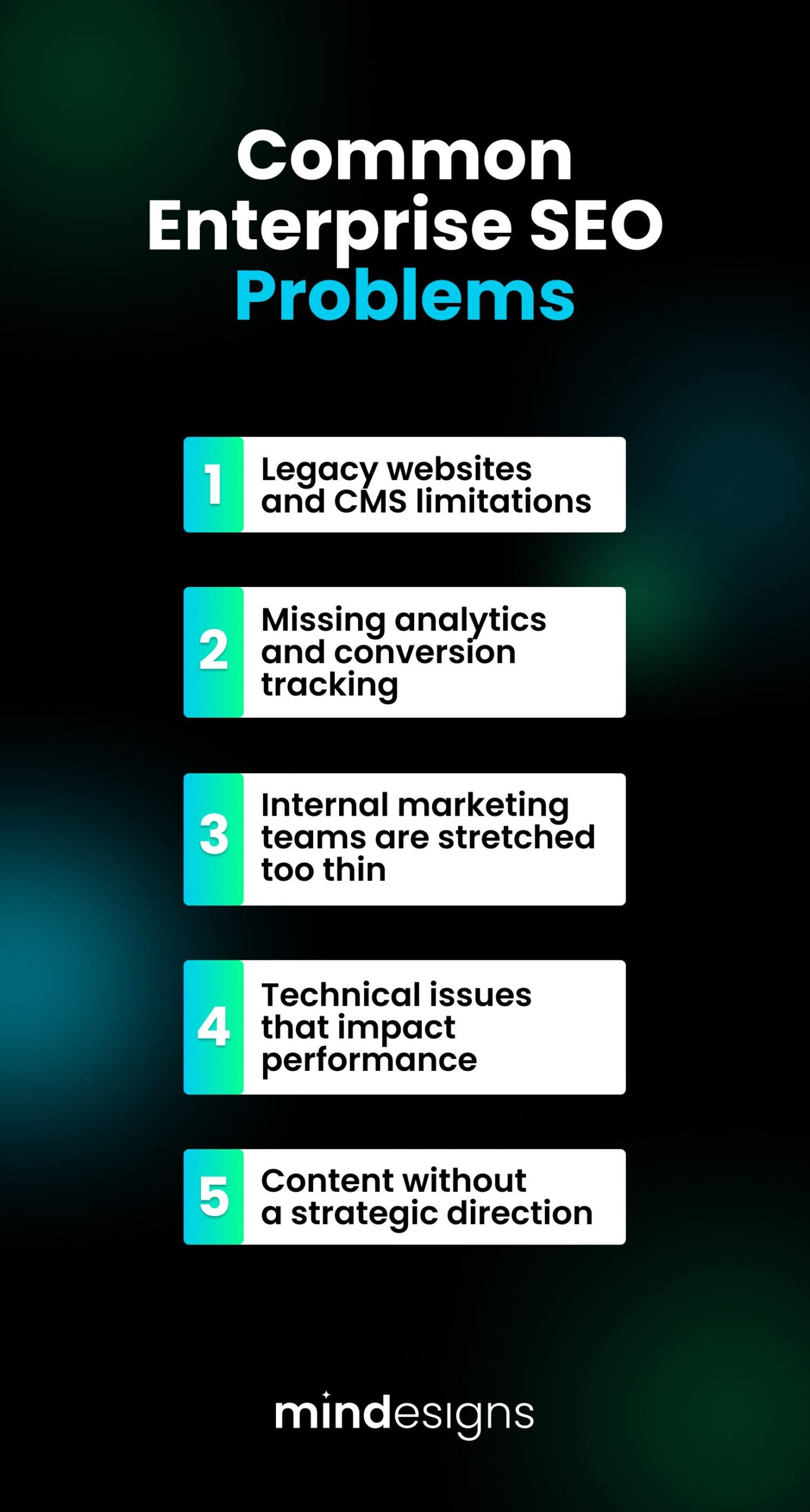
Legacy websites and CMS limitations
Many of the enterprise websites we work on at Mindesigns have grown over the years. As new products are added, landing pages accumulate, and multiple teams contribute content, the site becomes harder to manage.
For companies that don’t have a process. Most of the time, we see:
- Pages that are difficult to update
- Slow load times that affect user experience
- Missing technical foundations that help search engines understand the site
- Approval processes or development requirements that slow down small improvements
That’s why when we work on SEO, we never start with content. As a Semrush Agency Partner, our first step with every new client is a full site crawl and review process. It shows us what’s limiting their sites, quick wins and what to fix first before we invest in anything new.
Missing analytics and conversion tracking
One of the most common challenges we encounter is the absence of reliable data. Ruler Analytics reports that 42% of marketers don’t use an attribution tool at all, and AdRoll found 70% of businesses struggle to act on the attribution insights they do have. That’s irresponsible if you think about it, you will usually expect more accountability from businesses generating millions of dollars.
Many enterprise organisations know people are visiting their website, but they cannot confidently answer where those visitors came from, which content influences enquiries, or what marketing activities generate qualified leads.
We saw this firsthand when working with OES. Before implementing a comprehensive analytics setup, the organisation had limited visibility into website performance, conversion tracking, and where enquiries were coming from. Like many growing organisations, OES had built a strong reputation, but as the business evolved, it became clear that a stronger digital measurement strategy was needed urgently.
Internal marketing teams are stretched too thin
Enterprise marketing teams rarely focus on SEO alone. We’ve heard it firsthand from clients. Their teams are busy managing campaigns, events, paid media and reporting, with no capacity left to maintain a consistent SEO strategy alongside everything else.
Gartner’s 2025 CMO Spend Survey found marketing budgets have flatlined at 7.7% of company revenue, with 59% of CMOs saying their budget is insufficient to execute their strategy. In a follow-up survey, 63% of marketing leaders named budget and resource constraints their top challenge, and half said short-term demands are crowding out long-term strategic work.
SEO needs specialist skills and long-term focus, and flat budgets make it hard to hire for this in-house. Our role is to give in-house teams the specialist hours, technical support and structured roadmap to build proper SEO foundations, so they can easily be executed.
Technical issues that impact performance
Technical SEO issues can quietly reduce visibility, traffic, and conversions. For example, Google research found that as mobile page load time increases from 1 to 10 seconds, the probability of a visitor bouncing increases by 123%. That’s a lot of damage that could easily be caused by a single heavy image on your page that wasn’t compressed properly.
We saw this with OES, where technical performance was holding the site back before SEO could properly scale, and it wasn’t just heavy images. After we did our magic by migrating to WordPress, setting up tracking, and refining landing pages, their organic traffic steadily grew by 43% within three months.
Content without a strategic direction
Publishing more content doesn’t improve rankings. We often meet teams producing articles at volume using AI with no real results in terms of creating search demand or driving up conversions. Since 2024, Google EEAT ensures surface-level AI content gets zero trust, authority or ranking.
That’s why it’s important to create content with clear intent. HubSpot’s research found that content built around search intent and organised into related topics performs best. In our experience, Google rewards depth and novelty, not frequency or volume.
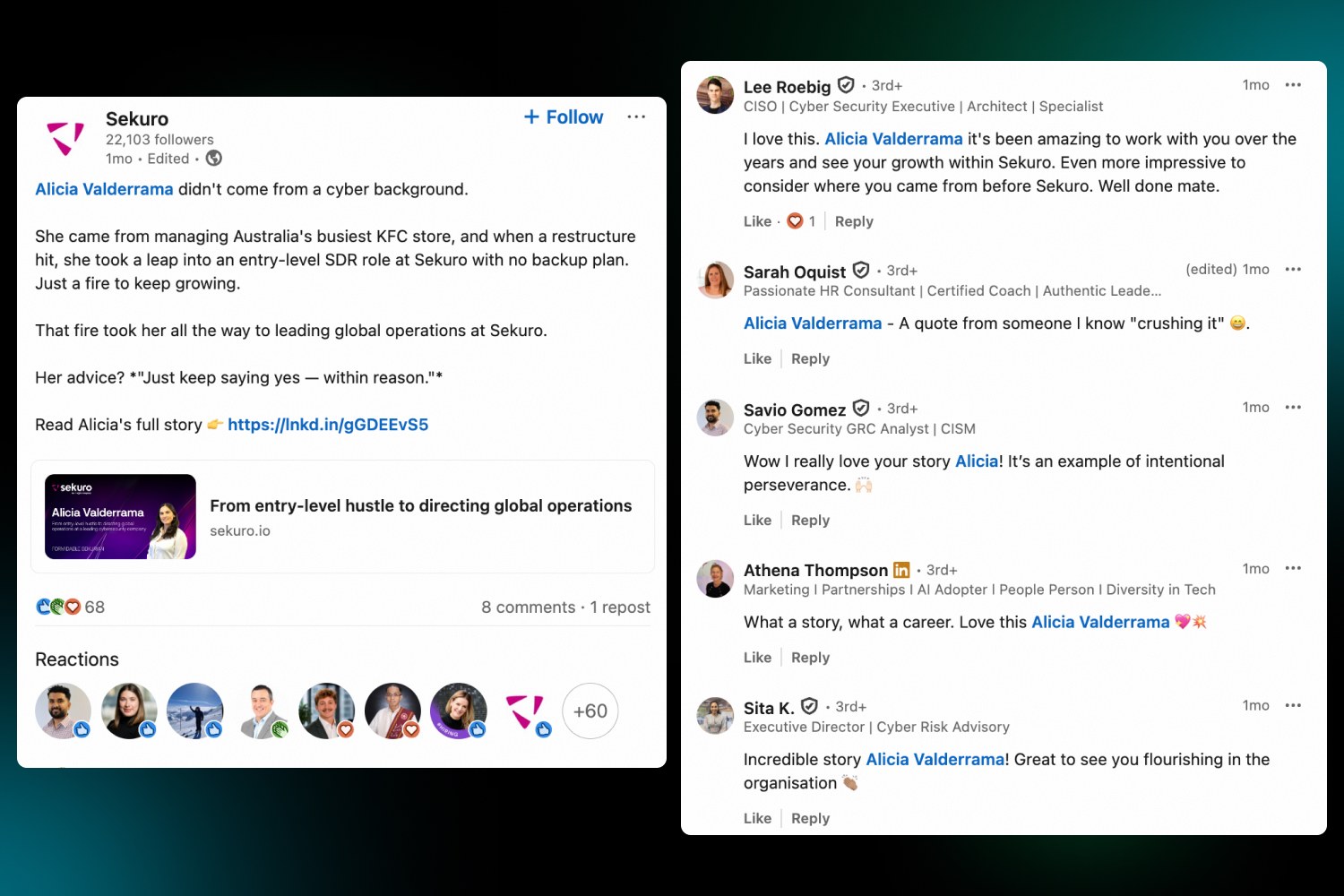
Here’s a perfect example of creating content with intent. When Sekuro published a career story about a team member, the LinkedIn post drew comments from CISOs and cyber risk executives, the exact stakeholders a cybersecurity provider needs visibility with. Every share and mention strengthens the brand signals Google and AI tools use to decide which businesses are worth recommending.
How OES Improved Organic Visibility
When OES first approached us, the goal wasn’t rankings. The SEEK subsidiary and global education solutions provider had a strong market presence but no clear picture of website performance. Site visits and conversions were not tracked. As a result, drawing solid conclusions from their marketing results was guesswork.
So, we started by fixing their foundation. We migrated the site to WordPress and implemented Google Analytics, Google Tag Manager, and the Meta Pixel. Once tracking showed us which page elements were driving conversions, we refined the landing pages where prospective students and education partners land first.
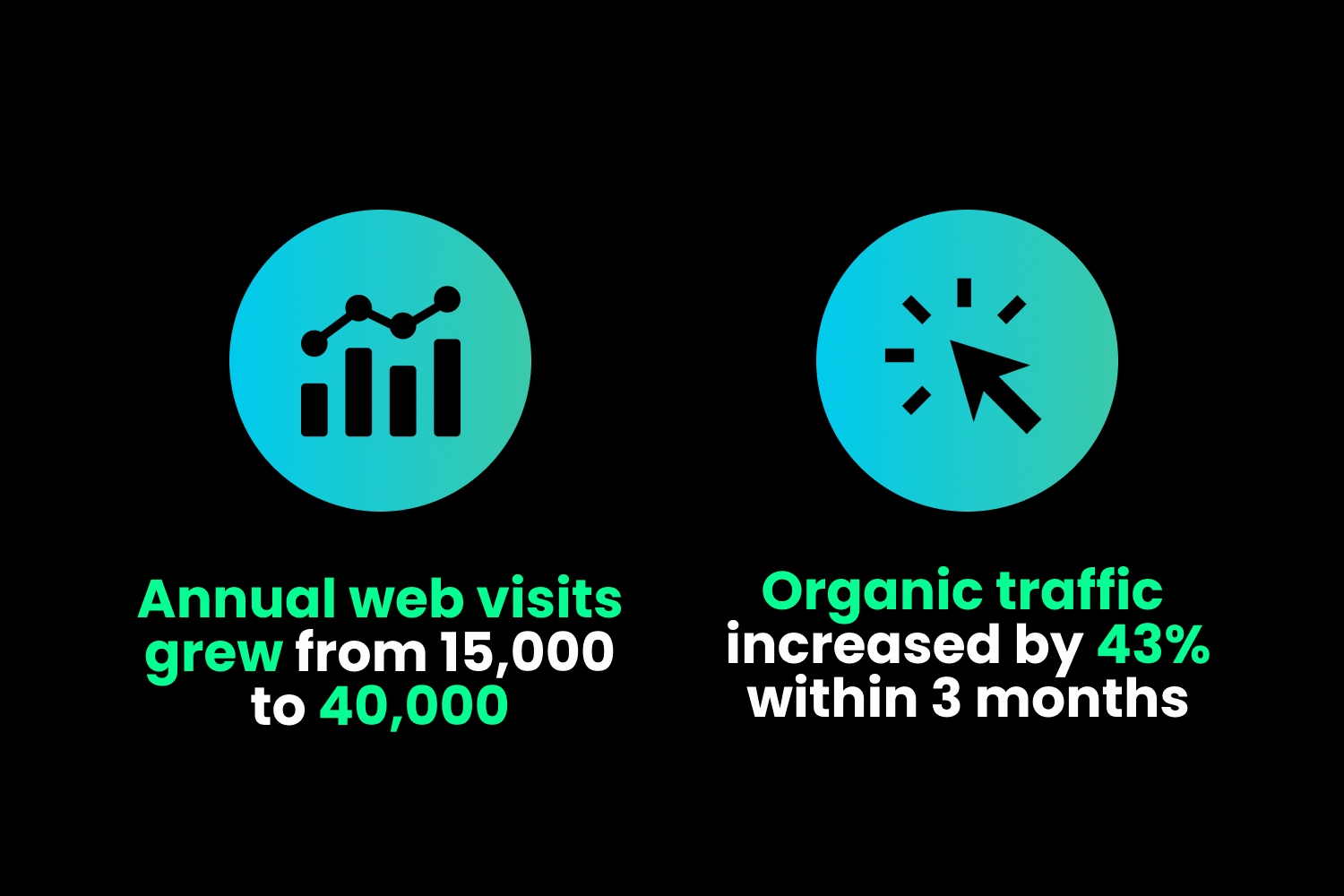
Organic traffic grew 43% within three months. Annual visits climbed from 15,000 to 40,000, and for the first time the marketing team had the data to steer that growth.
As Kealey Nutt, Strategic Advisor for Communications, Advocacy and Engagement at OES, shared:
“Mindesigns quickly became a trusted extension of our team. Their strategic guidance, responsiveness, and ability to deliver measurable outcomes made a genuine impact on our digital marketing efforts.”
How Sekuro Strengthened Its Digital Presence
For organisations operating in cybersecurity, trust, credibility, and website performance carry even greater weight. When Sekuro partnered with us, they needed a digital platform that reflected their position as a leading cybersecurity provider while supporting long-term organic growth.
Working closely with the Sekuro team, we delivered a website experience that balanced technical performance, accessibility, and user experience without compromising the high security standards expected within the industry.
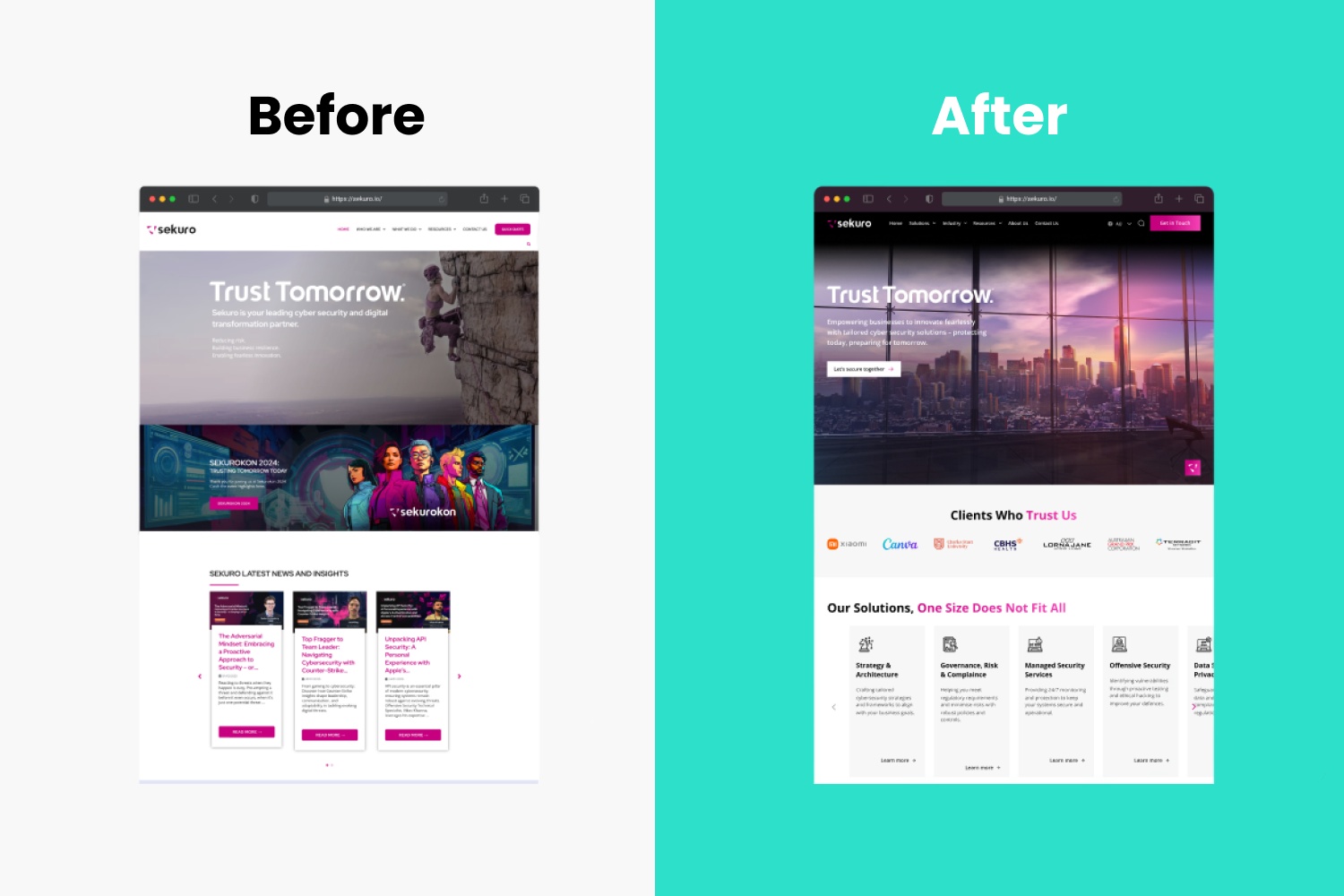
For Sekuro, Core Web Vitals and site performance were key priorities. As a cybersecurity provider, their website needed to load quickly, feel secure, and build trust from the first interaction.
We improved page speed, reviewed plugins, refined the site structure, and supported a secure server setup. We also strengthened their international SEO with dedicated regional pages, localised content, geo-targeting, and hreflang tags.
How AI Search Is Changing Enterprise SEO
Search is evolving.
Semrush research projects AI search visitors will surpass traditional search visitors by 2028, and the average AI search visitor already converts at 4.4 times the rate of a traditional organic visitor, because they arrive having compared their options.
This shift also creates an opportunity. Semrush found that when ChatGPT cites webpages, almost 90% rank in position 21 or lower in traditional search. You don’t need the number one spot to be cited by AI. Clear, specific, well-structured content that answers niche questions can earn citations well beyond your Google position.
Omer Bernstein, our Head of Marketing and Sales and Co-Founder of Mindesigns, discussed this shift in a recent JCU webinar on how AI is changing search behaviour. His point for enterprise brands was simple. Keyword rankings alone are no longer enough. Your content needs to be clear, useful, and structured so both people and AI systems can understand it.
Why Enterprise SEO Matters
Enterprise SEO matters because search itself is moving. Buyers ask ChatGPT, Claude, or Gemini for recommendations because it’s easier than going to Google and scrolling through each result. Someone looking for a new car simply asks which model is best for off-road driving in their region, and AI gives them options. The same is happening with software providers, service firms, and B2B suppliers.
Your website is where LLMs go to get their information, along with reviews, mentions, and industry coverage (which is also SEO). A Search Engine Land analysis found brands ranking on Google’s first page appeared in ChatGPT answers 62% of the time. That means strong SEO feeds AI tools the credibility and proof they need to recommend you, while weak SEO leaves them citing your competitors.
This is the real shift for enterprise decision-makers to take away. For twenty years, SEO’s job was to bring people to your website. Now, its job is to represent you in conversations you never see. Most of your next customer’s decision happens in research you can’t observe, by AI tools that only know what your digital footprint tells them. The enterprises that treat SEO as that representative, and build the technical, content, and measurement foundations it needs, will be the ones getting recommended while their competitors wonder where the enquiries went.
Ready to strengthen your enterprise SEO strategy?
If this article confirmed that your customers search before they buy, and you recognised any of these challenges in your own website, it may be time to review your SEO foundations.
We work with enterprise and corporate teams to identify the technical, content, and analytics gaps holding their websites back. Whether you’re preparing for AI search, improving lead quality, or simply trying to see what’s driving organic growth, we can help you prioritise the next steps.
Book a free strategy session with us and let’s identify where SEO can support your long-term growth.
FAQs
What advantage do enterprise companies have over small businesses in SEO?
Trust, and years of it. Enterprise companies have built a following through years of operation, while small businesses spend years earning those same trust signals from scratch. The catch is that most of this credibility never makes it onto the website in a form search engines and LLMs can read. Surfacing it through case studies, structured data, and organised proof is often the fastest win in enterprise SEO.
What should enterprise companies fix before creating more content?
Enterprise companies should focus on fixing the foundations that determine whether content can perform at all. That means technical SEO, site speed, crawlability, CMS structure, analytics, and conversion tracking. Fixing these first is what allowed OES to grow organic traffic 43% within three months. Content published onto a slow, unmeasurable website is effort you can’t evaluate.
How is AI search changing enterprise SEO?
AI is changing enterprise SEO by adding a secondary discovery layer! This allows enterprise companies to be visible in two ways, traditional search and AI-assisted searches. According to Gartner, B2B buyers complete 70 to 80% of their journey before contacting a vendor. AI tools now shape those shortlists using your website, reviews, and industry mentions. Clear, structured, credible content makes your business legible to both people and the AI systems recommending providers.