For Marketing Leaders
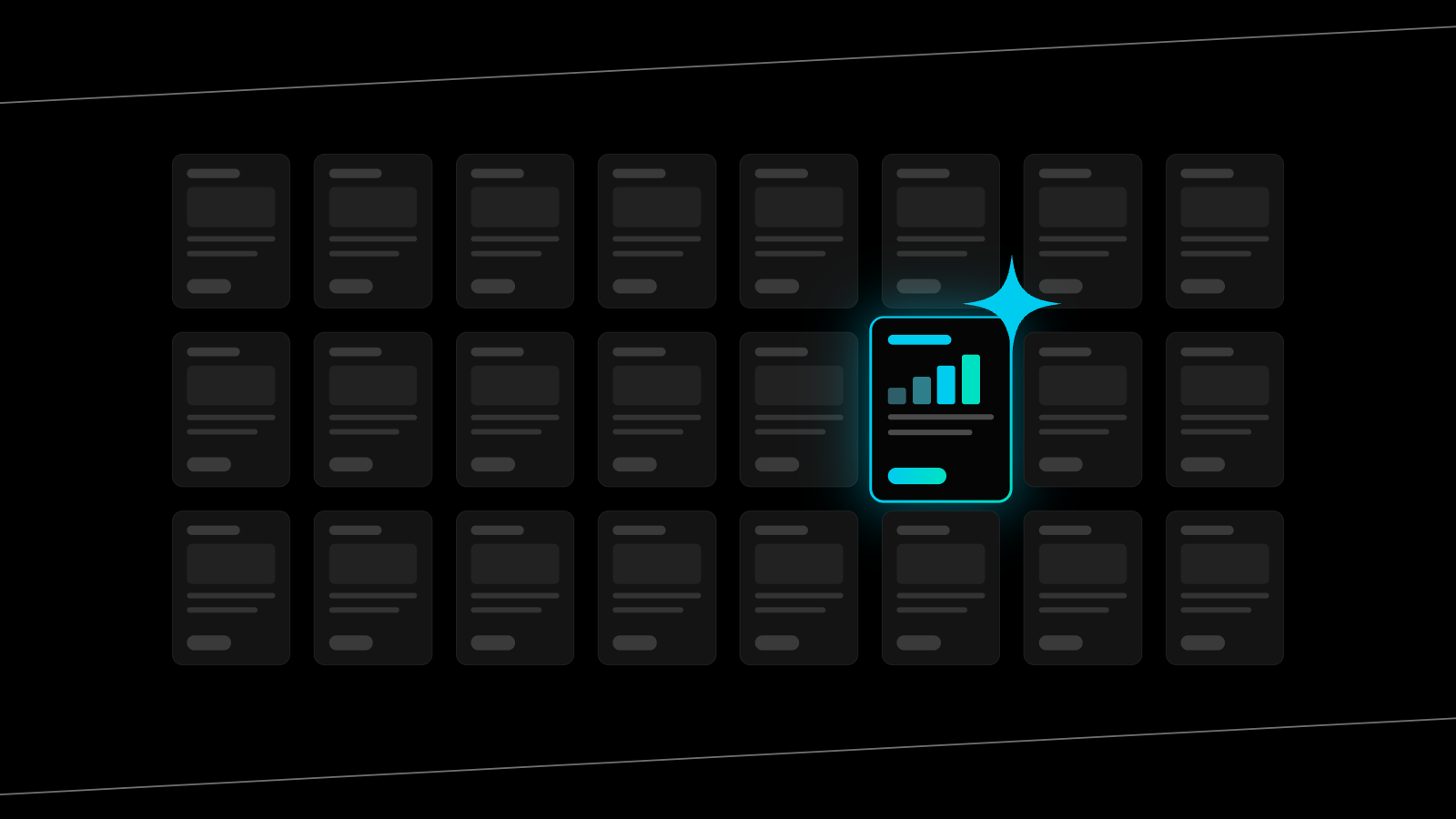
Why website strategy is changing
I left engineering in 2019 to start Mindesigns, and since then I have planned more websites than I can count. For most of that time, a solid website strategy was something only agencies and larger businesses could afford. You needed someone who could read keyword data, map it to pages, build a sitemap that made sense to Google and write content that answered real questions.
That is changing quickly. AI tools can now take a Semrush export, find where the opportunity sits and suggest which money pages to optimise for which keywords. They can draft a sitemap, outline page templates and flag gaps in your internal linking in minutes. Within a few years, most service and product businesses will have access to a strong technical foundation for their website.
I think that is a good thing. It levels the playing field for the plumber, the accountant and the local manufacturer who could never justify a big strategy budget. It also raises a harder question. If everyone has a well structured, well optimised website, what will make yours the one people choose?
In this article I walk through the website strategy and planning process we use at Mindesigns, step by step. Then I share where I believe the real difference between businesses will come from as AI takes over more of the technical work.
Step 1. Start with business strategy, ideal clients and positioning
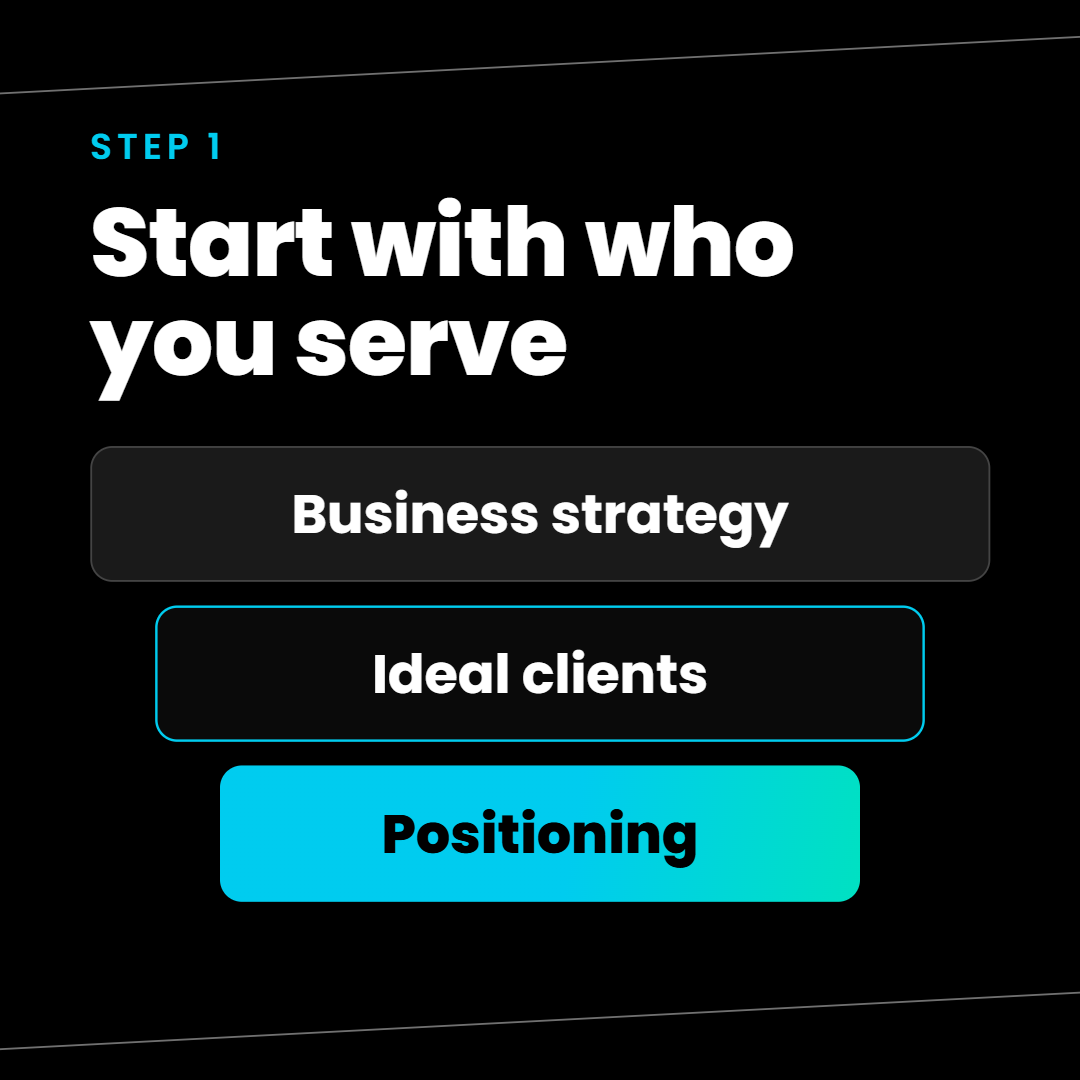
Every good website strategy starts away from the website. Before we open a design file or a keyword tool, we sit down with the business owner and ask simple questions. What do you sell that makes you the most money? Who buys it? Which clients do you want more of, and which ones would you happily refer elsewhere?
For a typical service or product business, the answers usually point to two or three ideal client groups. A commercial cleaning company might find that strata managers and medical clinics bring in most of their profit. A finance broker might realise first home buyers and refinancers make up 70% of their work. Those groups become the people the whole site is written for.
From there we work on your website positioning strategy. Positioning is the one clear reason an ideal client should pick you over the three other businesses they found on Google. It might be speed, specialisation, location, price or a guarantee nobody else offers. Whatever it is, it needs to be specific enough that a stranger could repeat it after reading your home page.
We document all of this in a short brief covering the following.
- Your core services or products, ranked by profit and growth potential
- Two or three ideal client profiles, including the problems that make them search
- Your positioning statement and the proof that backs it up
- The main competitors your clients compare you against
- The single action you want a visitor to take, such as booking a call or requesting a quote
AI can help draft this brief, but it cannot tell you which clients you actually enjoy working with or which jobs keep your business healthy. That part comes from you, and it shapes every decision that follows.
Step 2. Use keyword research to find where the opportunity sits
Once we know who you serve, keyword research tells us how those people search. As a Semrush Agency Partner, this is where we pull search volume and keyword difficulty for every service, product and location you care about. The goal is to find terms with real demand that you can realistically rank for.
A recent example shows why this step matters. We worked with a 4WD tyre workshop in Far North Queensland that wanted an online store aimed at local buyers. When we pulled 61 keywords through Semrush, every local tyre search in their city added up to about 3,000 searches a month. National 4WD tyre terms with low difficulty (KD 8 to 22) added up to more than 32,000. One product name alone, the Falken Wildpeak AT3W, had 8,100 monthly searches at KD 22.
The data completely changed the plan. Instead of a local shop, the strategy became a national store backed by a real workshop and 17 years of local credibility. Every keyword was given one page, and every page was given one job.
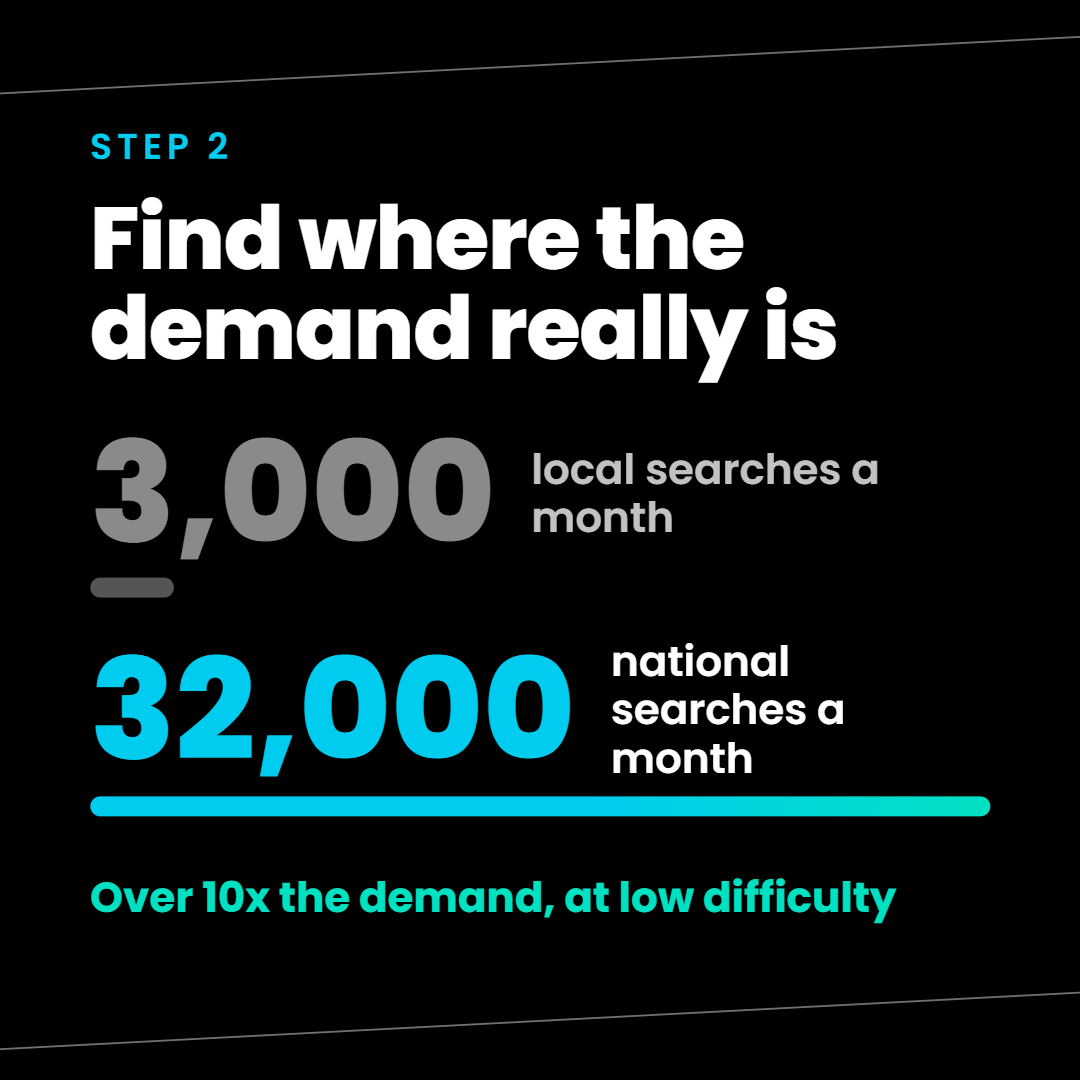
This kind of analysis used to take a strategist several days. Today, AI can sort a keyword export into groups like “easy and valuable”, “easy but empty” and “hard and thin” in minutes. What still needs a human is judgement about which opportunities fit the business, its margins and its capacity to deliver.
Step 3. Plan the sitemap around your money pages
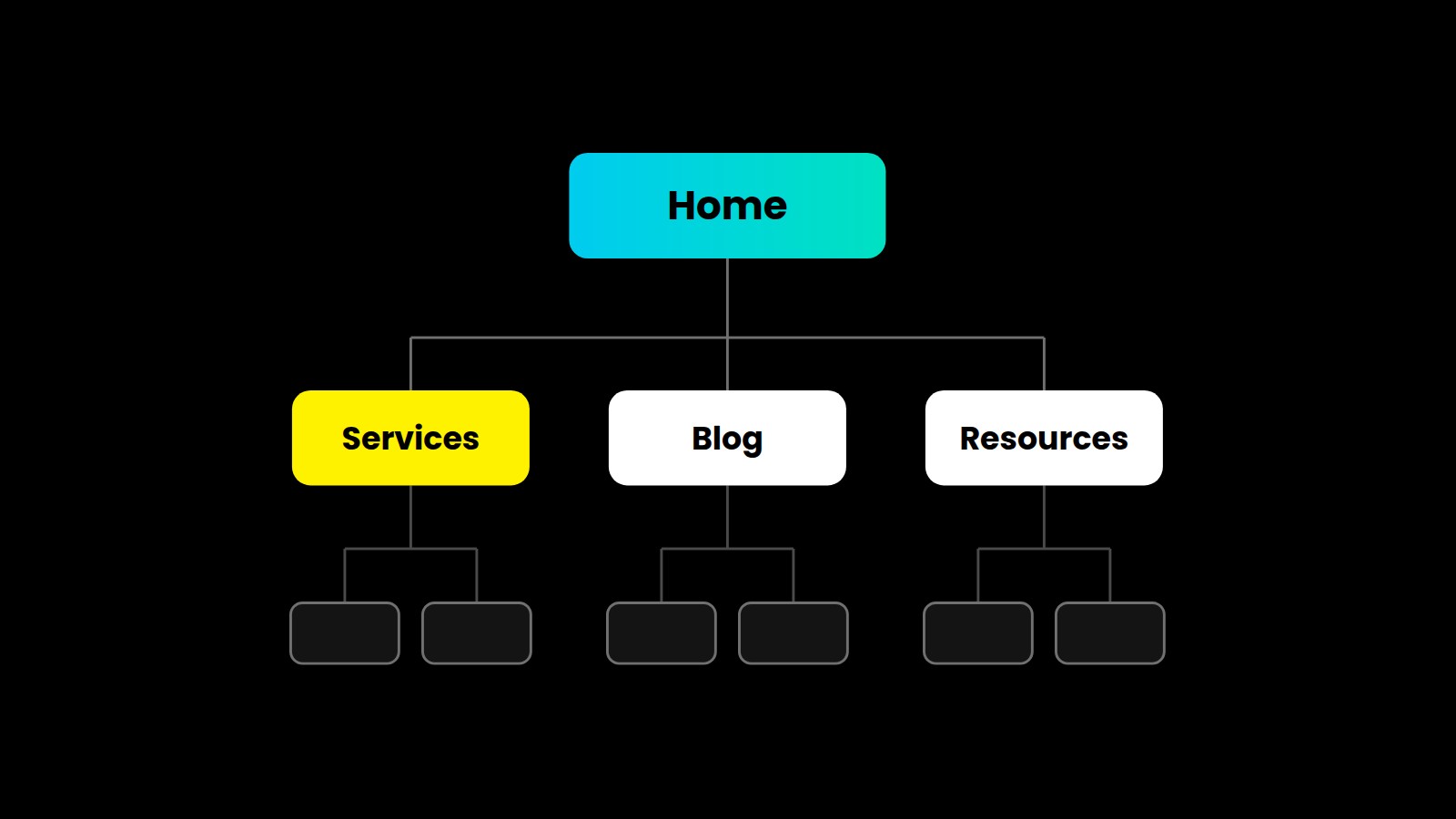
With a keyword map in hand, website planning becomes much more straightforward. The sitemap is simply a list of pages, each one built to rank for a specific group of keywords and move a specific type of visitor closer to enquiring.
We start with the money pages. These are the service or product pages that bring in revenue, and they get the most attention in design, copy and SEO. A typical service business sitemap looks something like this.
- Home page targets your brand name and your broadest commercial keyword, and explains your positioning in one screen
- Service or product pages each target one core keyword cluster, such as “commercial cleaning Brisbane” or “home loan broker”
- Location pages capture local searches for each area you serve, if location matters to your clients
- About us tells your story and shows the people behind the business, which builds trust with both visitors and Google
- Case studies or portfolio proves you have done the work before
- Blog or resources answers the questions your ideal clients ask before they are ready to buy
- Contact makes the next step easy
The rule we follow is one keyword cluster per page. When two pages compete for the same term, they usually both rank worse. A clear structure also makes it easier for AI search tools like ChatGPT and Gemini to understand exactly what you offer and who you offer it to.
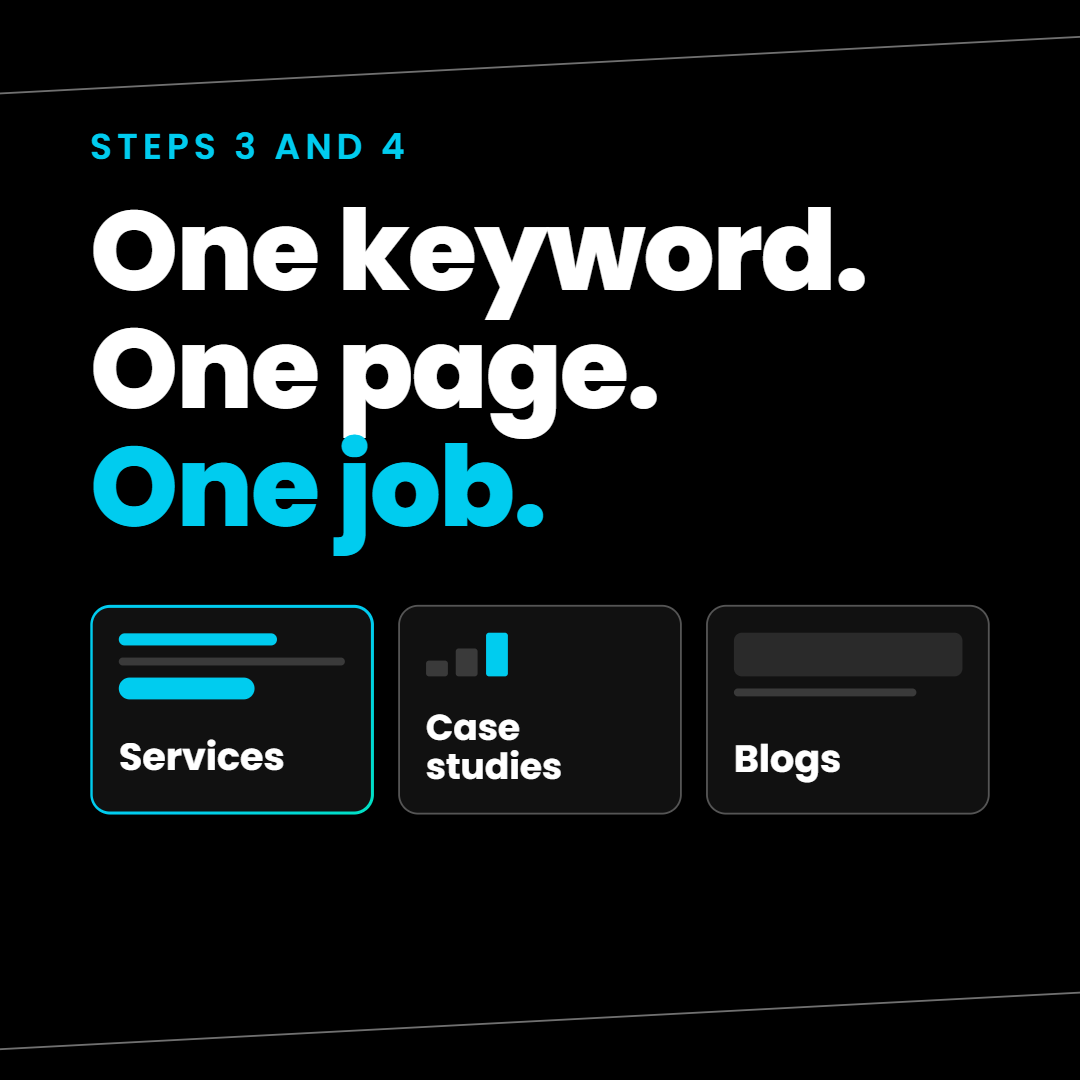
This is the stage where strategic web design and strategic website development meet. The sitemap tells our web design and custom website development team what needs to exist, how it connects and which pages deserve the most investment.
Step 4. Design templates for the pages you will keep adding
A website is never finished. You will add new services, publish new case studies and write new articles for years. That is why we design reusable templates early, so every new page follows a proven structure and the site stays consistent as it grows.
Most service and product businesses need three core templates.
- Money page template includes a keyword focused heading, a short statement of the problem you solve, your process, proof such as results and testimonials, FAQs and a clear call to action
- Case study template covers the client, their challenge, what you did, the measurable result and a quote from the client
- Blog template includes an author bio, a table of contents for longer articles, links to related services and a call to action that fits the topic
Good templates also bake in the technical details AI tools now handle well, like schema markup, heading structure and image alt text. Our UI/UX design team builds each template around how real visitors scan a page, so the important information lands in the first few seconds.
Step 5. Build an internal and external link structure that works
Links tell Google which pages matter most and how your content fits together. The final step in our web design strategy is planning those connections before launch.
Internally, we use a hub and spoke model. Each money page is a hub, and the blog articles and case studies related to it link back to it with descriptive anchor text. For example, an article on choosing a finance broker would link to the broker service page using a phrase like “home loan broker in Sydney” instead of “click here”. We aim for two or three money page links per article, placed where they genuinely help the reader.
We also check that your navigation and footer point to the same URL for each service. Two different URLs for the same page split your link equity and confuse search engines, and it is one of the most common issues we find in audits.
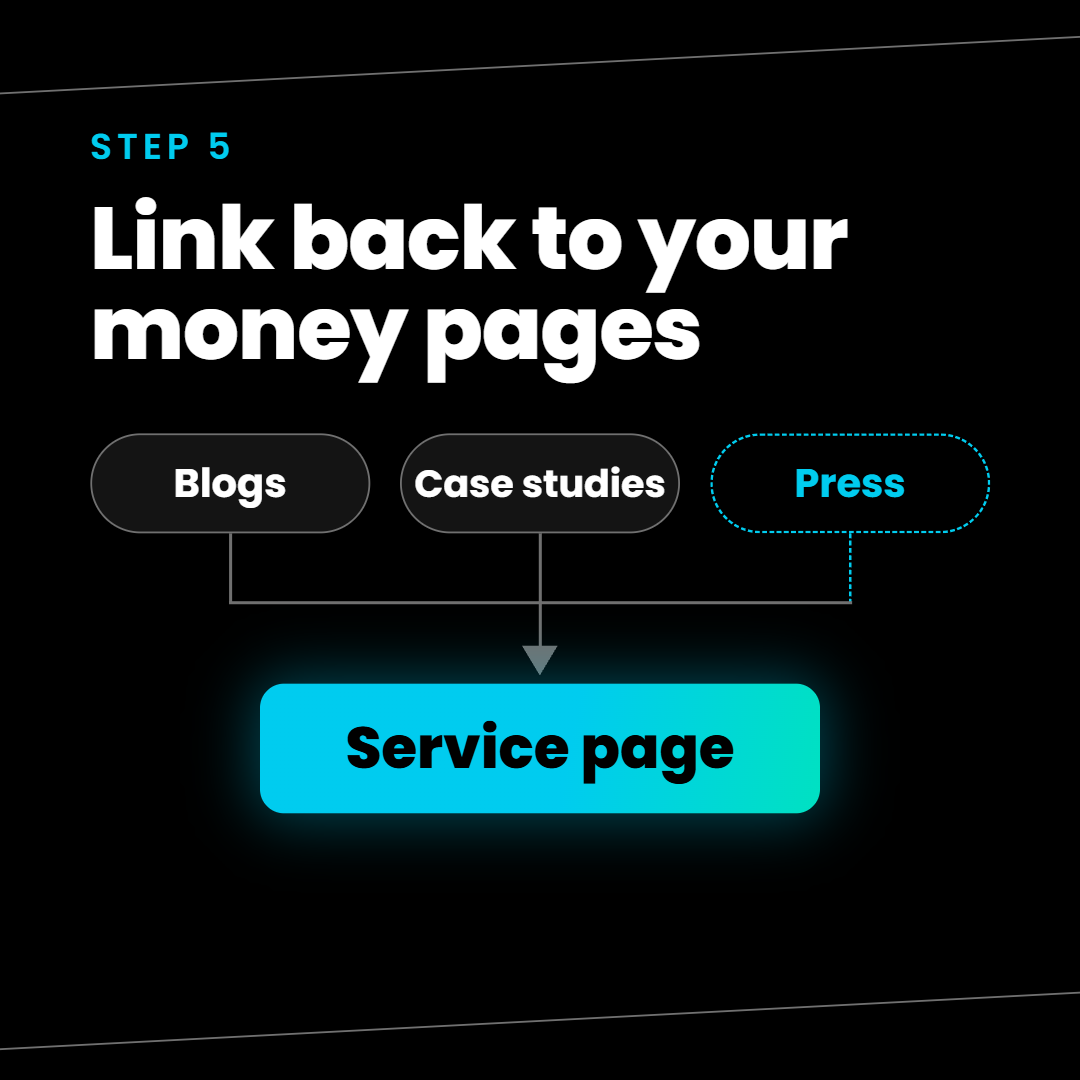
Externally, the goal is earning links and mentions from relevant, trusted websites. That includes industry associations, local business directories, suppliers, partners and media coverage. A link from a respected site in your industry or region is worth far more than dozens of random ones.
AI can now crawl your site, map every internal link and suggest where new ones belong. Our SEO services team uses these tools daily. Earning the external links still depends on having something worth linking to, which brings me to the most important part of this article.
What will set your website apart when AI does the rest
Look back over those five steps. AI can already handle a big portion of steps two to five, and it gets better every month. Keyword clustering, sitemap drafts, template outlines, schema and internal link audits are quickly becoming available to anyone with a subscription and a free afternoon.
So when every competitor has a clean structure and well optimised pages, the deciding factor moves to things AI cannot invent for you. In my experience, these are the four that will matter most.
1. Real results and case studies
Anyone can claim they are great at what they do. Very few businesses can show it with numbers and names. When we published the OES case study, it showed annual website visits growing from 15,000 to 40,000. The Finn Group saw a 487% lift in traffic, and Eakins Finance and Insurance saw 1,190%. Those results belong to our clients and to us. No AI tool can generate them, and they are exactly the proof that convinces a prospect and gives AI search tools something credible to cite.
2. First person expertise
AI writes from the average of everything already published. You write from what happened on your jobs, with your clients, last Tuesday. Content written in the first person by the people who actually do the work carries detail that generic content cannot match, like the mistake you see every week or the question every new client asks. That is also what Google’s EEAT guidelines reward, with experience listed first.
3. Novel ideas and original data
If your blog says the same thing as the top ten results, there is little reason for anyone to read it or link to it. Share your own data, your opinion on where your industry is heading and the lessons you learned the hard way. Original thinking is what earns links, shares and citations in AI answers.
4. Press, awards and reputation
Media mentions, podcast appearances, speaking at events, industry awards and a steady flow of genuine reviews all signal that real people trust you. These live partly on your website and partly across the web, and AI tools look at both when deciding which businesses to recommend.
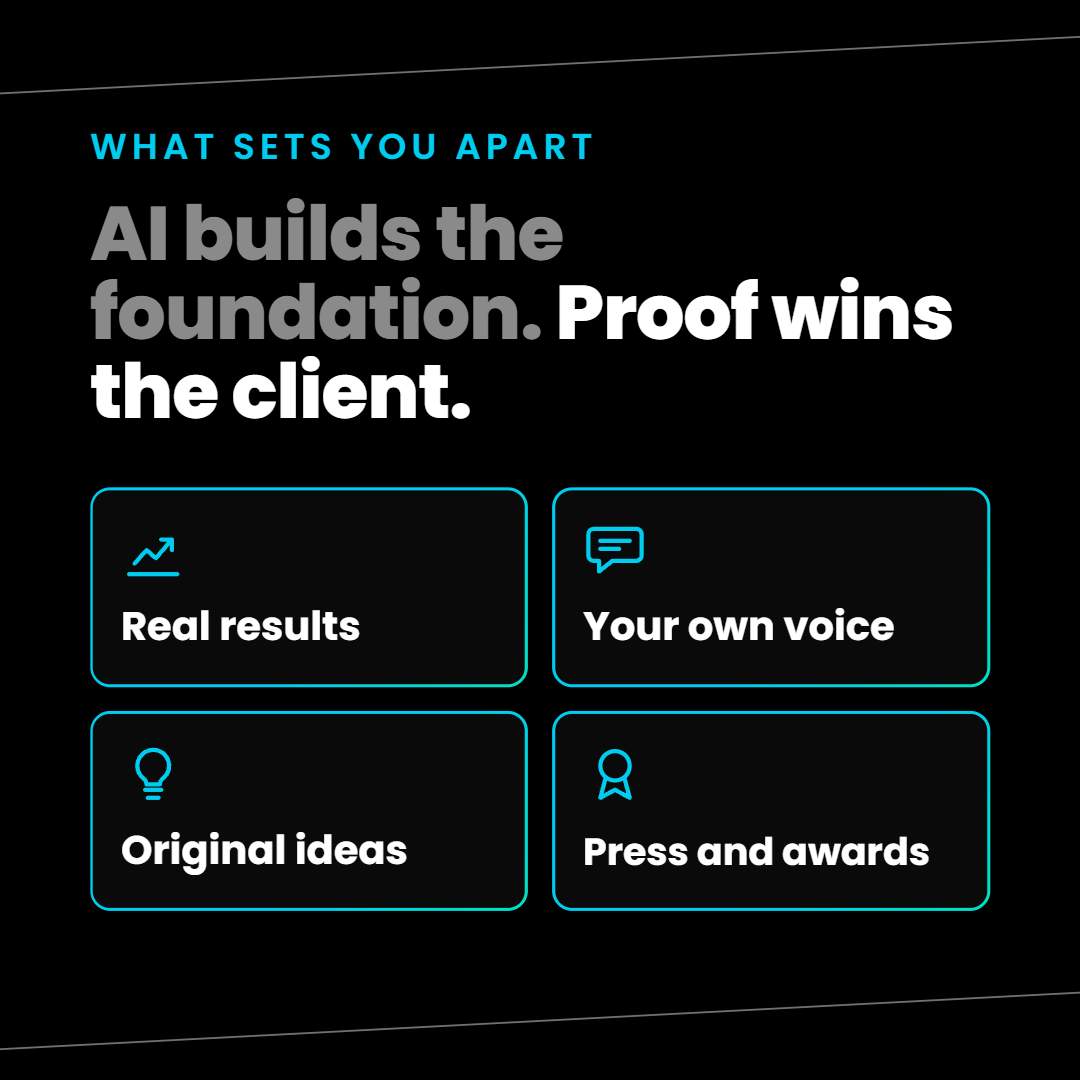
The businesses that win over the next few years will treat their website as a place to publish proof. The technical foundation will be expected. What you put on top of it is what people remember.
Ready to plan a website strategy that stands out?
If you are planning a new website or rebuilding an old one, start with your ideal clients and positioning, then let the keyword data shape your sitemap, templates and links. Use AI to move faster through the technical work, and spend the time you save collecting the results, stories and ideas only your business can share.
At Mindesigns, we help service and product businesses across Australia build websites around that kind of proof. Book a free strategy session with our team and we will show you where your biggest website opportunities sit.
FAQ
What is a website strategy?
A website strategy is a plan that connects your business goals to the structure and content of your website. It defines who the site is for, which keywords each page should rank for, how pages link together and what action you want visitors to take.
What is the difference between website strategy and website planning?
Website strategy sets the direction, covering your ideal clients, positioning and keyword targets. Website planning turns that direction into a sitemap, page templates and a content and linking plan your designers and developers can build from.
Can AI create a website strategy for my business?
AI can handle much of the technical side, including keyword grouping, sitemap drafts and internal link audits. It still needs your input on ideal clients, positioning and real results, because those are what make a strategy fit your business and help your website stand out.
How many pages does a service business website need?
Most service businesses need a home page, one page per core service, an about us page, a contact page, case studies and a blog. Add location pages if you serve several areas. The right number depends on how many keyword clusters your research shows are worth targeting.