For Marketing Leaders
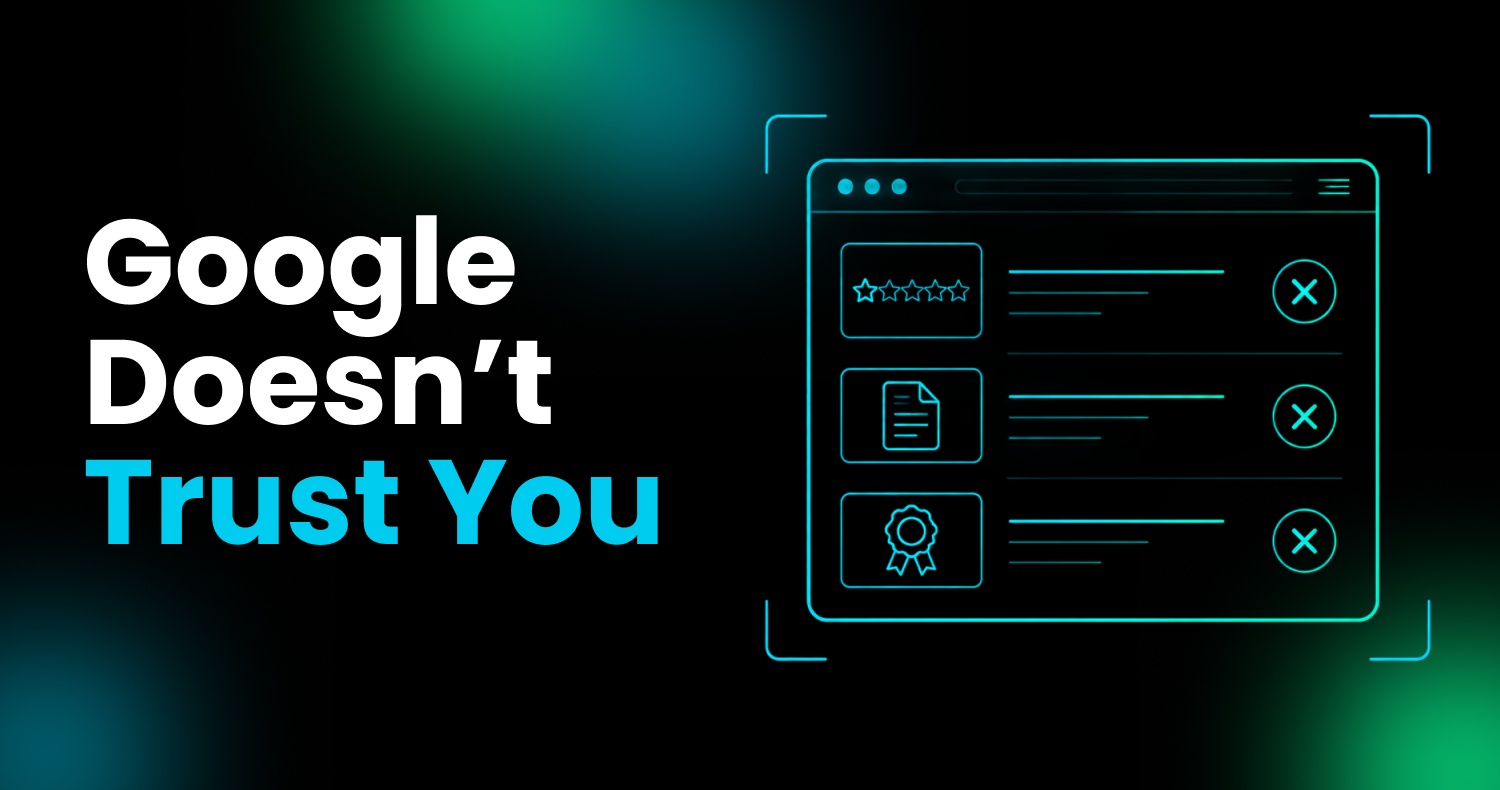
After more than eight years working in SEO and hundreds of strategy sessions with business owners across Australia, I’ve noticed a pattern that genuinely worries me. Most businesses are still doing SEO the way it was done in 2015. They’re chasing keywords, buying links, and publishing thin blog posts while completely ignoring the thing Google actually cares about now. That thing is whether your website proves you’re a real, credible, experienced business.
It has a name. Google calls it E-E-A-T, which stands for Experience, Expertise, Authoritativeness, and Trustworthiness. In my experience, it’s the single most neglected part of most websites I audit. It’s a silent killer because you won’t see it in any error report. Your site loads fine, your pages are indexed, and yet your rankings quietly stall or slide, and nobody can tell you why.
I can usually tell you why within ten minutes of opening a site. Let me show you what I look for.
What E-E-A-T Actually Is (In Plain English)
E-E-A-T isn’t a ranking factor you can toggle on. It’s the framework Google’s quality raters use to judge whether a website deserves to be trusted, and it increasingly shapes how the algorithm evaluates sites, especially for anything involving money, health or major decisions.
Mostly, because AI can’t duplicate this stuff. Break it down, and it’s just common sense.
Experience. Have you actually done the thing you’re writing about? First-hand, demonstrable experience.
Expertise. Are the people behind the content qualified? Do they have credentials, training and a track record?
Authoritativeness. Do others in your industry recognise you? Partnerships, certifications, mentions and reviews.
Trustworthiness. Can a stranger verify you’re legitimate? A real address, real people, real policies and real results.
Here’s the uncomfortable truth. Google is essentially asking the same questions a skeptical customer asks. If your website can’t answer them, you’re losing both.
The Page Everyone Ignores Is About Us
In strategy session after strategy session, I open a business’s About Us page and find one of two things. Either a wall of generic “we’re passionate about excellence” filler, or worse, nothing at all beyond a paragraph written five years ago.
This is a massive mistake, and here’s why. Your About Us page is where E-E-A-T lives. It’s the one page whose entire job is to prove you’re real and credible. When it’s empty, every other page on your site is weakened.
A strong About Us page should show three things.
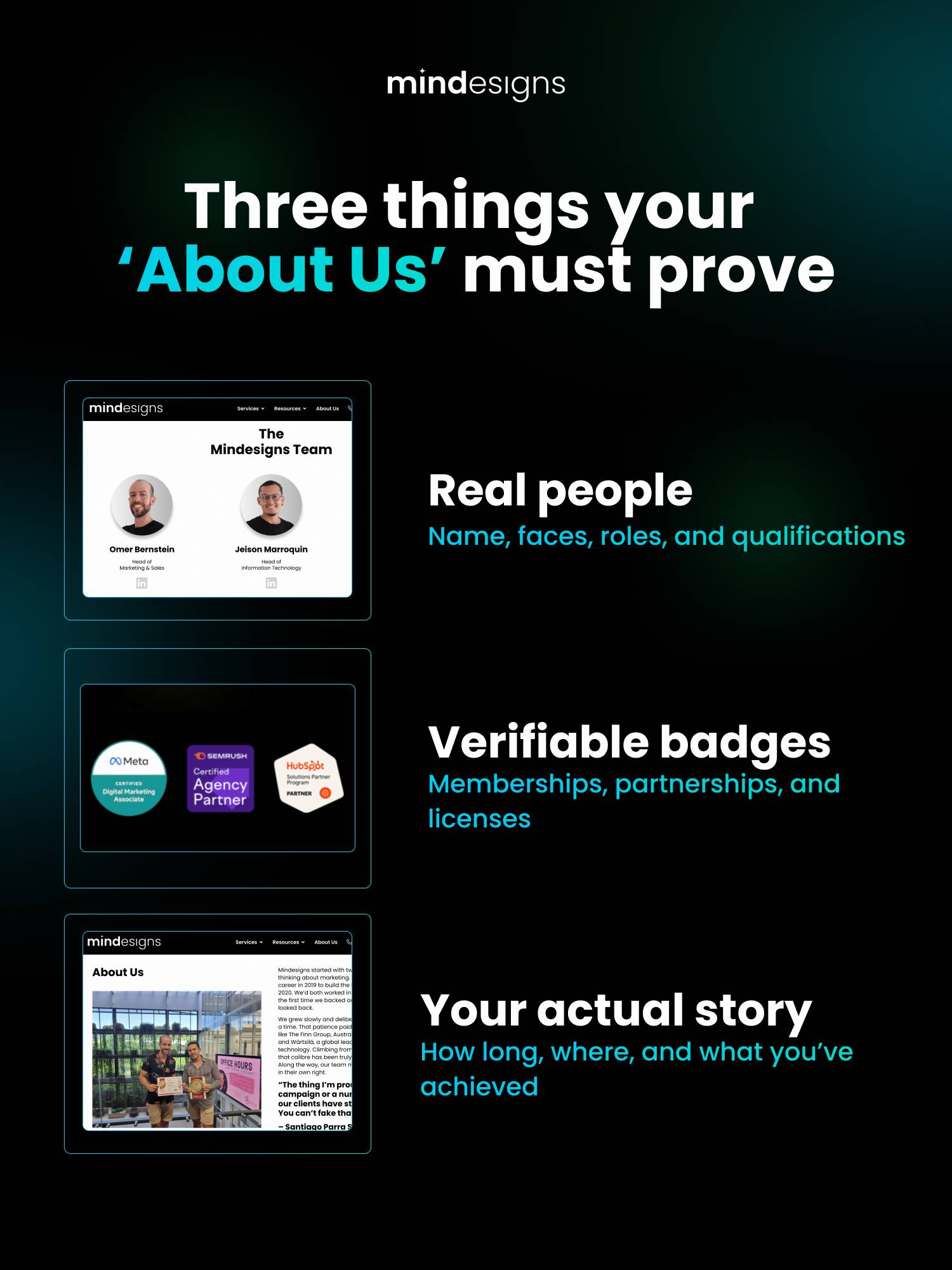
Real people with real credentials. Names, faces, roles and qualifications. If your team holds certifications, list them. If your founder has 20 years in the trade, say so specifically. “Our director is a licensed second-hand dealer with over two decades in precious metals” beats “we have years of experience” every single time.
Badges and certifications that can be verified. Industry memberships, official partnerships, licenses and awards. At our agency, being Semrush Agency Partners is something we display proudly. Not as decoration, but because it’s independently verifiable proof that we meet a recognised standard. Whatever the equivalent is in your industry, it belongs on your site.
Your actual story and roadmap. How long you’ve operated, where, and what you’ve achieved. Numbers and specifics build trust. Vague claims destroy it.
The Footer Is 40 Pixels of Wasted Trust
Here’s a detail almost everyone misses. Your footer appears on every single page of your website. It’s prime real estate for trust signals, and most businesses fill it with nothing but a copyright line and a privacy policy link. Not even that, in most cases.
Your footer should carry your physical address, your ABN, your certifications and partner badges, and links to your key trust pages. Every page a visitor (or Google) lands on then carries a baseline of legitimacy. It’s one of the highest-leverage, lowest-effort E-E-A-T fixes available, and I’d estimate fewer than one in ten sites I review does it properly.
Pages Feeding Each Other Creates an Architecture of Trust
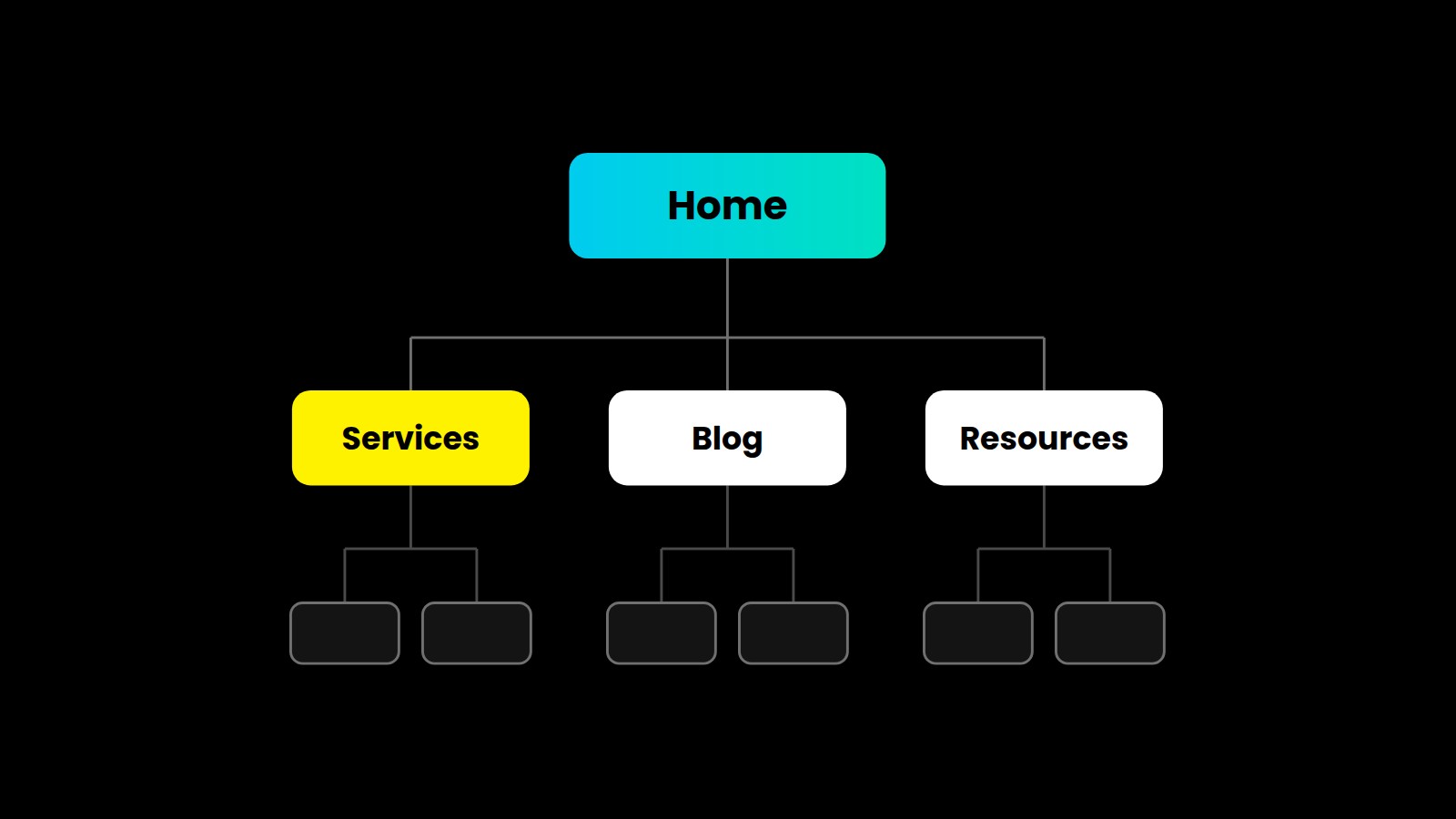
The biggest mindset shift I try to give business owners in strategy sessions is this. Your website is not a collection of separate pages. It’s a system, and the pages need to feed each other. It is very logical once you get it; let me explain.
Think about the priority pages and what each one’s job is.
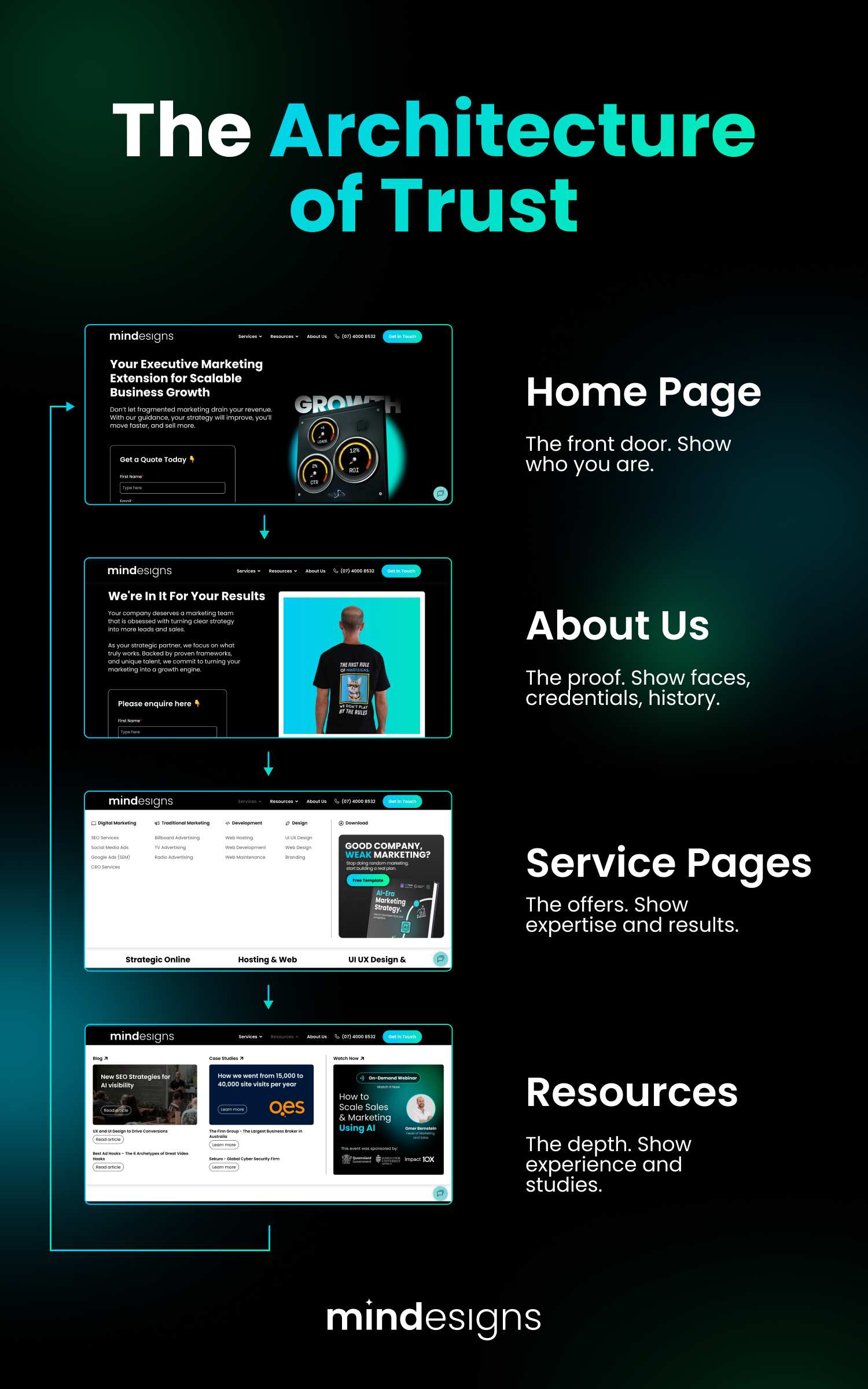
Your home page is the front door. Its job is to establish, within seconds, who you are, what you do, and why you can be trusted, then route people to the right place. Trust signals belong above the fold, not buried at the bottom.
Your About Us page is the proof. It backs up every claim your home page makes. Your home page says “trusted experts” and your About Us page shows the faces, credentials, and history that make it true.
Your service pages are where decisions happen. Each one should demonstrate expertise on that specific service. Not generic copy, but evidence of how you do the work, what results you’ve achieved, and who on your team delivers it. Each service page should also link naturally to the About Us page and to relevant supporting content, like blogs that explain complex terms, specific methodologies, processes, or the like.
Your supporting pages and resources, meaning guides, articles, case studies and FAQs, are where experience gets demonstrated in depth. This is where you show, not tell. A detailed guide written from genuine first-hand experience does more for your E-E-A-T than fifty thin blog posts written to hit a keyword quota.
When these pages link to each other with purpose, from home page to services, from services to proof, and from articles back to services, you create an internal ecosystem where authority flows through the whole site. When they sit in isolation, each page has to earn trust from scratch, and most can’t. Linking needs to make sense to people and to algorithms, not just for the sake of the number of links; that’s the old way that’s completely dead.
What This Looks Like When It Works
This isn’t theory. When we rebuilt the trust architecture for Sell Gold Sydney, a business in an industry where trust is literally everything because customers are handing over gold, the focus wasn’t tricks. It was proving legitimacy at every touchpoint through credentials, licensing, transparent processes, real reviews, and pages structured to reinforce each other. The result was sustained growth in rankings and, more importantly, in customers who arrived already trusting the business.
We saw the same pattern with OES. Strengthening the signals of who is behind the business and why they’re qualified lifted performance across the site, not just on one page. That’s the nature of E-E-A-T. It’s sitewide. Fix it and everything you do afterward works better. Ignore it, and every other SEO dollar you spend is fighting uphill.
Where to Start (A Priority Order)
If you take nothing else from this article, take this sequence. In strategy sessions, this is exactly the order I recommend.
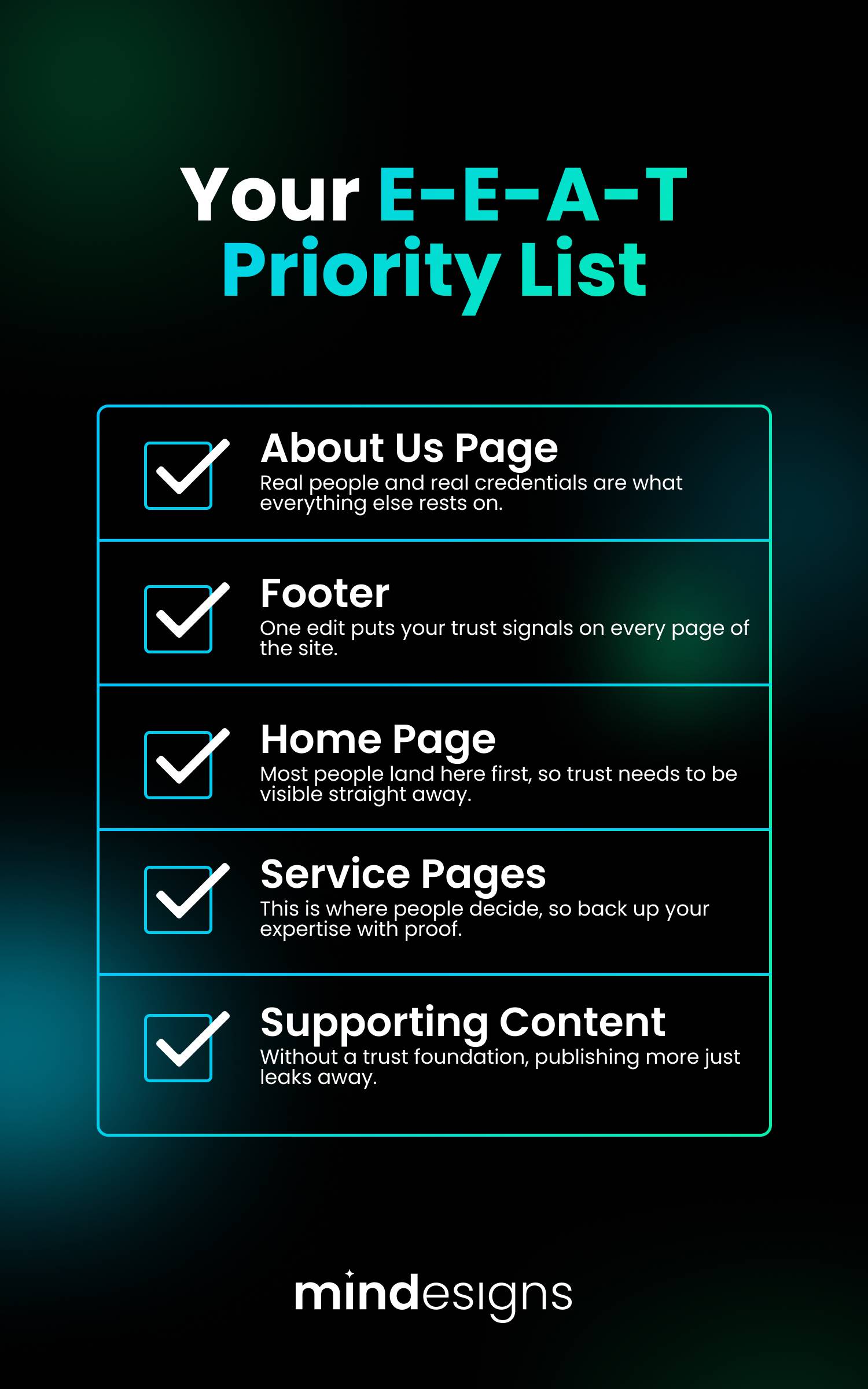
- About Us page first. Real people, real credentials, real badges and a real story. This is the foundation.
- Footer second. Address, ABN, certifications and trust links on every page, sitewide, in one edit.
- Home page third. Trust signals above the fold and clear routing to services and proof.
- Service pages fourth. Evidence of expertise on each one, linked to your proof pages.
- Supporting content last. Fewer, deeper resources written from genuine experience, each one linking back into your core pages.
Super effective tip: get Claude or ChatGPT to crawl your site and ask it what you can improve regarding E-E-A-T. You will be surprised how effective this is in finding issues you were never aware of.
Notice that content comes last. That surprises people, but it’s deliberate. Publishing more content on a site with no trust foundation is pouring water into a leaking bucket.
The Bottom Line
The old way of doing SEO treated Google like a machine to be gamed. The new way recognises that Google is trying, imperfectly but persistently, to identify businesses that are genuinely experienced, expert, authoritative and trustworthy. The businesses still stuck in the old way are being quietly filtered out, and most of them will never know why.
The good news? Most of your competitors are neglecting this too. That means an honest, thorough E-E-A-T overhaul, starting with that lonely, forgotten About Us page, is one of the biggest competitive advantages available in SEO right now.
You’ve already done the hard part by building a real business with real experience. Now make sure your website proves it.
Article reviewed by Santiago Parra