Marketers & Business Owners

Consumer behavior models were designed to help marketers predict how people buy, but the reality of B2B Online Marketing looks nothing like those clean diagrams anymore. In fact, it has become even more unpredictable and prolonged, with the average B2B buying cycle lasting 11.5 months. Most buyers are already 70% through their process before they even speak to you, often with a preferred vendor already in mind. So, how can you be the ultimate choice?
Today’s B2B purchase is shaped less by your sales script and more by the invisible conversations happening inside Slack threads, internal peer groups, and private messages. Because the buying path has changed, your marketing model must shift from funnel thinking to mapping these “moments of influence”.
B2B Online Marketing Shift From Funnels to Moments of Influence
The typical B2B purchase is rarely decided by one person. In most organisations, several people weigh in. These will range from the person who first feels the “pain”, to the IT team checking technical fit, to Finance reviewing cost, to leadership approving the final choice.
Research shows that an average of 10–12 stakeholders now influence a single B2B buying decision, each entering the process at different times with different priorities. As such, each of these touchpoints is in a different segment of the traditional sales funnel. Because of this, it’s far more accurate to think in terms of a web of influence rather than a linear funnel, where each touchpoint becomes its own opportunity to move the decision forward.
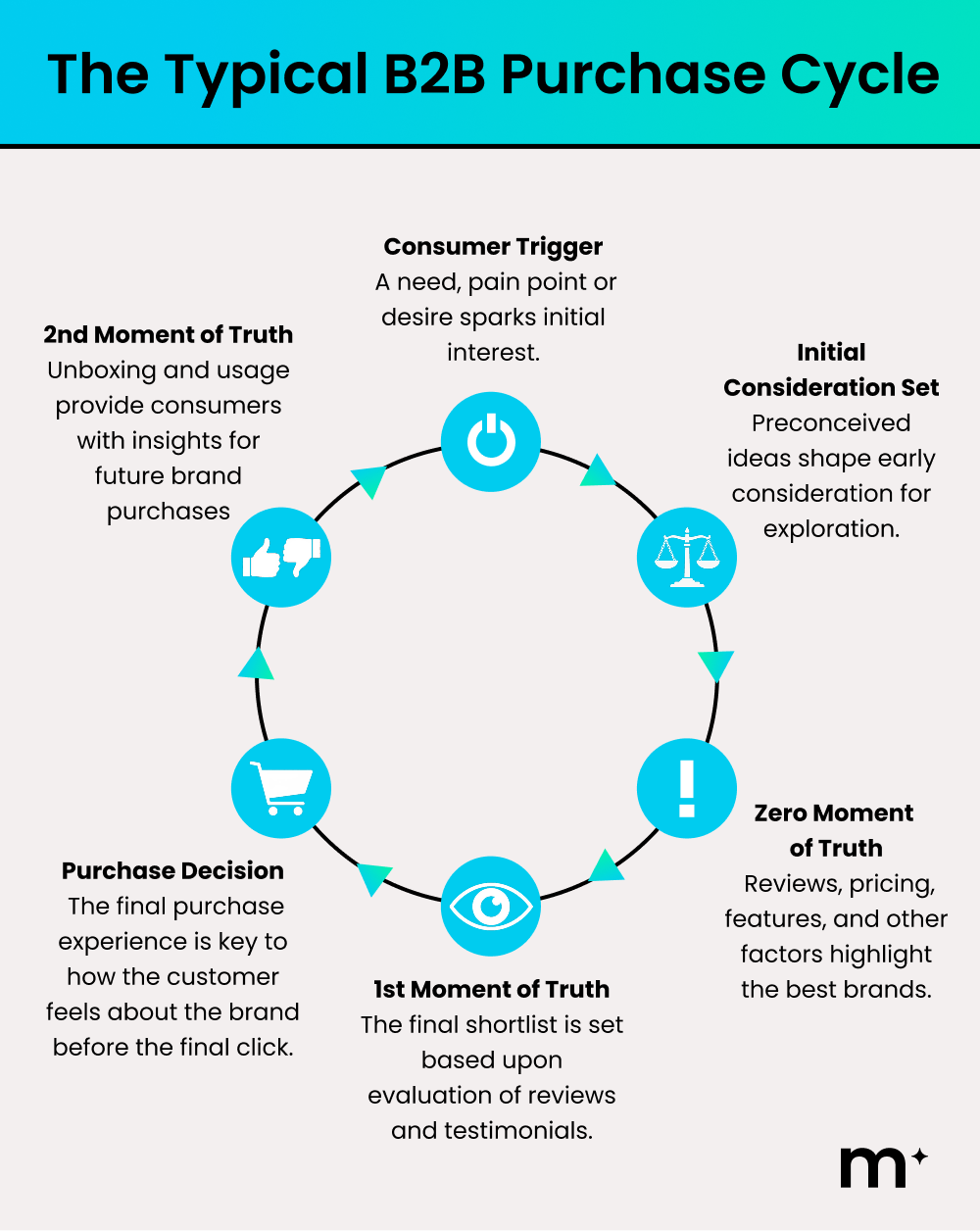
A simple example shows how this plays out in real life:
- Trigger: Carla, Head of Operations at a 40-store retail chain, sees rising inventory errors and delays. She decides it’s time to find a better inventory management system.
- Initial Consideration Set: She lists three known software vendors and adds another she discovers from a LinkedIn post.
- Zero Moment of Truth: She searches online, reads reviews, watches demos, and updates her shortlist as she loops through research over several days.
- First Moment of Truth: She brings in her IT Manager and Finance Lead. Both run their own research, sending Carla back to refine the shortlist again.
- Purchase Decision: In an internal meeting, a regional manager vouches for one platform based on past experience. That peer validation tips the decision.
- Second Moment of Truth: The team tries the product. Strong early results build confidence to renew or expand and make them more likely to recommend it internally or to peers in other companies.
For marketers, the takeaway is simple. You cannot control the order of the journey, but you can support it by showing up in the right moments. The path now unfolds on the buyer’s terms. Your job is to stay present where their decisions take shape. And to do that, you can download our Digital Strategy Template to map these moments more clearly.
How to Succeed in the New World of B2B Marketing
When buyers make decisions in places your analytics can’t see, the only way to stay relevant is to show up across the moments that guide those choices. This next section outlines the strategies that help you do exactly that.
Build Content Ecosystems That Drive Search and Discovery
Content marketing and SEO have existed for decades, but the landscape has never been more competitive. B2B buyers consume an average of 11+ pieces of content before deciding to make a purchase. They discover you in fragments across different platforms and at different times. Because of this, they must be able to find you wherever they choose to look.
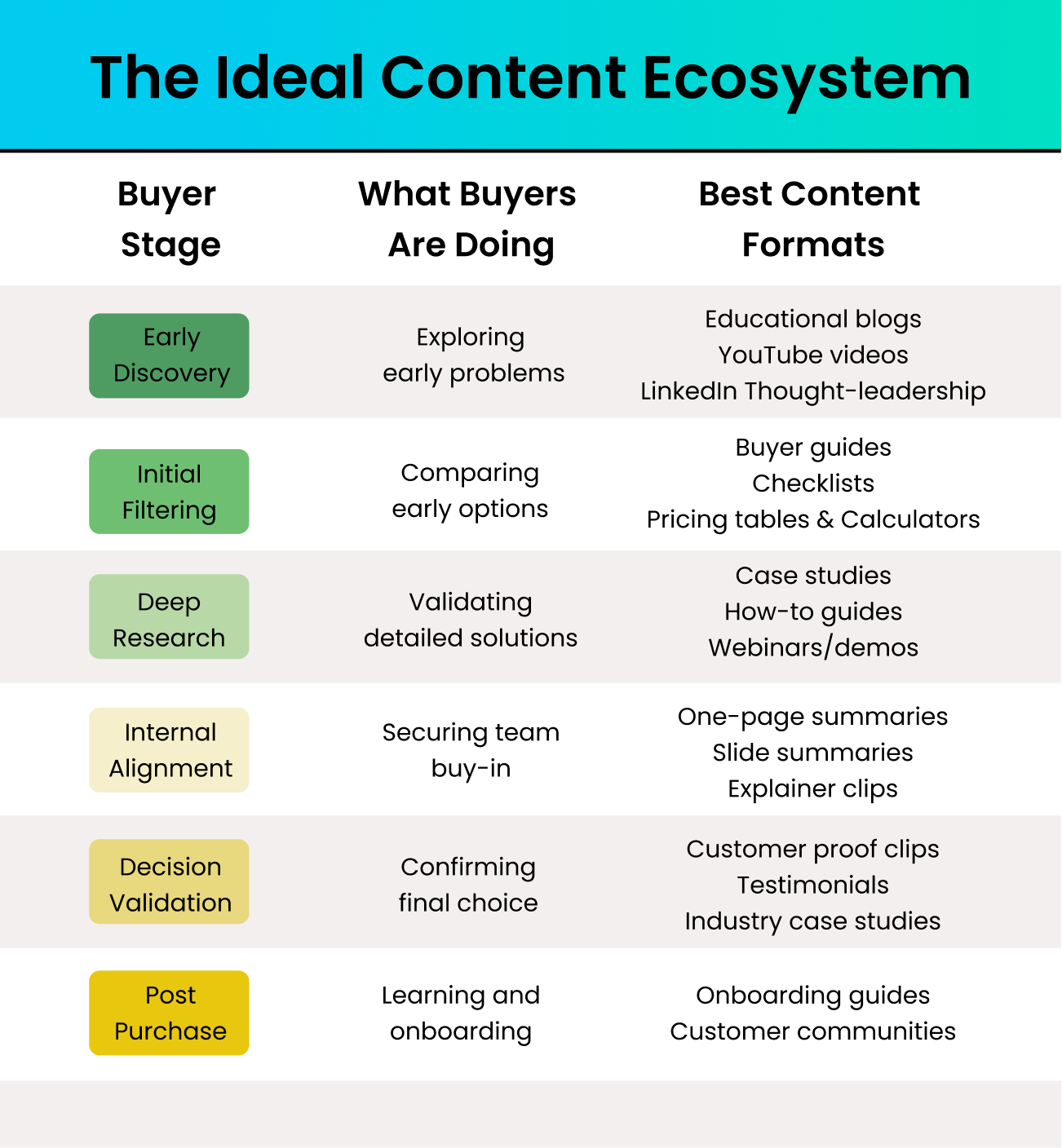
When we say content, we don’t mean just blogs or promotional videos. Buyers need content that matches their depth and intent. Below is a simple way to map content to buyer stages:
If your content matches the way buyers search and decide, you stay relevant at every step. The key is creating pieces that answer real questions, support internal discussions, and guide teams as they move from early curiosity to final validation.
Run an Always-On Account-based Marketing Engine Powered by Signals
As content becomes richer and more abundant, the challenge is no longer producing assets. Now, it is making each interaction count. You need a way to focus your effort where it matters most. This is where Account-Based Marketing becomes essential.
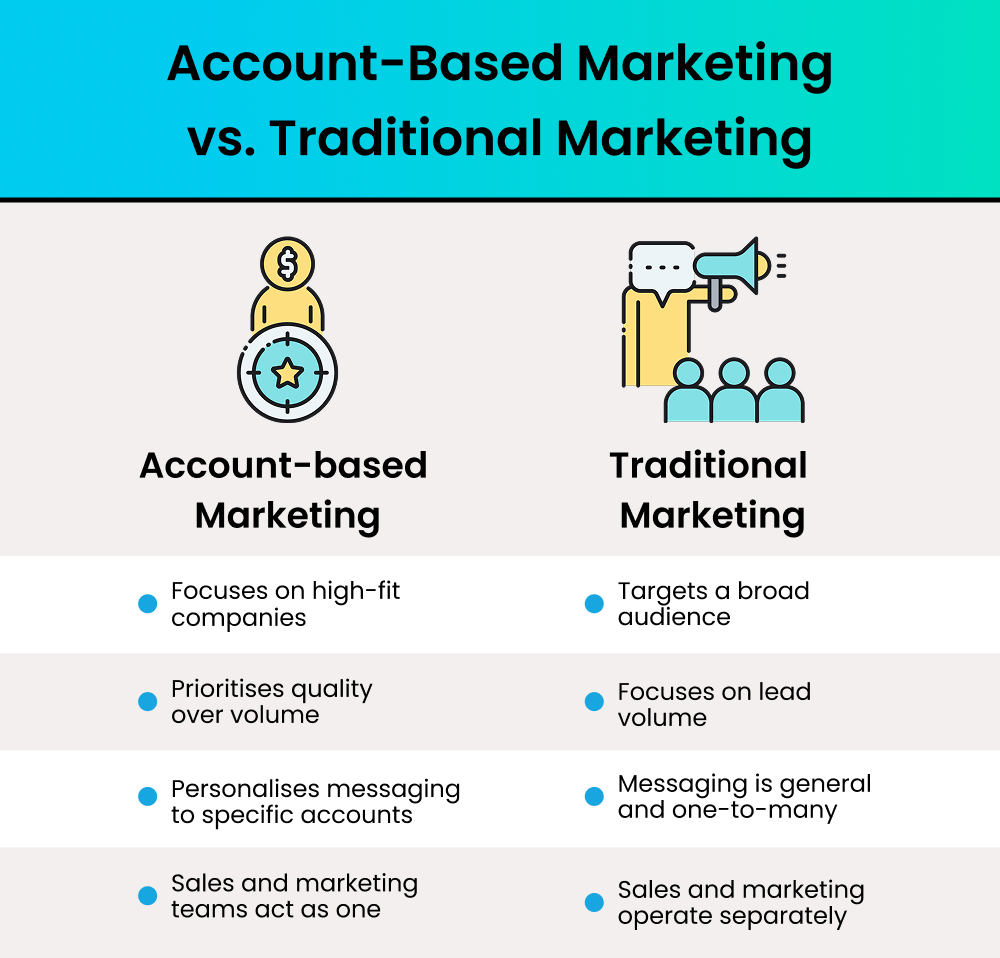
Account-Based Marketing (ABM) focuses your effort on a defined set of high-fit accounts. Instead of running broad campaigns, you tailor your messages and content to the companies most likely to buy from you. Teams that use intent and behavior signals are 2.5× more likely to close high-fit accounts, which shows how powerful targeted influence can be.
To run ABM well, pay attention to the signals that show when an account is active. Look at what topics they’re researching, which pages they keep returning to, and whether they fit your ideal customer profile. Use these clues to send the right follow-up, like a helpful email, a relevant ad, or a quick phone call outreach from sales.
Buyers show interest in short, unpredictable bursts. Your ABM engine needs to run every day so you can respond the moment those signals appear.
Earn Trust Inside Dark Social and Private Communities
Dark social refers to the parts of the internet that your analytics can’t track, like Slack groups, WhatsApp chats, and internal email threads. Chances are, your buyers rely on these platforms heavily to talk, share links, and compare notes. You may not see what happens inside these conversations, but your content still needs to reach them.
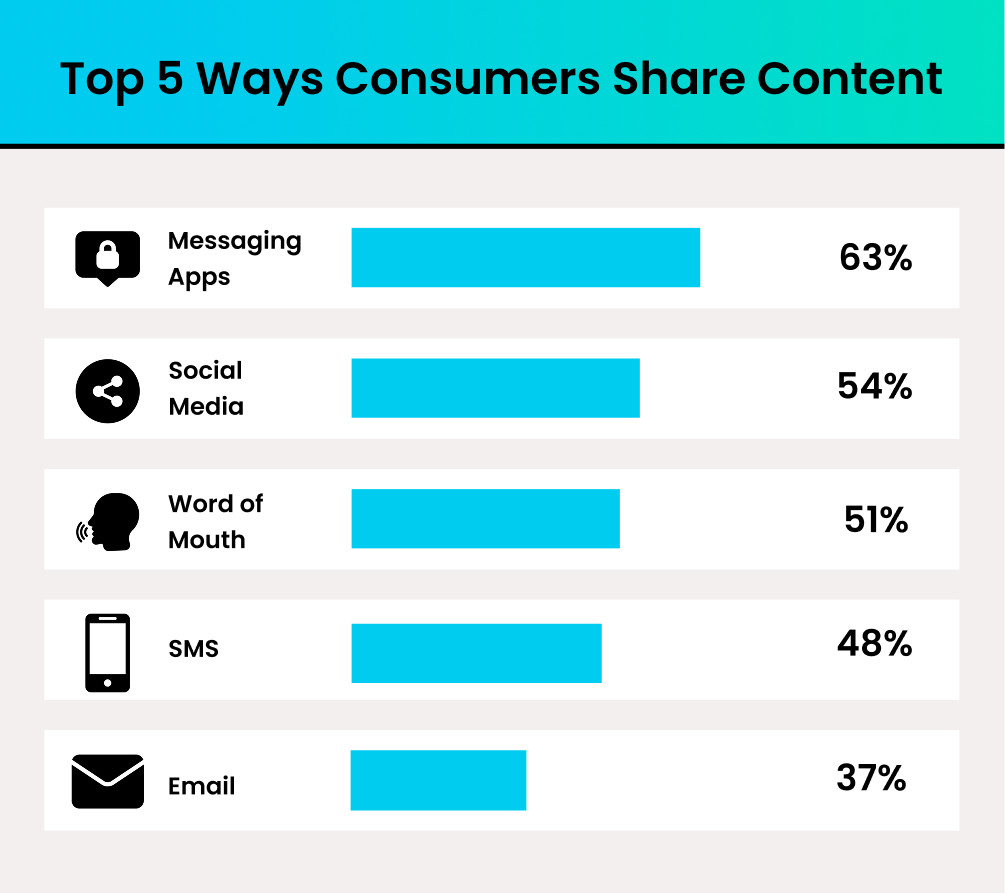
To earn trust in areas you can’t track, publish content that people naturally forward. Use formats like:
- Short clips
- Checklists
- Templates
- Simple tools
- Webinars
- Case studies
Beyond those, encourage your team to contribute authentically to industry discussions, especially on LinkedIn. This ensures your perspective enters the private spaces that influence decisions long before a demo request appears in your CRM.
Deploy AI as a Revenue Partner Across the Entire System
AI is already embedded in the workflows of many revenue teams across industries. It’s no longer experimental or niche. It has become a practical part of day-to-day operations in marketing, sales, and customer success.
It’s not just about ease and convenience. Teams using AI see about 30% higher win rates. That lift happens because AI parses large amounts of data in seconds, improves handoffs between teams, and spots buying signals humans often miss.
To adopt AI effectively, integrate it into the tasks that shape buyer decisions. Here’s how you can do it across the different functions in the sales and marketing teams:
| Function | Practical Use Case for AI |
| Paid Marketing | • Creatives variant testing • Performance anomaly alerts • Budget optimisation insights |
| SDR & BDR | • Account research summaries • Objection-handling suggestions • Meeting transcription |
| Sales | • Call summary notes • Tailored proposal drafts • Intent signal monitoring |
| Sales Admin | • Lead data cleanup • Pipeline status reports • Activity logging automation |
| Customer Success | • Churn risk alerts • Upsell opportunity • Sentiment trend checks |
| Content | • Webinar-to-clip edits • Transcript-to-article drafts • Persona tone rewrites |
The goal isn’t to replace people. It’s to give every part of the revenue team more leverage, so they spend less time on admin and more time influencing the moments that actually move a deal forward.
Turn Customers into Advocates
Advocacy grows when customers genuinely succeed with your product. This matters because loyal customers are far more persuasive than marketing. Referrals convert about 30 percent higher, retain longer, and carry a lifetime value advantage. In fact, a trusted recommendation is up to fifty times more likely to trigger a purchase than an ad.
Apart from making your product or service undeniably great, the best way to spark customer advocacy is by making the post-purchase experience smoother. Look at the exact points where your users get stuck and fix them.
- Add in-app walkthroughs for confusing setup steps.
- Rewrite unclear tooltips and workflows.
- Offer proactive chat support when errors appear.
- Generate first-week reports so users see quick wins.
Small improvements compound into trust. When customers feel supported at every step, advocacy happens on its own. Now let’s turn this into a clear action plan you can follow right away.
The Simple B2B Online Marketing Action Plan & Checklist
Your competitors are already moving in this direction. You should, too. Marketing now rewards teams that adapt fast and show up in the moments buyers actually make decisions. Modern marketing is about delivering the right message at the right time, not just pushing out content and hoping it resonates.
To make the next steps more actionable, here is a simple plan you can start today:
| Section | Action to Start Today |
| Buyer Journey | Map your current touchpoints |
| ABM | Identify your top target accounts |
| Content | Create one useful content hub and three supporting pieces |
| AI | Add one AI workflow to your process to streamline admin or repetitive tasks. |
| Advocacy | Audit your full customer experience journey |
If you need help strategising for the new way to do B2B online marketing, the Mindesigns team can guide you through every step. Get in touch with us so that our team can help you craft your new B2B online marketing strategy that delivers real results for your business.