Marketers & Business Owners
Why Most Ads Fail in 3 Seconds (And How You Can Fix It)
The biggest difference between winning and losing on social media is the hook. It’s the 80/20 of video performance. If you want your advertising content to perform well, your first priority must be to level up your hooks. Because the first few seconds of your video matter most.
After studying thousands of great video ads, I’ve realised that the best-performing content doesn’t reinvent the wheel. It just leverages one of six simple hook formats. Master one or two of these six, and you’re set.

This article breaks them all down with examples, along with a comprehensive framework for crafting your own high-performing hooks. These principles helped me create highly effective ad videos for dozens of our clients, and they can work for you too.
“I guarantee this will be the best article on ad hooks you ever read.”
The Psychology Behind Great Video Ad Hooks
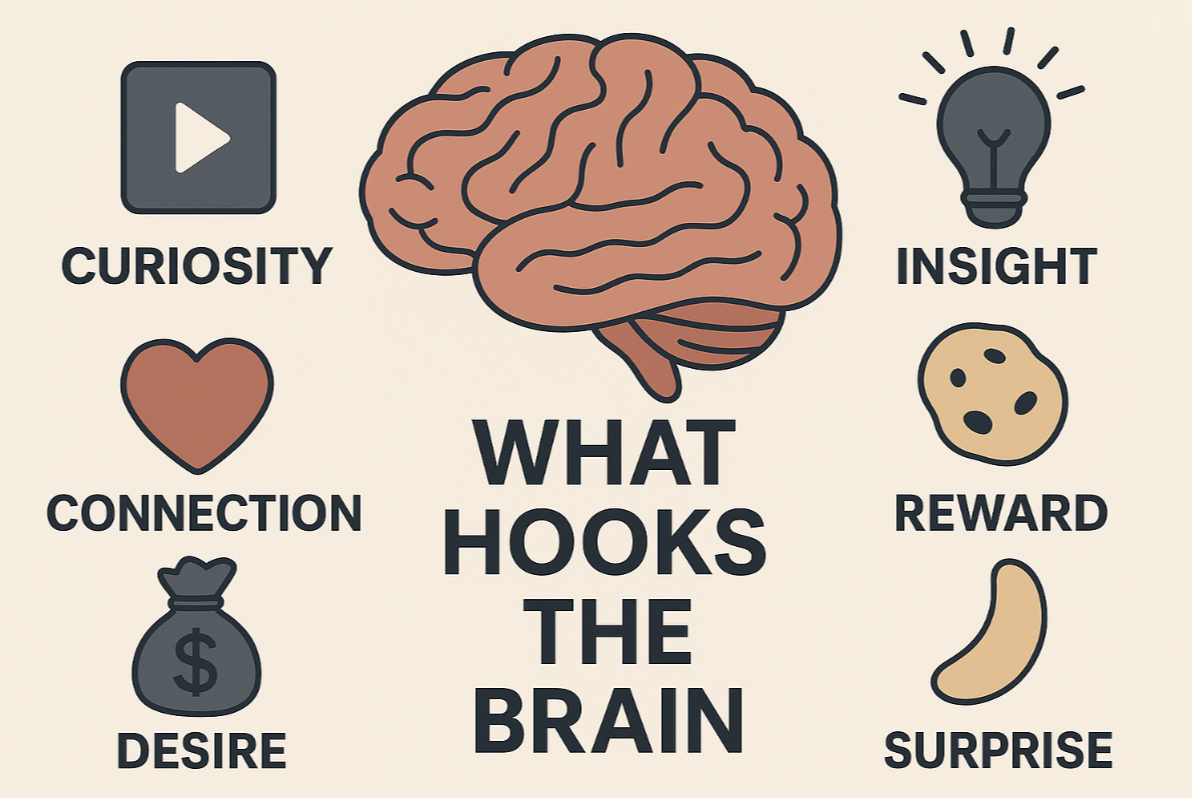
Hooks exist to create a loop of curiosity. It’s the mental rabbit hole that makes your viewer think, “This is interesting, I have to know what happens next.”
The easiest way to trigger this curiosity is through contrast. Viewers start the video believing one thing—and your hook introduces an unexpected alternative. The greater the gap between A (what they know) and B (what you reveal), the more powerful the hook.
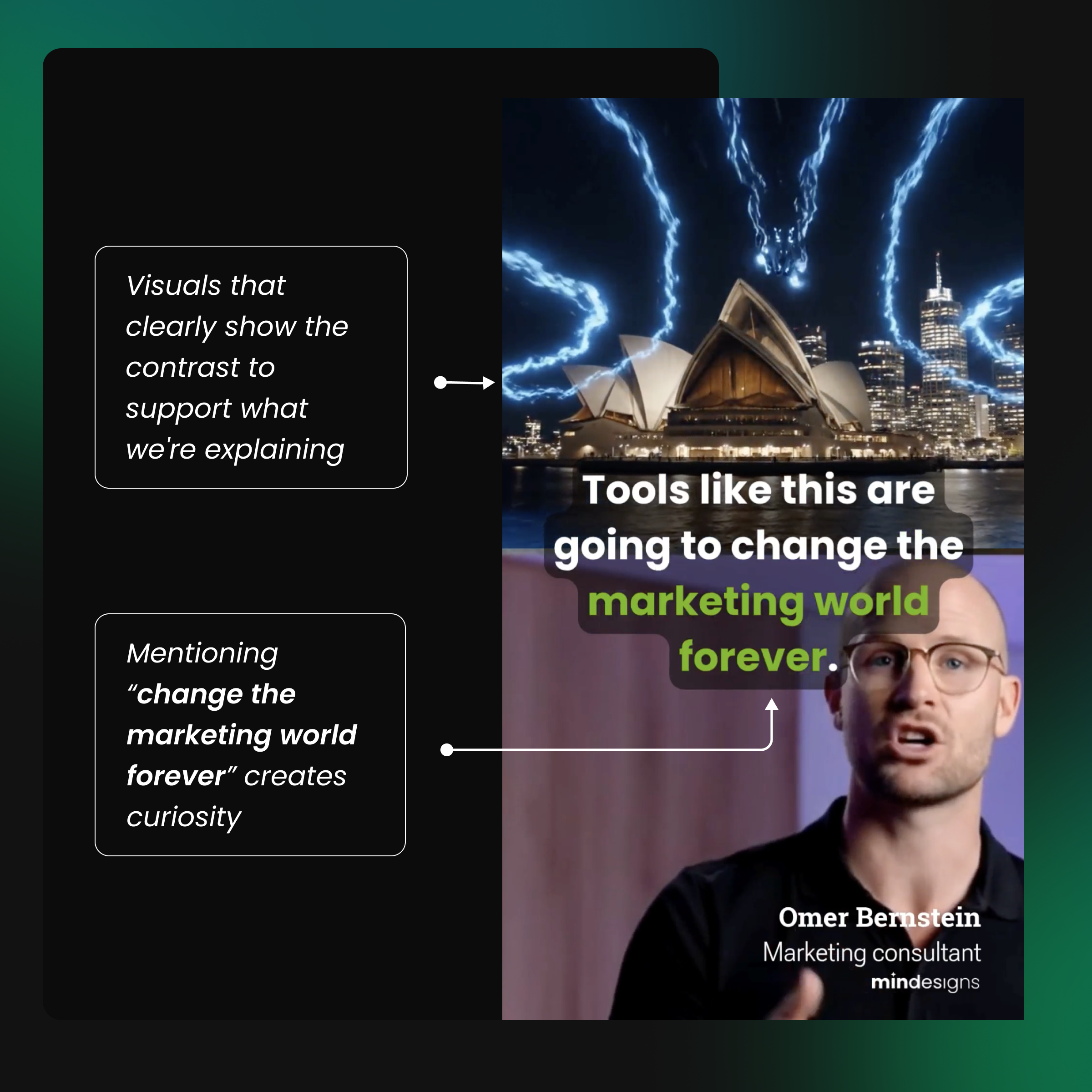
You only get 3–5 seconds to pull this off. So great hooks are designed to create that contrast fast, while aligning the spoken line, the on-screen visual, the text overlay, and the music or sound effect. Misalignment? That’s a scroll.
“Hooks are designed for one reason: to create a curiosity loop.”
There’s also a deeper psychological mechanism at play here. Our brains process visuals faster than sound. Viewers follow a subconscious sequence: visual → spoken hook → visual confirmation. The eye notices first, the ear catches up, and the brain checks the visual again to confirm what was just said.
That’s why alignment between all four components (spoken, visual, text overlay, audio background) of the hook is crucial. Without it, comprehension drops. With it, retention increases.
“The difference between 500 and 500,000 views is unlocking max alignment between those four things.”
The 6 Archetypes of the Best Ad Hooks
Let’s walk through the six foundational hook formats that top creators and advertisers use to craft great video ads and some of the best Facebook advertising campaigns.
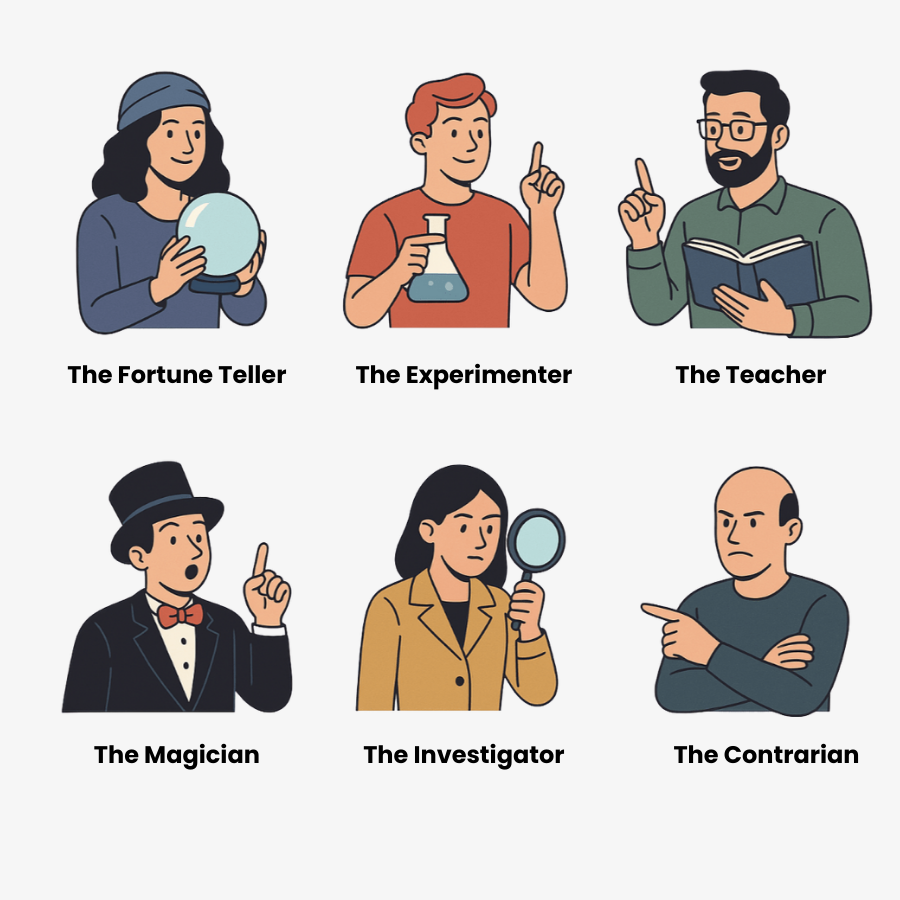
Once you learn them, you will start seeing them everywhere, from viral TikToks to high-converting Facebook ads. They’re simple, proven, and can be your key to getting some insane results.
1. The Fortune Teller
This hook format contrasts the present with the future. It teases change, and our brains love predicting the future. Some of us can become obsessed with it.
Example: “The End of The Console? Xbox Lost the Console War. Now It’s Redefining Gaming.”
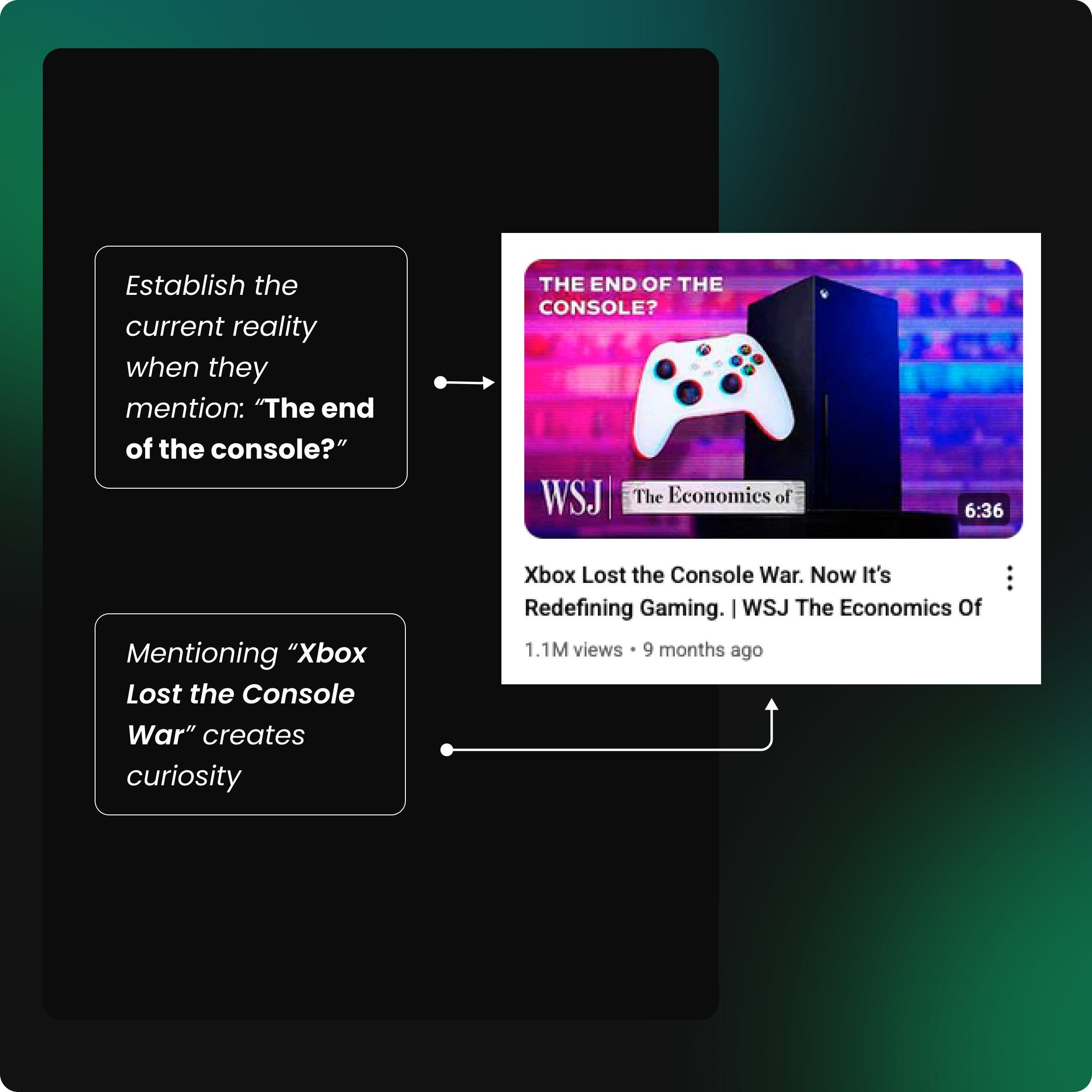
Use it when: You want to showcase an innovation, a shift in the market, or the next big thing. Think new tech, changing consumer behaviour, or game-changing products.
“This is the future of animation.”
Tactical Steps:
- Establish the current reality
- Introduce how the future might change
- Frame a question or statement teasing that future
2. The Experimenter
This one plays out like a peer-to-peer demo. You solved a problem or tried something new, and now you’re showing the result.
Example: “1 Blog Post (1 Day) vs AI 4 Blog Post (1 Hour) “
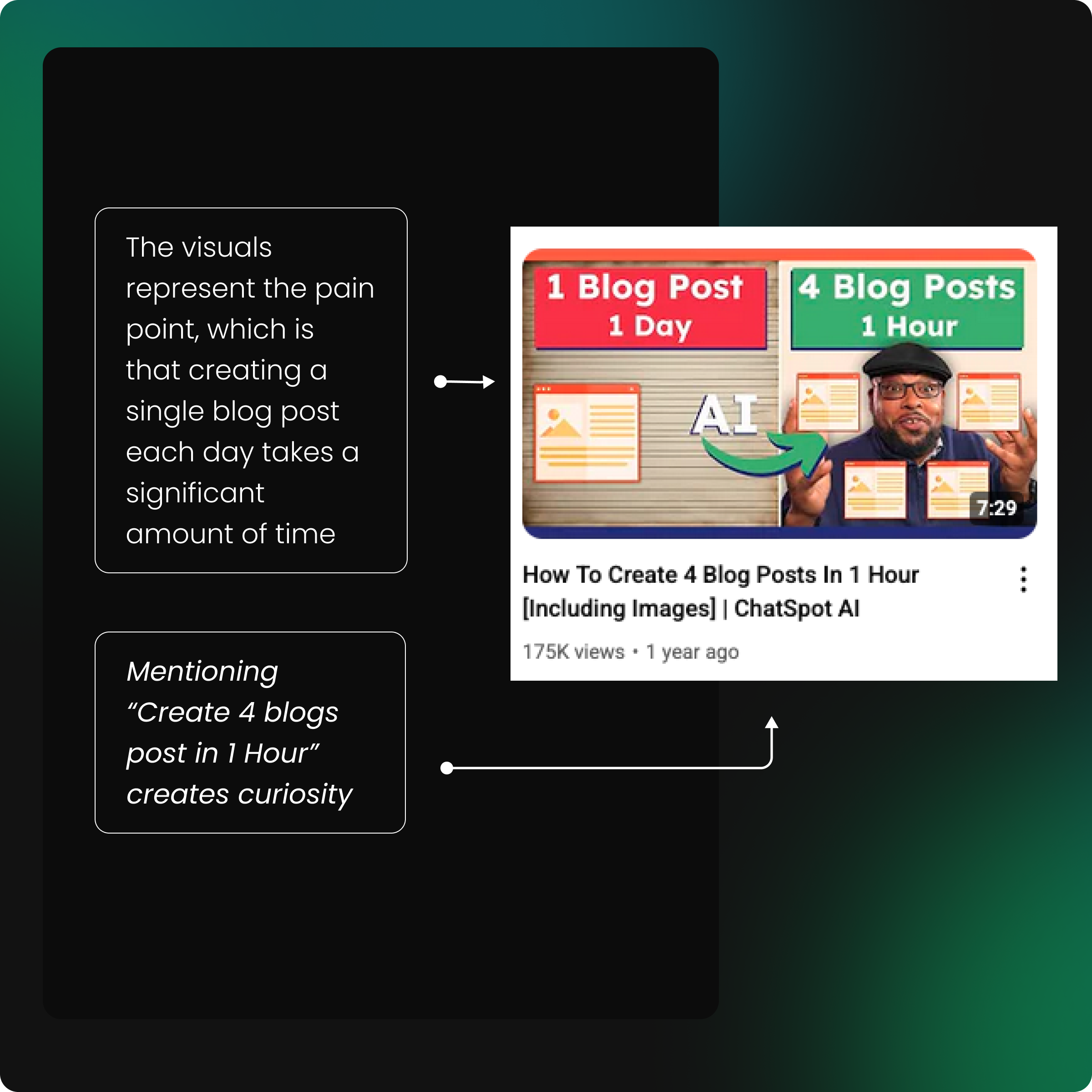
Use it when: You want to build trust by showing, not telling. This works especially well for UGC, product demos, or transformation stories.
Tactical Steps:
- Identify the pain point
- Run the experiment or show the solution
- Explain how it helped or what was learned
3. The Teacher
This is less about what you did and more about what they can learn. Think of it as a short, punchy masterclass.
Example: “Did Steve Jobs Micromanage? The Secret Art of Micromanagement with…”
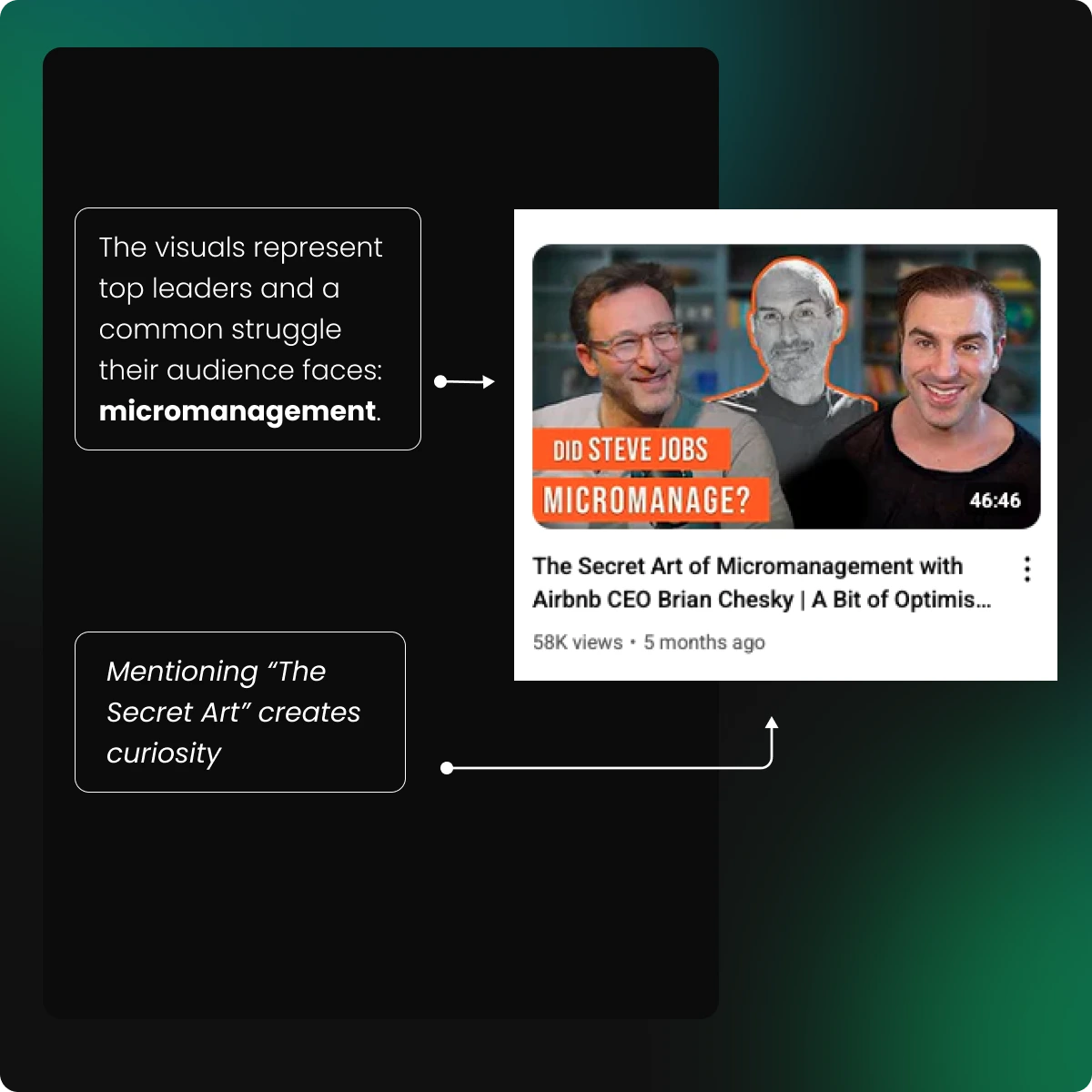
Use it when: You’re educating, breaking down a method, or delivering practical value. Especially powerful for B2B or expert positioning.
“Three things you can learn from Aritzia.”
Tactical Steps:
- Identify a struggle your audience faces
- Share the process or method that worked
- Teach the principles or steps behind it
4. The Magician
This one’s a stun gun. It uses visuals or rhythm to force attention. It might be a snap, a whip pan, or someone stacking cups while talking—anything that visually surprises. It’s basically like saying, “Look at this crazy car,” and enforcing it with a great visual that catches the attention (like a car that converts into a submarine).
Example: “Check this out. This trick helped me grow 10x faster on YouTube.”
Use it when: You need to stop the scroll. Stack it with another hook for even more impact.
“Check this out really quick…” (repeated as a scroll-stopper in dozens of viral videos)
Tactical Steps:
- Use a unique or rhythmic visual
- Add a pattern interrupt (snap, motion, prop)
- Reinforce it with a spoken line that makes the viewer lean in
5. The Investigator
This hook format digs into the unknown. It reveals a hidden insight, secret, or marketing move you’ve uncovered.
Example: “This brand sells out in seconds—but it’s not just because he’s a rapper.”
Use it when: You’re revealing something surprising, shocking, or under-the-radar.
“This is one of the sneakier marketing campaigns I’ve seen.”
Tactical Steps:
- Hint at an unknown or unspoken truth
- Set up the viewer’s lack of knowledge as contrast
- Deliver the insight clearly and confidently
6. The Contrarian
The boldest of the six. You come out swinging and say what others won’t. It works because it immediately sets up tension.
Example: “You have no creative ideas because your space sucks to live in.”
Use it when: You have a strong opinion that breaks the norm. Great for thought leaders and challenger brands.
“You’re doing your branding wrong. You should be doing this instead.”
Tactical Steps:
- Identify a common belief in your niche
- Share your opposing view without fluff
- Back it up with a reason, example, or proof
Choosing the Right Hook Format
Every video idea could use any of the six formats. The real decision is: which one gives you the most contrast?
Think about what emotion, shift, or surprise you’re trying to provoke. Are you trying to predict the future? Challenge popular opinion? Reveal something hidden? The hook should set up a tension or curiosity loop that makes viewers want to stay for the payoff. Let your visuals, audience, and desired reaction guide which format to use.
Let’s say you’re reviewing a backpack. Here is how you can use each of the archetypes:
- Fortune Teller: *”This backpack will change how Millennials travel.”
- Experimenter: *”I took this bag 7,000 miles. Here are 3 major design flaws.”
- Teacher: *”Here’s how to pack like a pro for international trips.”
- Magician: “Which of these bags is best for guys in their 20s?” (cut to rapid visuals)
- Investigator: *”Nobody is talking about this design flaw.”
- Contrarian: *”Everyone loves this bag. It’s overrated.”
Same topic, six different angles. Let the visual and contrast guide your decision.
How to Write a High-Converting Hook
Here’s the full step-by-step to crafting winning ad hooks:
Step 1: Find the visual. Pick the most scroll-stopping moment of your video. This is your key visual.
Step 2: Find the contrast. What do people currently believe, and how can you flip it?
Step 3: Pick your hook archetype. Which of the six best aligns with your message and visual?
Step 4: Write the spoken line. Two to four lines that follow the formula: Context → Lean-in → Contrast → Snapback
Context
Give the viewer just enough information to understand the situation. It should feel familiar or grounded—something they can quickly relate to.
Example: “This might look like an ordinary backpack…”
Lean-in
Now pull them closer. Drop a hint that something unusual or unexpected is coming. Build intrigue without revealing too much.
“…but I’ve tested it across 7 countries, and something felt off.”
Contrast
Introduce the surprise or twist. This is the key moment that breaks their expectations and creates tension or curiosity.
“Most people say it’s the best travel bag—but they’re missing a huge flaw.”
Snapback
Bring them back with a strong emotional or visual payoff. This can be a bold statement, quick cut, or question that demands attention.
Cut to: a close-up of a broken zipper mid-trip or “Would you trust this bag on a one-month hike?”
Step 5: Add the text overlay. It should reinforce the spoken line and visually point to what matters.
Step 6: Choose the audio. Use rhythm, sound effects, or music to set the tone, without distracting from comprehension.
“Visual > speech > visual” is how your viewer processes information. Nail that sequence, and you win.
Bonus tip: If your visuals aren’t strong, you need to either manufacture them (via motion graphics, props, or clever editing) or rethink the video altogether. Great visuals are the foundation of great hooks.
Stop Guessing How to Start Your Video and Start Hooking
You don’t need to reinvent the wheel. The best ad hooks follow proven psychological formulas that spark attention, curiosity, and clicks.
Before you post another video or launch a new campaign, ask:
- What’s the contrast?
- What’s the key visual?
- Which hook format makes that contrast hit hardest?
Then align your visual, speech, text, and audio like your views depend on it—because they do.
And if you ever feel stuck, you can take any video idea and reshape it through any of the six archetypes. That’s the cheat code.
“If the viewer goes visual → speech → visual and doesn’t get it, scrap the video. You only get one shot at attention.”