Marketers & Business Owners

Search is moving into a new era. Google’s updates and AI-driven search features are reshaping how results appear, turning static lists into curated answers, conversational snippets, and machine-generated summaries. As we discussed in our article about SGE SEO, the way content is discovered is shifting fast, and every brand is fighting harder for visibility. The old playbook of SEO is no longer enough.
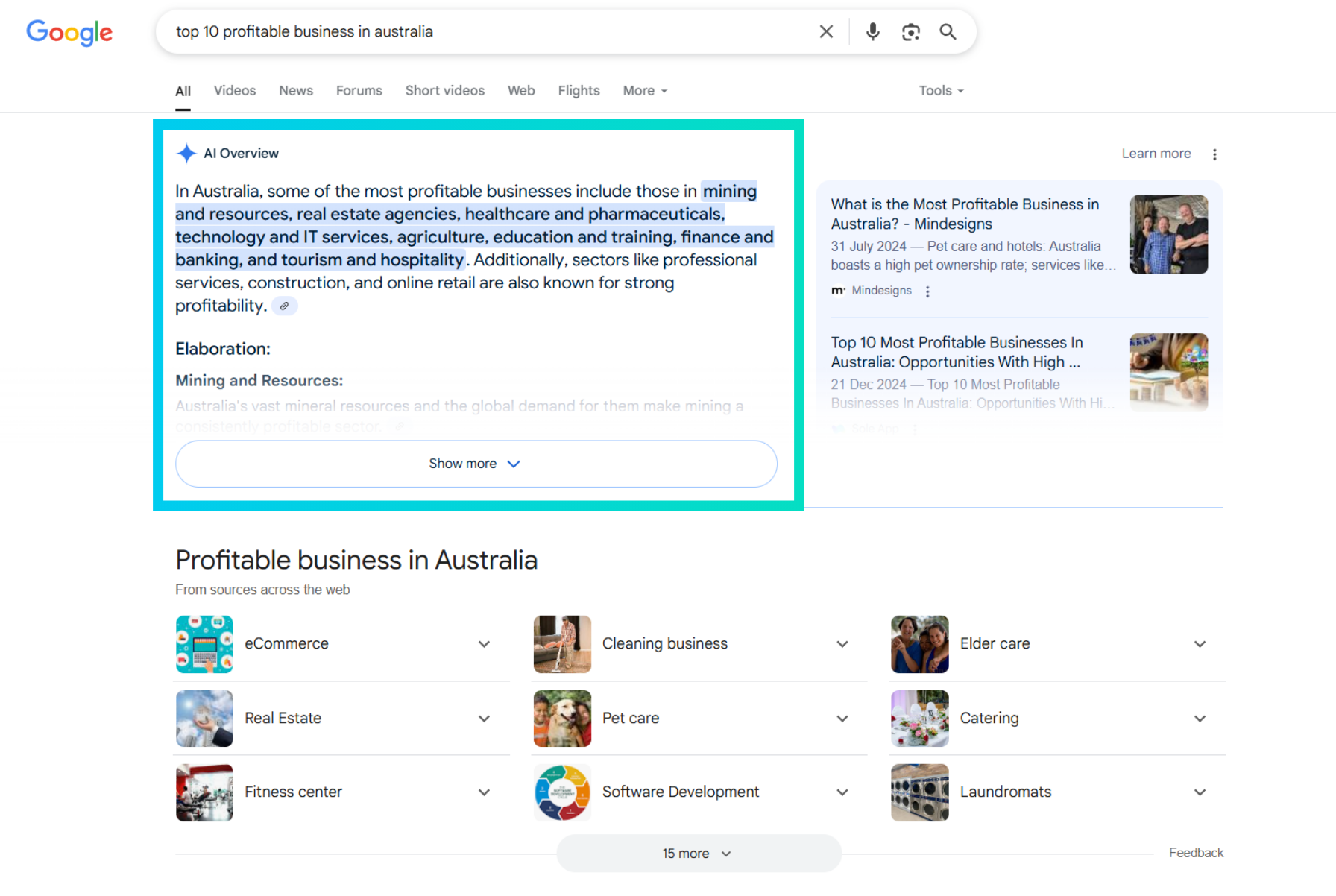
AI has made SEO more of a technical grind for many businesses. Audits, keyword research, and optimised content take hours, while larger competitors often race ahead with more resources. The process still matters, but it is repetitive, time-heavy, and difficult to scale without losing quality.
This is where SEO AI Agents step in. Built on GPT models and trained with SEO expertise, they can analyse keywords, structure content, flag gaps, and generate drafts that fit your brand voice. In practice, they act like tireless SEO strategists, freeing teams to focus on decisions that drive growth instead of routine checks.
Imagine an SEO assistant that never gets tired, never misses details, and learns your playbook by design. This article walks you through building that kind of GPT-powered agent, one that clears hours from your schedule and gives you a lasting edge in search.
What can SEO AI Agents Do?
An SEO AI Agent is designed to take on the kind of tasks that usually drain time and focus. It can brainstorm content ideas and uncover keywords that match the intent behind searches. Instead of staring at spreadsheets of keyword data, you get organised clusters with clear directions on where to aim your efforts. This kind of automation frees you to think about the bigger picture instead of sorting through endless lists.
Content production is another area where an agent shines. It can draft outlines that already reflect SEO best practices, suggest headings that cover relevant topics, and create full articles that are structured to perform. Writers still play a role, but they start from a strong base rather than a blank page. This makes the process faster while keeping the focus on quality.
An agent also acts as a watchful auditor. It can scan your site for missing meta descriptions, poorly structured headers, or duplicated content that could drag down rankings. It can run through the details in seconds and flag issues before they become bigger problems. On top of that, it can look at search results and competitor pages to identify what others are doing well and where your opportunities lie.
What ties all these capabilities together is the ability to link directly with your data. Connected to Google Search Console, an agent can surface which pages are slipping, why click-through rates are falling, and what keywords are growing in importance. Instead of wading through reports, you get insights that point to clear actions. The difference between doing this manually and letting an agent handle it can be summed up in the table below.
| Task | Traditional Method | With SEO AI Agent |
| Keyword Research | Manual tool exports | Automated keyword clustering & intent detection |
| Content Creation | Writer drafts then optimises | GPT generates SEO-aware drafts instantly |
| On-page Audit | SEO manually checks tags | AI agent runs page audit & flags issues |
| SERP Monitoring | Manual rank tracker checks | AI highlights ranking drops & suggests updates |
Seeing what an agent can handle makes it clear that it is more than a novelty. It is a shift in how teams approach their work. To understand how these agents are built to deliver this range of outcomes, it helps to start with their foundation, how GPT models are trained and customised for SEO.
How to Create an SEO AI Agent
Building an SEO AI Agent does not have to mean coding from scratch. In fact, most businesses can start with existing platforms and layer in their own processes. Here’s a straightforward roadmap.
- Choose Your Foundation Model
Options include GPT-4 and GPT-5 for cutting-edge performance, or open-source models like Mistral for greater control and lower costs. Each choice balances accuracy, flexibility, and scalability differently. For teams that prefer ready-made solutions, “SEO-first” platforms such as Semrush’s AI Copilot already combine language models with live SEO data for immediate, practical use.
Semrush Copilot Overview - Define the Core Use Cases
Start small. Do you want the agent to handle keyword clustering, on-page audits, or draft content? By setting clear goals, you avoid feature creep and ensure measurable impact. - Integrate SEO Tools
Connect the agent with the platforms you already rely on, Google Search Console, Ahrefs, or Semrush, through their APIs or third-party platforms like Zapier. This is where the agent stops being generic and starts working with live SEO data, turning raw metrics into tailored strategies. - Set Up Workflows
Map out how the agent will interact with your team. For example:- SEO manager prompts the agent to generate a content outline.
- Writer reviews and adjusts the outline before drafting.
- Agent audits the final page before publishing.
- Add Guardrails
Build in prompts or policies that align the agent with your brand’s voice and SEO standards. Simple rules like “always suggest meta descriptions under 155 characters” keep its output reliable. - Test and Refine
Run the agent on a handful of pages or campaigns first. Compare its outputs against your benchmarks for accuracy, readability, and SEO performance. Iterate before scaling.
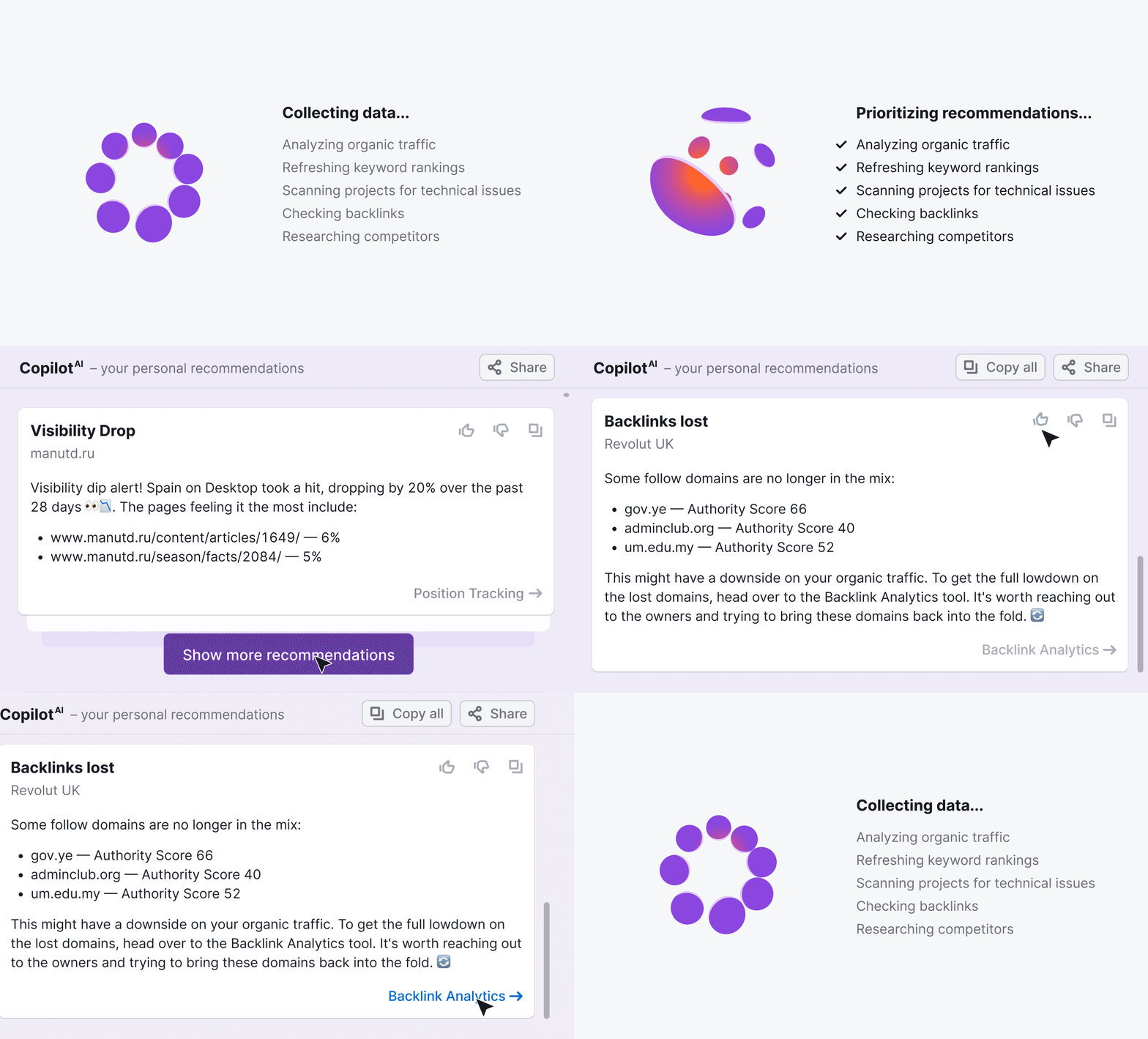
By following these steps, teams can go from experimenting with prompts in ChatGPT to operating a tailored SEO assistant that actually plugs into their daily workflow. Once the basics are in place, you can move on to training and optimising the agent for deeper alignment with your brand and strategy.
How to Train and Optimise an SEO AI Agent
To make AI truly useful for SEO, you have two main paths. The first is fine-tuning, which involves training the model on SEO-specific data so it learns to deliver outputs tailored to your strategy. The second is prompt engineering, which relies on carefully crafted instructions to guide the model’s behaviour without additional training.
Fine-tuning is about feeding the model your own playbook. This could include high-performing articles, keyword research documents, SEO guidelines, and competitor analyses. By training on this material, the model learns your voice, your standards, and the search patterns that matter to your audience.
Prompt engineering, by contrast, is faster to set up. You create detailed prompts that instruct the model on what to do, like producing a blog outline with a specific structure or optimising metadata within character limits.
The fine-tuning Process
- Gather your SEO dataset and make sure it reflects the type of output you want.
- Clean and format the data so it is consistent.
- Fine-tune or embed the data into the GPT model.
- Test the outputs against your SEO checklist to confirm that the agent produces content that is accurate, useful, and aligned with your objectives.
Prompt engineering should be enough to handle common tasks like keyword research and blog drafting. Fine-tuning becomes worth the investment when you need scale, industry-specific depth, or outputs that match a strict brand style. A practical example is a company that teaches GPT its style guide and SEO framework during training. From then on, every draft, title, or analysis the agent generates automatically follows the rules, saving hours of revision.
The reality is not every business has the resources to fine-tune models. Many teams only have access to GPTs and limited time. In those cases, well-engineered prompts combined with a solid SEO workflow can still deliver meaningful results. Even without custom training, GPTs can cluster keywords, analyse competitors, draft content, and generate metadata, if guided properly. For lean teams, this balance of speed and structure may be the most practical entry point, with fine-tuning as a longer-term goal once scale demands it.
How to Use GPTs for Advanced SEO Workflows
Asking GPT to “write a blog post” or “find keywords” barely scratches the surface. The real advantage comes when you use GPT as a strategist and train it on the same principles that Google and top-ranking competitors already follow. Here are advanced applications that separate casual users from experts:
Train GPT on Google’s Guidelines
Upload excerpts from Google’s Search Quality Rater Guidelines and instruct GPT to act as a rater. It can score your drafts for helpfulness, expertise, and trustworthiness before publication, mirroring the criteria Google uses internally.
Generate Schema Alongside Content
Go beyond text and have GPT create JSON-LD markup for your pages, articles, FAQs, products, and more. Structured data improves eligibility for rich results and feeds directly into Google’s SGE, giving your content more visibility.
Run Automated E-E-A-T Audits
Build prompts that evaluate content against Experience, Expertise, Authoritativeness, and Trust. For example: “Highlight where this article lacks credible sources, author signals, or authority-building elements, and recommend improvements.” GPT becomes your E-E-A-T checker.
Reverse Engineer Top-Ranking Pages
Paste the top 5–10 SERP results into GPT and ask it to analyse structure, word count, and recurring subtopics. Then compare those patterns against your own draft. This takes the guesswork out of matching search intent.
Map Keywords to Funnel Stages
Instead of a flat keyword list, have GPT cluster terms by awareness, consideration, and decision stages. Ask it to recommend the best format for each group, blog posts, landing pages, or comparison guides. You get an actionable content roadmap, not just data.
Combine Backlink Research with Outreach
Provide GPT with a competitor’s backlink profile and prompt it to group links by type (blogs, news sites, directories). Then have it draft personalised outreach emails for each category. You get prospecting and outreach in one workflow.
Create Continuous Learning Loops
Integrate GPT with SEO dashboards or SERP scrapers. Feed it monthly data and prompt it to update keyword clusters, highlight declining pages, and suggest refresh opportunities. This transforms your strategy into a living system that evolves with search.
Used this way, GPT becomes more than a content tool. It acts as a strategist, auditor, and analyst that cuts hours of manual work while sharpening the precision of your SEO campaigns.

Best Practices, Risks, and Future Opportunities
Getting the best out of an SEO AI Agent requires a disciplined approach. Simply turning it on is not enough. The strongest results come from combining the agent’s speed with human judgement. Teams should build a framework that keeps the AI aligned with both search guidelines and business goals.
Best practices to follow with SEO AI Agents
- Keep humans in the loop: Always have a reviewer for content and recommendations. This ensures accuracy, maintains brand voice, and prevents blind reliance on AI.
- Update with fresh SEO insights: Feed the agent new data and guidelines regularly, especially after Google algorithm updates, to stop it from drifting into outdated tactics.
- Measure effectiveness with KPIs: Track organic traffic, rankings, click-through rates, and engagement to verify whether the agent’s actions are creating real impact.
- Define boundaries for automation: Use the agent for research, drafting, and auditing, but leave final approvals and strategy calls to humans.
- Educate your team: Treat the agent as both a tool and a teacher. Encourage staff to ask it questions, review its reasoning, and learn from its explanations.
Risks to Manage with SEO AI Agents
- Hallucinations: GPT models can generate advice that sounds correct but is factually wrong or based on outdated practices.
- Over-automation: Handing too much control to the agent without checks can result in poor decisions that harm search visibility.
- Data privacy: Connecting APIs for analytics and SEO tools requires care. Mishandled integrations can expose sensitive site or user data.
- False confidence: Teams may trust outputs without challenging them. The danger is not spotting subtle errors until rankings slip.
- Scalability traps: Automating at scale before refining the workflow can multiply mistakes across hundreds of pages.
SEO AI Agent Opportunities for Businesses
While the challenges are real, the opportunities ahead are just as significant. As Google’s Search Generative Experience and Bing Chat continue to change how people interact with search, SEO AI Agents can help businesses optimise for this new landscape. They can:
- Personalise metadata and content at scale for different audience segments.
- Act as in-house trainers, explaining SEO concepts to junior staff and improving their learning curve.
- Provide early alerts when rankings shift, enabling faster responses.
- Simulate AI-driven search answers, helping teams understand how content may be presented in the future.
Taken together, these practices, risks, and opportunities show that SEO AI Agents are not just tools for efficiency. They are part of a larger shift in how SEO will be approached in the years ahead. Businesses that manage the risks carefully and invest in the right practices will be better placed to capture the opportunities.
SEO AI Agents mark a shift in how businesses approach optimisation, bringing speed and precision to a complex field. For organisations ready to act, a tailored agent offers a real advantage. If you want expert guidance on building one and improving your search performance, contact us for an SEO consultation.