Marketers & Business Owners

With an average return of US$10 – $36 for every $1 spent, email remains to be one of the most potent weapons in a digital marketer’s arsenal. Yet too often, it’s treated as little more than a quick blast to an entire mailing list then calling it a day. To better utilise email for growth, you must change how they’re written and delivered. That’s where electronic direct mail (EDM) marketing comes in.
Instead of sending one message indiscriminately to everyone in the mailing list, EDM takes a more nuanced approach to email marketing. Every email in an EDM campaign is crafted with the goal of being timely, relevant, and aligned with what the recipient needs, and delivered at the right moment. And it does this by leveraging a lot of data.
In this article, we’ll first discuss what EDM is and why it is completely different from email marketing. More importantly, we’ll discuss the psychological strategies we use to write emails that not only get opened, but also drive action.
What Is EDM Marketing?
Electronic Direct Mail is a campaign-based approach that aims to build a structured conversation with your audience rather than sending disjointed one-off emails.
It follows the same principle as traditional direct mail, where businesses collected customer addresses to build mailing lists and then sent catalogues, postcards, or coupons with the goal of nurturing relationships and driving repeat sales.
What sets EDM apart is its extremely targeted nature. Instead of blasting the same message to everyone, EDM segments audiences by behaviour, preferences, and stage in the buyer’s journey, with automation ensuring that each message is delivered at the right time.
For example, one subscriber might receive a reminder about an abandoned cart, while another gets an onboarding guide. Someone at the beginning of their buying journey could be sent an educational blog to build awareness, while those in the decision-making phase will be sent a case study to aid their decision-making.
The neat part is that all these messages were triggered automatically by their actions or their input. This combination of data-driven segmentation and automation makes EDM campaigns not only more relevant, but also scalable and consistently effective.
EDM vs. Email Marketing
Email marketing is the broad field that covers any communication sent through email. It can include newsletters, seasonal promotions, or quick one-off announcements. While there is strategy involved, the most common approach is to send an email blast to the whole mailing list.
EDM marketing builds on these, but its strategy extends beyond the inbox. Campaigns are reinforced with retargeting ads, social media posts, and even text messages, so that it resembles a conversion funnel rather than a series of isolated sends.
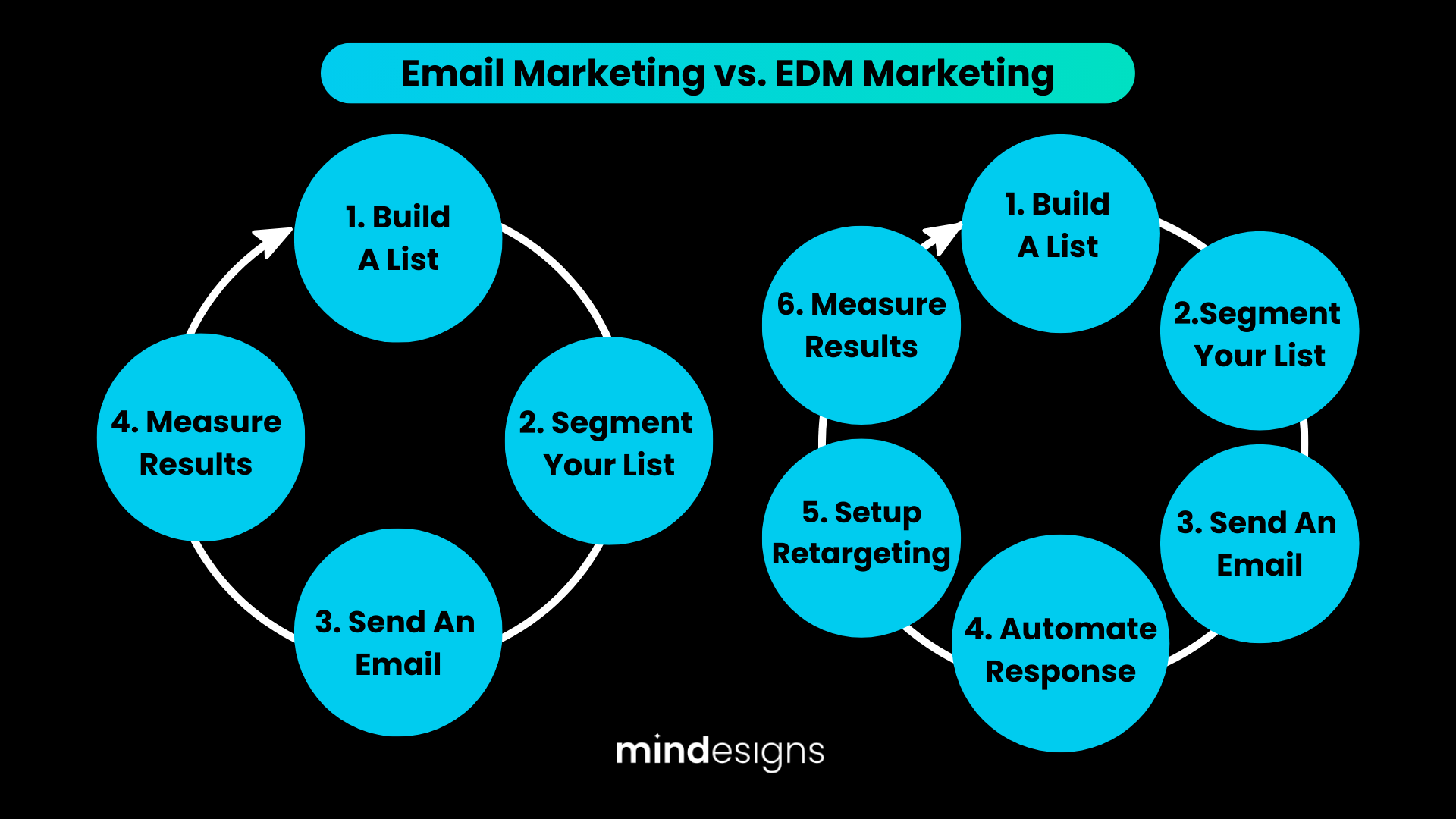
Moreover, modern EDM platforms make it possible to automate journeys, personalise messages at scale, and integrate with other marketing channels.
For example, if a subscriber clicks on a product link but does not complete a purchase, they may receive a reminder email the following day or see a retargeting ad for the same product. If a customer engages with educational content, the next campaign might position them for a product demo or special offer.
How To Create EDM Content That Converts Using Psychology
Since every piece of content in an EDM campaign serves a distinct purpose, knowing how to frame the message is just as important as deciding when to send it. A teaser email should spark curiosity, a reminder should create urgency, and a thank-you should build goodwill. This is where psychology comes in. By understanding how people pay attention, process information, and make decisions, your emails will perform better.
Cognitive Load and Attention Span
Cognitive load refers to the mental effort required to process information, and our brains have limited capacity. When an email tries to say too much at once, the reader’s attention can flatline.
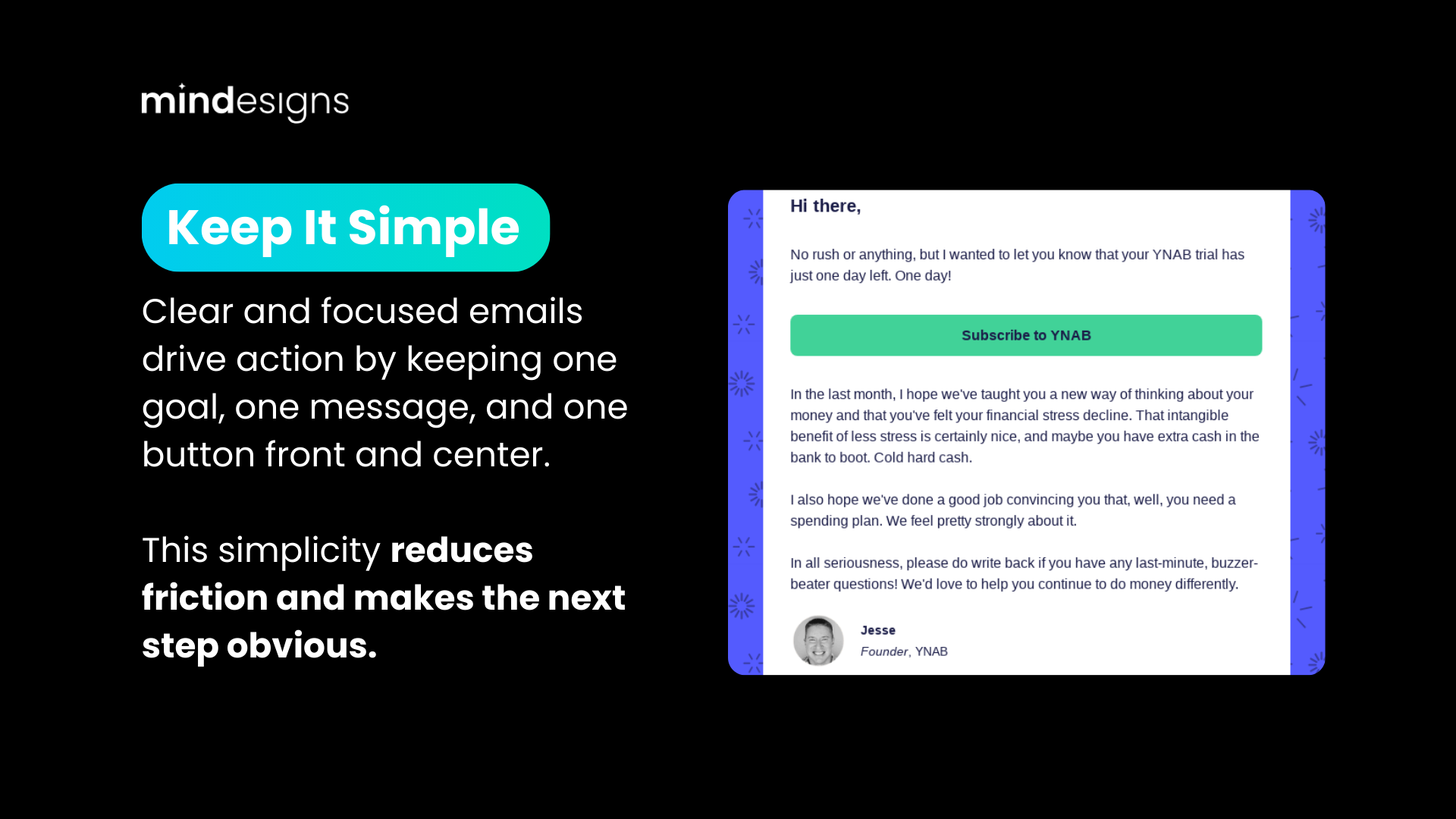
In a world of short attention spans, simpler is better. Concise, well-organised emails are more likely to be read and understood. This means using simple language and focusing on one main message or goal per email. Visually, you should break up text with headings or bullet points and leave breathing room between elements so it’s easy on the eyes.
Visual Priming
Visual priming involves using imagery or design elements to trigger certain feelings or associations in your reader’s mind.
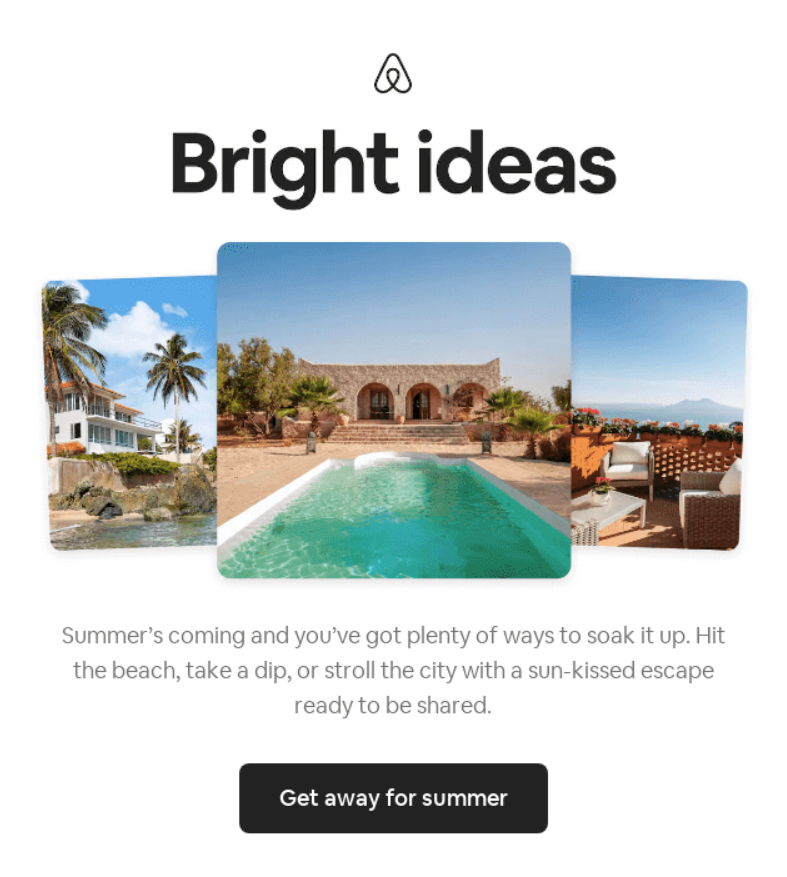
Image from reallygoodemails.com
Ever noticed how Airbnb’s emails frequently showcase gorgeous photos of destination homes? One glance and you’re daydreaming about that cozy cottage or beachside villa. You are now primed to desire the experience, which makes you more receptive to the message that follows.
Emotional Resonance
Emotional resonance is about creating a feeling that sticks with your audience. People may forget the details of your offer, but they won’t forget how it made them feel. Emails that tap into joy, fear, excitement, nostalgia, or empathy cut through the noise because we’re wired to respond to emotional cues.
Storytelling, vivid language, and emotive subject lines can all spark that feeling. Charities often use this to evoke empathy and urgency. For other industries, it may look like this:
- Retail/E-commerce (Excitement) – “Feel the thrill of unboxing something new!”
- Food & Beverage (Pleasure/Comfort) – Savor the taste of home, fresh from our kitchen to yours.”
- Insurance (Fear/Security) – “Protect what matters most before it’s too late.”
- Entertainment (Curiosity/Fun) – “The twist you never saw coming is waiting for you.”
- SaaS/Productivity (Relief) – “Finally, a tool that makes your workday stress-free.”
Self-identification and Storytelling
Connecting with the audience should be at the heart of every email. To make them care about your message, you need to frame it as a story they can relate to.
What brands often get wrong is that they position themselves as the hero of that story. In reality, your reader should be the hero of the journey, and your role is to be the guide who helps them succeed.
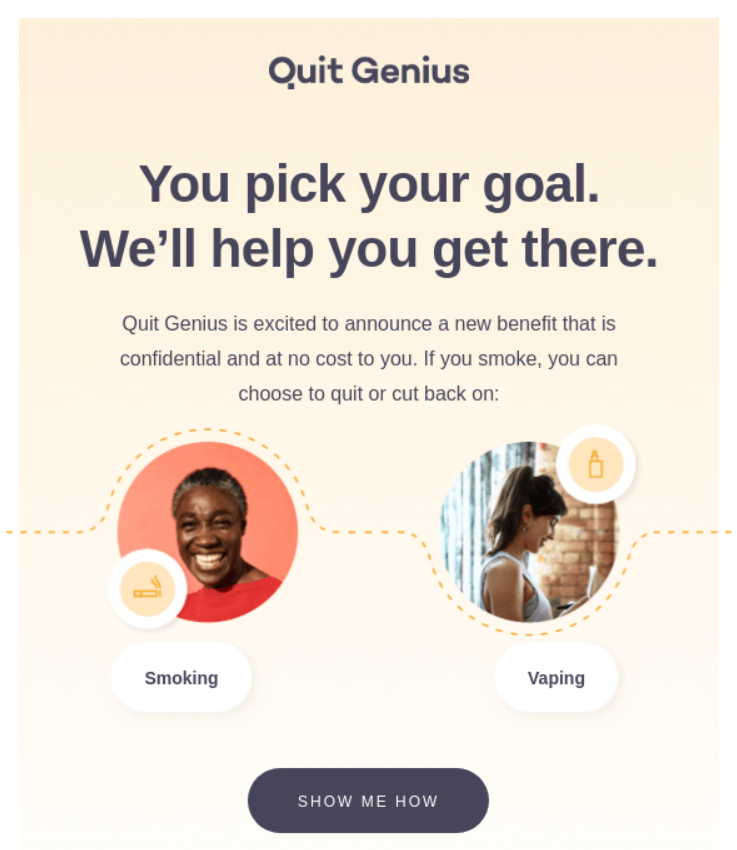
Image courtesy of reallygoodemails.com
Instead of “We built the most advanced platform in the market”, you can say “You get the tools to work smarter and faster every day.” instead. This shift in perspective makes your content more relatable. When you frame your emails this way, you tap into the psychology of self-identification. You highlight their struggle, paint a picture of the success they want, and then show how your product or service helps them get there.
Social Proof
In marketing, social proof means leveraging the idea that if many (or influential) people trust or buy something, it must be good.
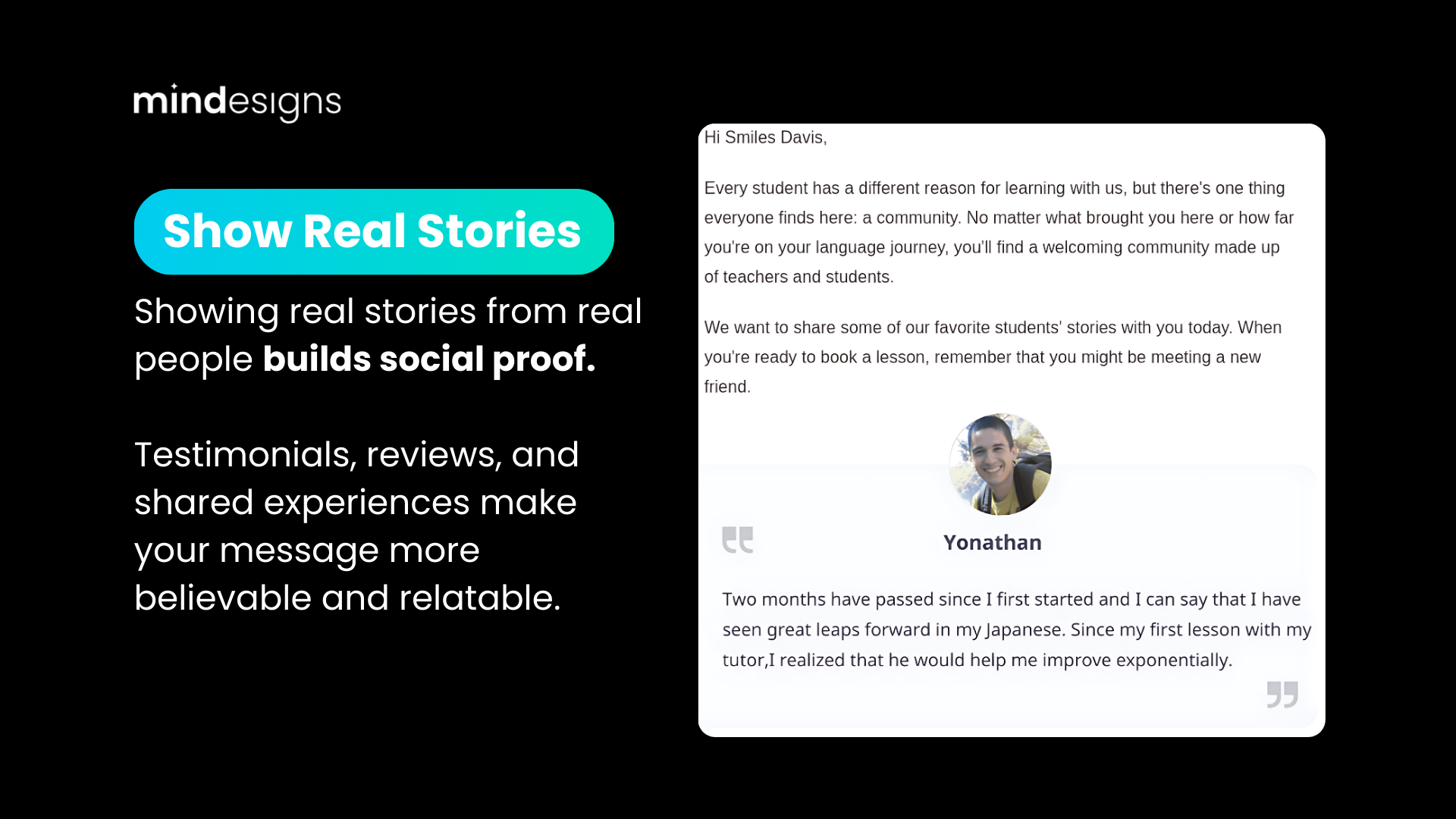
Including indicators of popularity or approval in your EDM content can instantly boost credibility. There are many ways to weave social proof into emails:
- Testimonials, reviews, and accolades – Highlight a short customer testimonial or a stellar product review. Also, featuring a badge or a line about it (“Voted #1 by PC Magazine”, “As seen on New York Times) is like saying experts have validated us.
- Numbers and Milestones – Share impressive stats, like “Join 50,000+ happy subscribers” or “Over 1 million units sold.”
- “Trending” or “Best Sellers” – Many retail emails now feature sections like “Trending products” or “Our best sellers,” essentially saying others are buying this, maybe you’d like it too.”
Loss Aversion (urgency)
Humans hate losing out. In fact, psychologically, the pain of losing something is about twice as powerful as the pleasure of gaining something equivalent. This is known as loss aversion, and it’s a potent tool in email marketing.
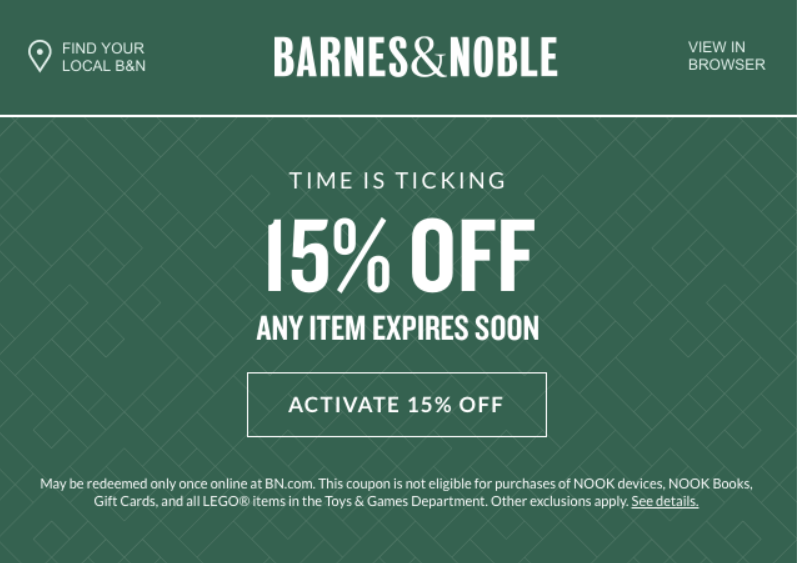
Image courtesy of reallygoodemails.com
The idea is simple: people are motivated to act if they fear they might miss their chance or incur a loss by not acting. You’ve likely seen this used all the time in phrases like “Don’t miss out!” or “Only 3 left in stock!”
Anchoring
In marketing, anchoring is often used with pricing or options: the initial number or option sets an expectation that influences how we perceive later numbers or options.
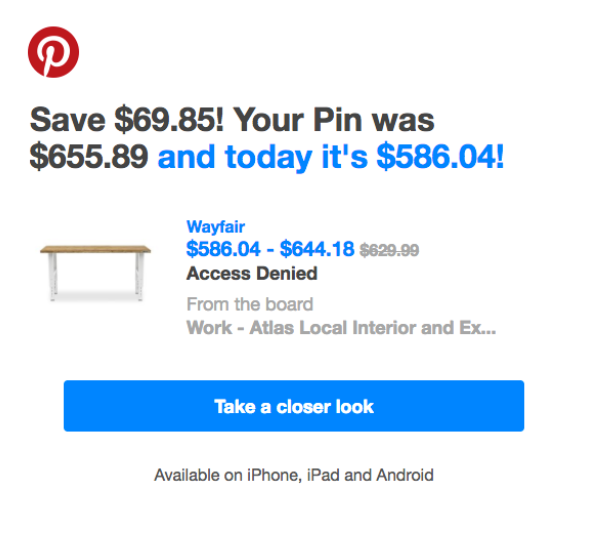
Image courtesy of reallygoodemails.com
You can use anchoring to frame your offer in the best possible light. The most common practice is price anchoring. If you’re offering a discount, mention the original (higher) price first, then the sale price. For example, an email might say “Originally $129, now $79 (Save $50).”
For tiered options, you can introduce the most expensive option first, so that the subsequent options seem more reasonable.
Exclusivity Bias
Exclusivity bias is the idea that people are more interested in something if they believe it’s not available to everyone. When a product, offer, or content is perceived as limited-access or invite-only, it gains a “shiny appeal” that regular offerings might lack.
It doesn’t even have to be offers. Even something as simple as phrasing a survey invite as “You have been selected to give feedback” (versus a generic “Please take our survey”) can increase participation because it strokes that exclusivity bias.
Action Psychology
At the end of the day, the goal of most EDM content is to get the reader to do something, whether it is to sign up, shop now, download, register, etc.
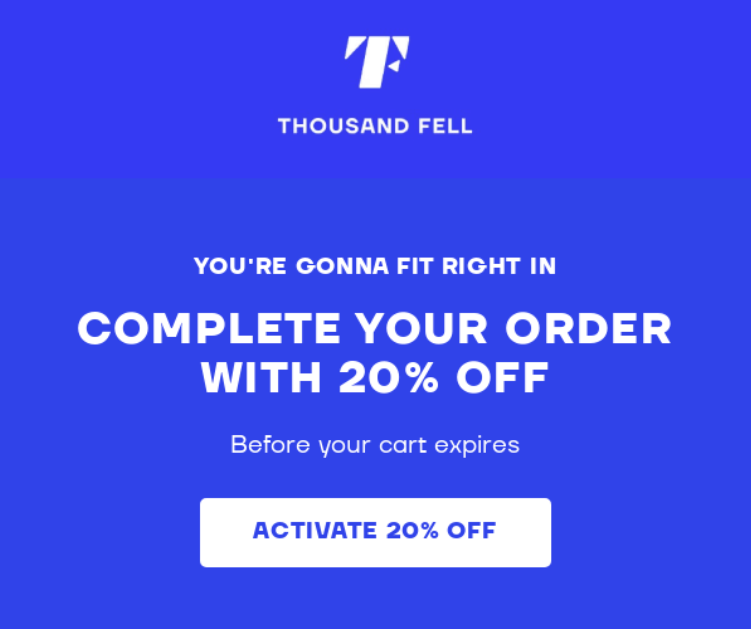
Image courtesy of reallygoodemails.com
This is where action psychology comes into play. The art and science of designing your content and call-to-action (CTA) in a way that maximises the odds of that click or conversion. The wording needs to be short, clear, and action-oriented. Strong action verbs like “Get,” “Start,” “Discover,” or “Reserve” prompt the reader to act now rather than later.
EDM Wins with Stories, Not Volume
The best EDM campaigns succeed not by flooding inboxes but by using content shaped through psychology and storytelling. When you tug on the reader’s heartstrings, your emails become far more than promotions.
It’s not about sending more, it’s about making every message matter. By focusing on clarity, relevance, and the psychological cues that guide decisions, each email can feel like a personal conversation. Done right, your emails don’t just get opened, they’ll produce conversions as well.
For businesses ready to move beyond email blasts, a well-crafted EDM strategy offers a clear edge. If you want expert guidance on writing campaigns that connect and convert, get in touch with us for a content strategy consultation.