Marketers & Business Owners

Most small company owners already know digital marketing matters. What holds them back is the complexity and know-how. With limited time, tight budgets, and a flood of platforms and advice, it is hard to know where to begin or what actually works.
Unlike larger companies, small teams cannot afford to test everything. The pressure to choose the right tools, channels, and messages is real. But results do not depend on being everywhere or doing everything. They come from having a clear structure and processes that fits your size, market, and goals.
That’s exactly why we created a free Digital Marketing Template. It’s a simple, step-by-step framework designed to help small companies build marketing that performs.
This article follows that same approach. You’ll be guided through the core steps of a high-performing digital strategy:
- Define a clear customer persona so your message reaches the right people
- Set a realistic budget and know how to allocate it across timeframes
- Map out a marketing funnel that moves leads from cold to committed
- Choose the right digital channels to connect with your audience and drive results
Everything here is built for action. No fluff, no filler. Just practical steps you can follow to build a smarter, simpler marketing plan.
Who Are You Really Marketing to as a Small Company?
Marketing works best when it’s personal. If you try to reach everyone, your message ends up speaking to no one. The businesses that get results are the ones that understand exactly who they’re talking to and shape their strategy around that.
Small companies often rely on guesswork when it comes to customers. Over time, this leads to vague messaging, low engagement, and wasted budget. A clear, well-defined persona changes that. It helps you say the right things, on the right platforms, in a way that resonates and attracts.
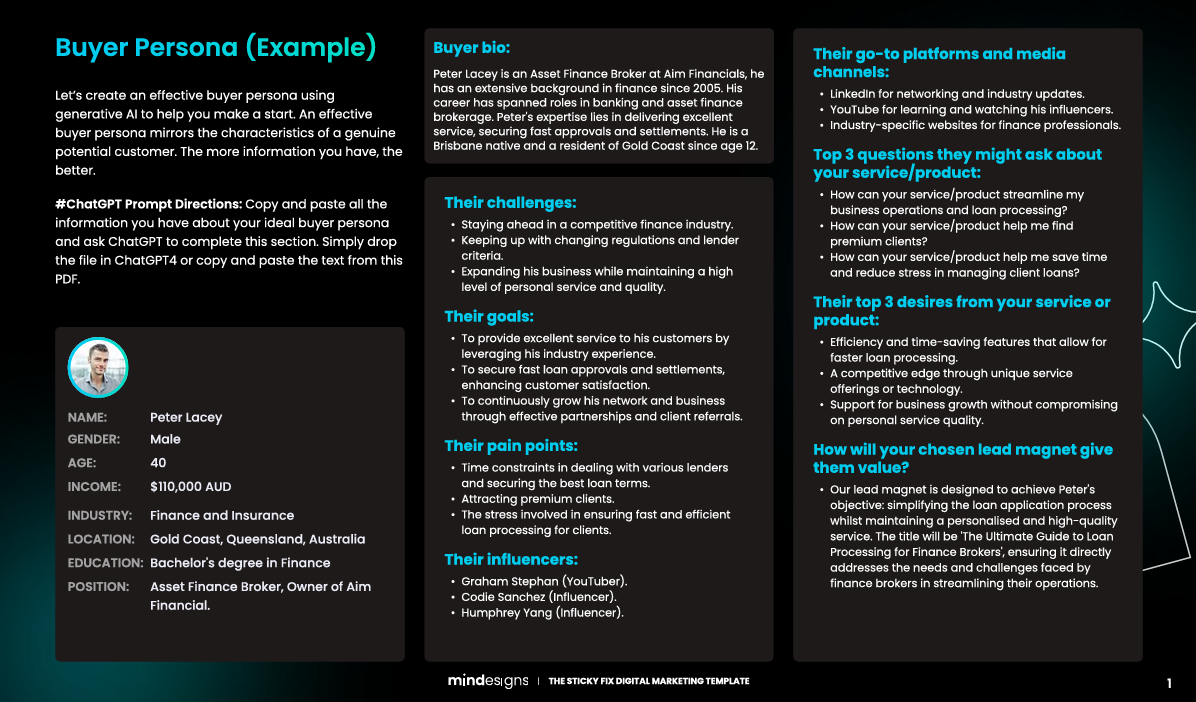
How to Complete the Buyer Persona Using ChatGPT
In our template, you can complete this page manually or use ChatGPT to help speed up the process. Simply open the template, provide a short description of your ideal customer, and ask ChatGPT to draft the persona for you. This is especially helpful if you’re just starting out or want a clearer view of your audience.
There’s no single perfect prompt, but we recommend starting with something like this:
Prompt format – (Action: complete the first page of the buyer persona), (Context: I run a [type of business]. My best customers are [description of who they are, what they care about, and how they typically find or choose businesses like yours]).
Once ChatGPT gives you a draft, review it carefully and adjust the details based on your real experience. The more specific and realistic the persona, the more useful it becomes across your strategy.
Important tip: If your business serves a local or culturally specific audience, make sure your website visuals and language reflect that. For example, if you mainly work with tradespeople in regional Queensland, your imagery should feel local, relatable, and familiar. If your audience includes young professionals or multicultural communities, highlight that in your brand visuals and tone. Subtle changes like this can have a strong effect on how people connect with your brand.

Creating a persona grounded in real people, real emotions, sets the tone for everything else. It becomes your filter for messaging, offers, and even the words on your website. A strong persona is the first step toward building a strategy that actually speaks to the customers you want to attract.
The Small Company Marketing Budget and Distribution
This part of the strategy helps you set a realistic marketing budget and decide where to put it based on what stage your business is in.
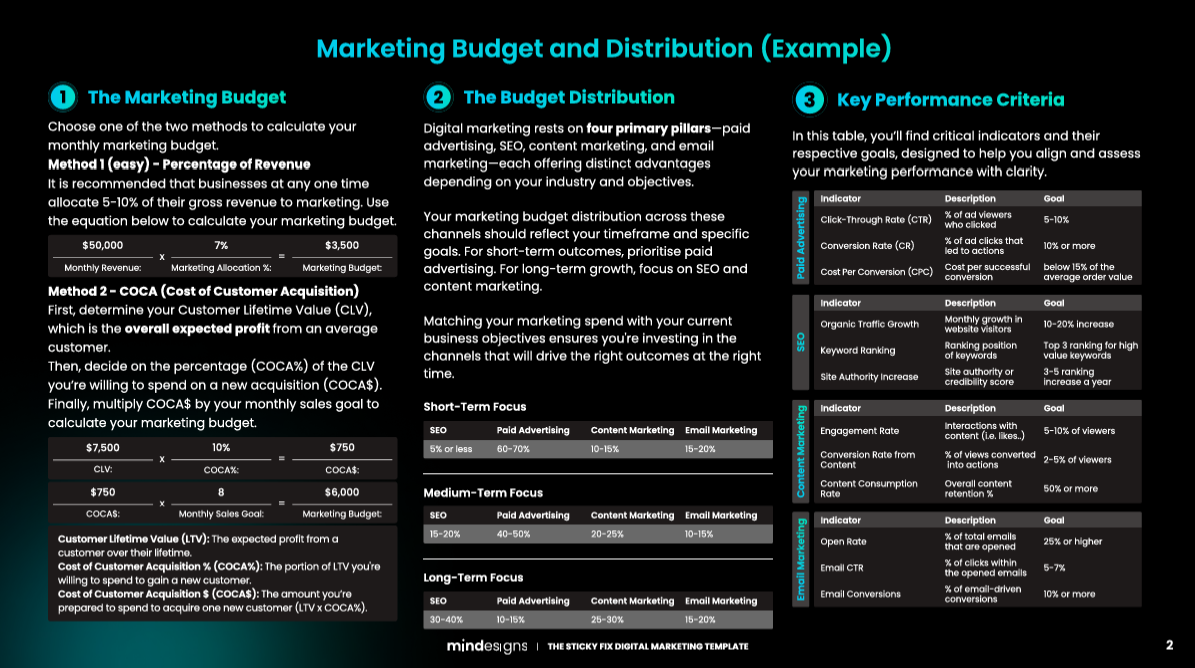
Choose a Budget Method
The template gives you two clear options:
- Percentage of Revenue
Allocate 5–10% of your monthly revenue to marketing. Quick and simple. - COCA Method (Cost of Customer Acquisition)
Base your budget on how much you’re willing to spend to gain one new customer, multiplied by your monthly sales goal. This method works well if you know your Customer Lifetime Value.
Match Spend to Business Goals and Timeline
How you distribute your budget depends on your need to generate sales, for example, paid ads are great for short term results where SEO and content creaiton is a long-term game:
| Focus | Paid Ads | SEO | Content | |
| Short-Term | 60–70% | 5% | 10–15% | 15–20% |
| Medium-Term | 40–50% | 15–20% | 20–25% | 10–15% |
| Long-Term | 10–15% | 30–40% | 25–30% | 15–20% |
Choose the mix that aligns with your revenue goals and timeline.
Know What to Track
The template includes key benchmarks for each marketing pillar. Here are a few examples from the template:
- Paid Ads: Click-through rate (5–10%), conversion rate (10% or more)
- SEO: 10–20% growth in monthly site traffic
- Content: 2–5% of viewers converting
- Email: 25% open rates, 10% conversion from email leads
Understanding what good results look like and tracking helps you spot what’s working, what needs adjusting, and where to invest next.
Digital Marketing Funnel for Small Companies
The goal of your marketing funnel is to guide people from first discovery all the way to becoming paying customers. It brings structure to your strategy so that each piece of content or campaign supports the next step in the buyer journey. Without this structure, you risk sending the right message at the wrong time, or worse, losing people before they’re ready to act.
Essentially, a marketing funnel will give you a better return for each dollar or hour you spend on your marketing efforts. Without it, your work is guaranteed to be less effective over the long run.
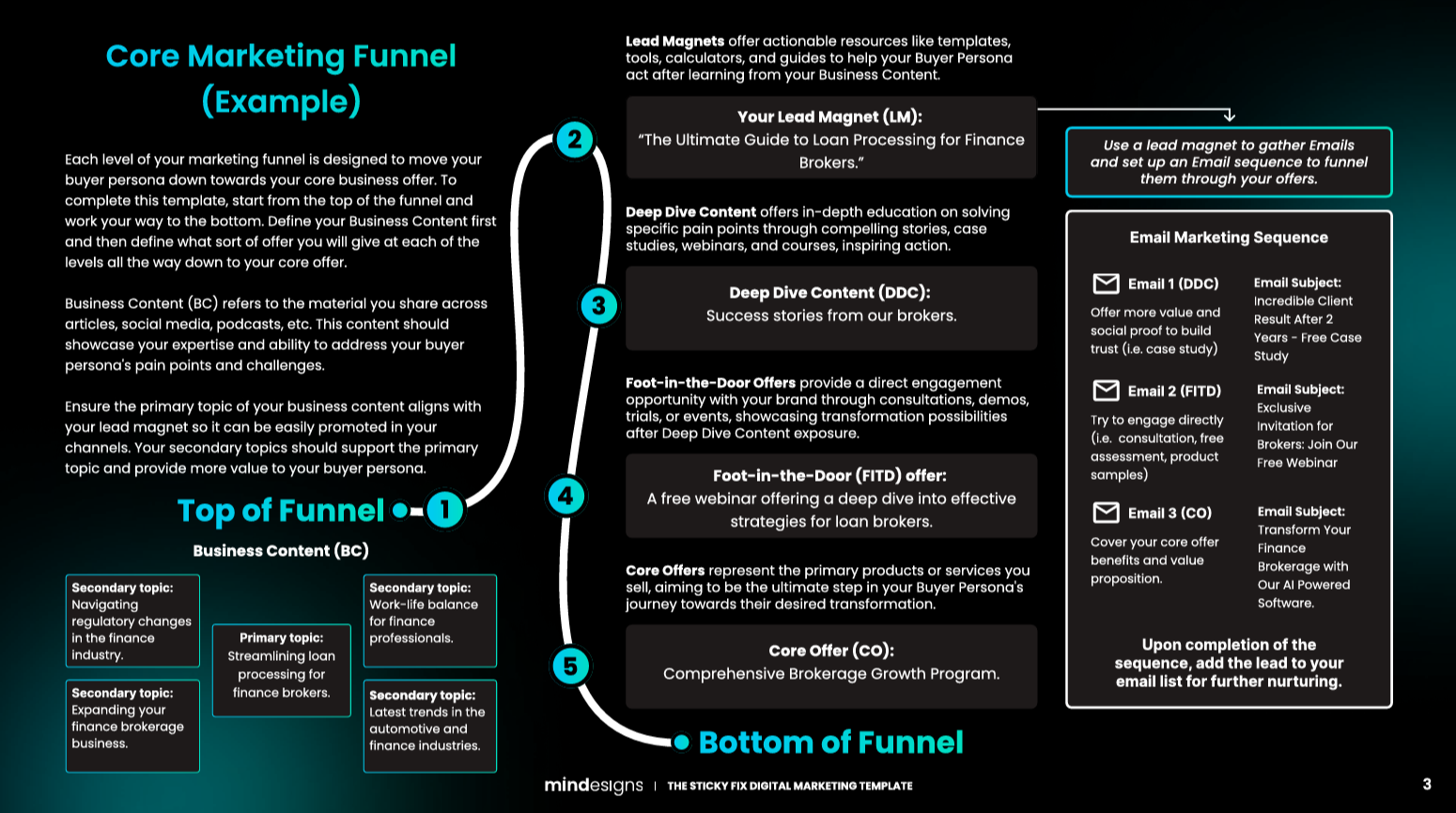
Funnel Overview from the Template
Each level of the marketing funnel works together to turn interest into action:
- Business Content (BC)
General content to attract attention. Think social posts, blog articles, or how-to videos. Keep your content valuable or even entertaining to align with your customers’ needs and pain points.
Example: “Top 5 Mistakes Small Companies Make When Running Ads” - Lead Magnet (LM)
A free, valuable resource that helps your audience solve a specific problem or offer insightful information. This could be a checklist, guide, or calculator.
Example: “Free Checklist: What to Set Up Before You Run Your First Facebook Ad” - Deep Dive Content (DDC)
More in-depth content that shows how you solve problems. Such as success stories, webinars, or detailed case studies.
Example: “How We Helped a Local Retailer Triple Their Leads with a $500 Ad Budget” - Foot-in-the-Door (FITD) Offer
A low-barrier way for someone to experience working with you, such as a free consult, sample, or strategy call.
Example: “Book a Free 15-Minute Audit of Your Website or Ad Account” - Core Offer (CO)
Your main product or service. This is where warm leads take action and become paying customers.
Example: “Monthly Marketing Support Plan for Small Companies”
Use Email to Funnel Leads Through Each Step
Once someone opts in via your lead magnet and gives you their email address, follow up with an email sequence that delivers value and builds trust. The template suggests this structure:
- Email 1 (DDC): Share a helpful success story or case study
- Email 2 (FITD): Invite them to try a free sample, consult, or assessment
- Email 3 (CO): Introduce your main service or offer
After this, continue nurturing leads by adding them to your main email list (such as your monthly newsletter).
To build your funnel using ChatGPT, simply copy and paste the buyer persona you created earlier and add a prompt like this:
Prompt format – (Action: complete the core marketing funnel), (Context: use this buyer persona and build a funnel for [your business type], including BC, LM, DDC, FITD, and CO)
Mapping out a funnel this way gives your marketing a clear direction. Each part supports the next, so your time, content, and ad spend are always working toward the sale.
Crafting a Channel Strategy That Matches Your Small Company Funnel
The Marketing Channel Strategy page helps you choose the right platforms to promote each stage of your funnel. The key is to match the message to the level of familiarity your audience has with your business.
Some channels work better for cold audiences who are just discovering you. Others are more effective for warm audiences who already trust you and are ready to act.
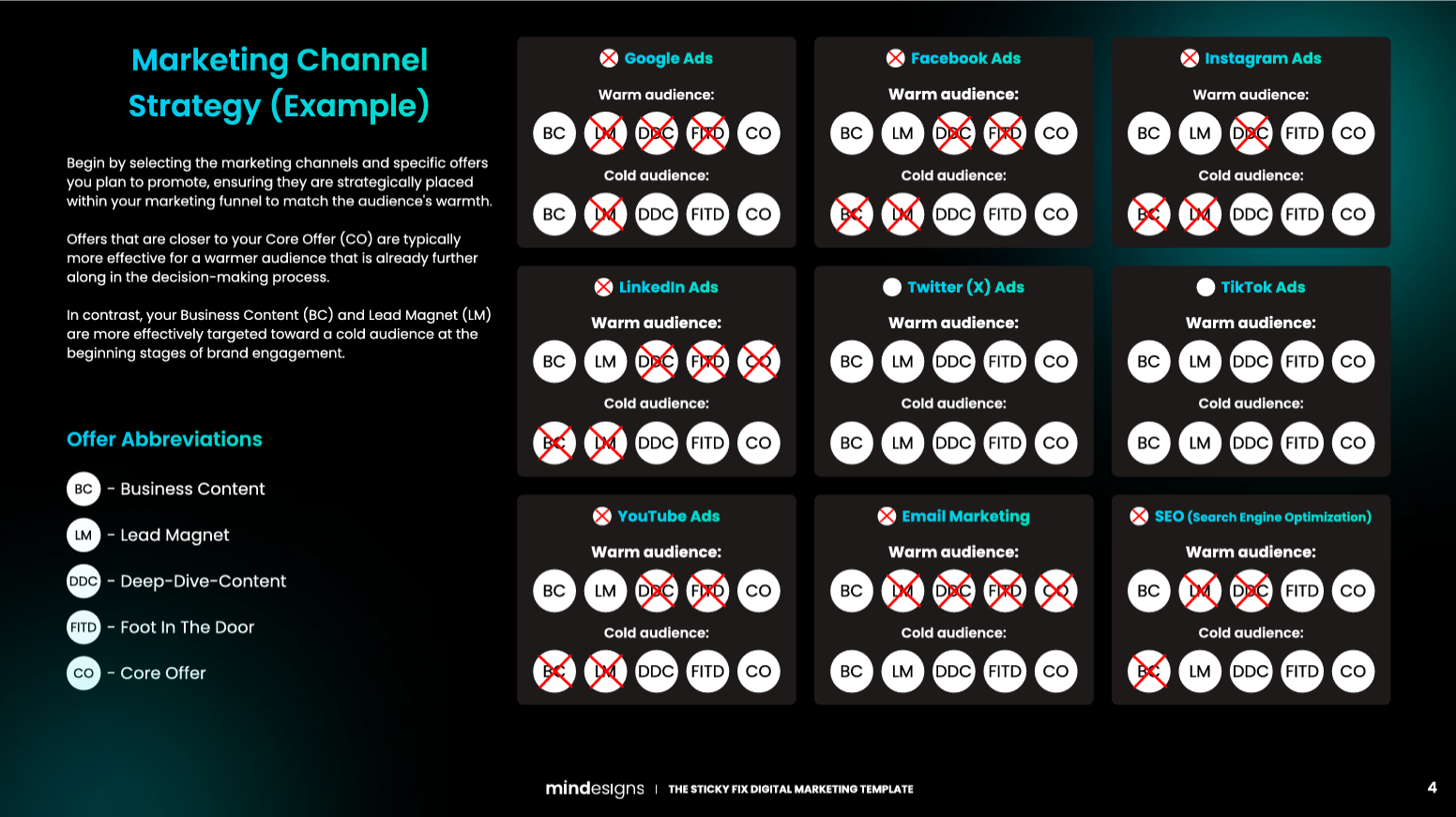
Here’s the basic principle:
- Use channels like SEO, TikTok, and YouTube to promote Business Content and Lead Magnets to people who are just learning about your brand.
- Use platforms like Facebook, Instagram, and Google Ads to retarget warm audiences with Deep Dive Content and Foot-in-the-Door offers.
- Use Email and LinkedIn for direct communication with people who already know you, especially when offering Core Services or high-trust consultations.
The template makes this process clear by mapping each funnel stage to the right platforms depending on audience warmth. The visual on this page shows exactly where your offers fit and which platforms support them best.
Use ChatGPT to Help Build Your Channel Plan
You can also use your buyer persona and funnel map to generate a tailored channel strategy with ChatGPT.
Prompt format – (Action: complete the fourth page of the marketing channel strategy), (Context: use the buyer persona and funnel details previously generated, and build a platform plan for a small company selling [your product or service])
Pushing offers to a cold audience to buy too early often backfires. By choosing the right platform for the right offer, you create a natural flow that builds trust and improves conversions. This approach ensures that each message lands with the right level of intent.
Important tip: Don’t try to master all the channels. Choose 2-3 channels to start out with and build your expertise on effective strategies and how their algorithms (regarding social media platforms and SEO) work. Trying to advertise on too many channels could erode your efforts or water down your results, unless you have a huge marketing team to do so.
Digital Marketing Checklist to Stay Consistent
Digital marketing can feel overwhelming when you’re running a small company. But with a clear structure, the right tools, and a bit of consistency, it becomes manageable and even repeatable.
Throughout this strategy, you’ve seen how to define your ideal customer, set a budget that fits your goals, build a funnel that moves people toward action, and choose channels that work for your business stage. What ties all of this together is alignment. When your message, platforms, and timing are in sync, you don’t have to rely on luck or constant trial and error.
That said, even with a framework in place, it’s easy to slip into habits that stall growth. To help you stay focused, here’s a simple checklist to guide your next steps.
What to Do
- Start with one clear persona
Ground your strategy in who you’re actually serving. The clearer the customer, the better the message. - Align your funnel and your channels
Promote the right offer at the right stage of the buyer journey and on the right platform. - Budget with intention
Use the percentage-of-revenue or COCA method and stick to a monthly number you can measure. - Create with purpose
Build content that helps, not just sells. Educate, inspire, and solve small problems to earn trust. - Track and refine
Monitor what’s working weekly or monthly. Use data and benchmarks to improve instead of starting over.
What to Avoid
- Running ads without a strategy
Paid campaigns need a clear goal, a defined audience, and a way to measure success. - Pushing sales to cold leads
Guide new audiences with content or lead magnets before presenting your core offer. - Spreading yourself too thin
Focus on 2–3 marketing channels where your audience already spends time and makes decisions. - Guessing what people want
Base your decisions on real customer insights, not assumptions. - Inconsistent messaging
Make sure every piece, from your ads to your emails, feels like part of the same conversation.
Ready to Put This Plan Into Action?
You don’t need a big team or unlimited budget to make digital marketing work. You just need a plan that fits your business and the discipline to follow it.
If you’d like help applying this strategy to your brand, we offer complimentary strategy sessions designed specifically for small company owners. In this session, we’ll either help you refine your strategy or provide more guidelines on how to execute it effectively.
Book your free session today and let’s build something that actually works and helps your business grow.