Marketers & Business Owners
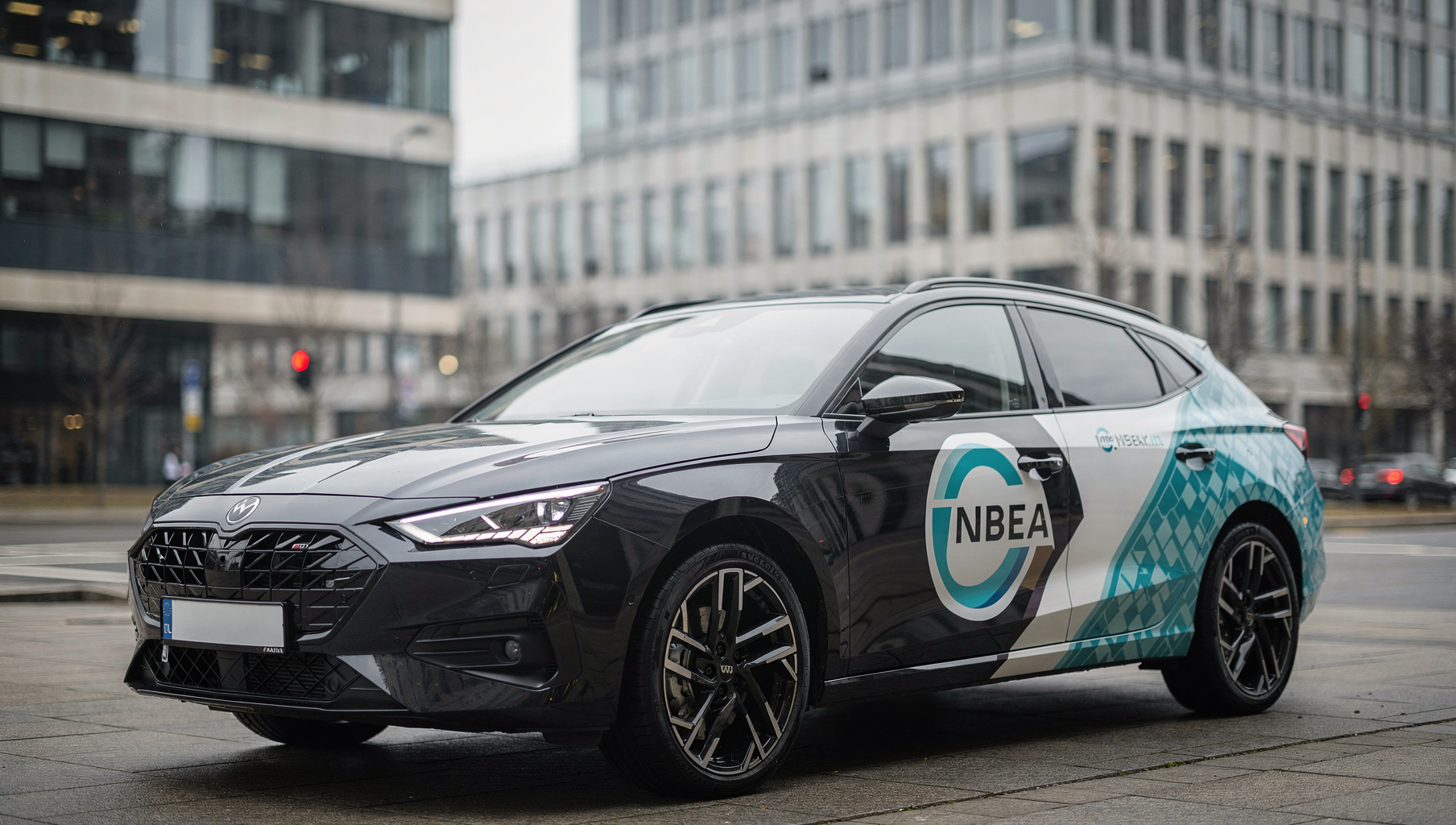
Most people do not really read branding on cars. They catch it in passing. A van pulls up at a job site. A ute is parked outside a café. A car moves through traffic and disappears at the lights. In those moments, people are not giving you full attention. They are processing shapes, colours, names, and cues in a matter of seconds. That is why branding on cars lives or dies on clarity.
When done well, a branded vehicle becomes a steady source of local visibility. It puts your business in the suburbs you service, helps people see your name again and again, and builds familiarity in a way that feels natural. A person might notice your vehicle outside a neighbour’s house this week, see it again in traffic next week, and remember the name months later when they need that service. That kind of recall is hard to buy with a single ad.
As a marketing agency, we approach branding on cars as a visibility and brand recall tool, not just a design exercise. This guide breaks down what belongs on a car, where branding should sit, what makes it easy to read, and what separates strong execution from visual clutter.
Start With the Job the Car Needs to Do
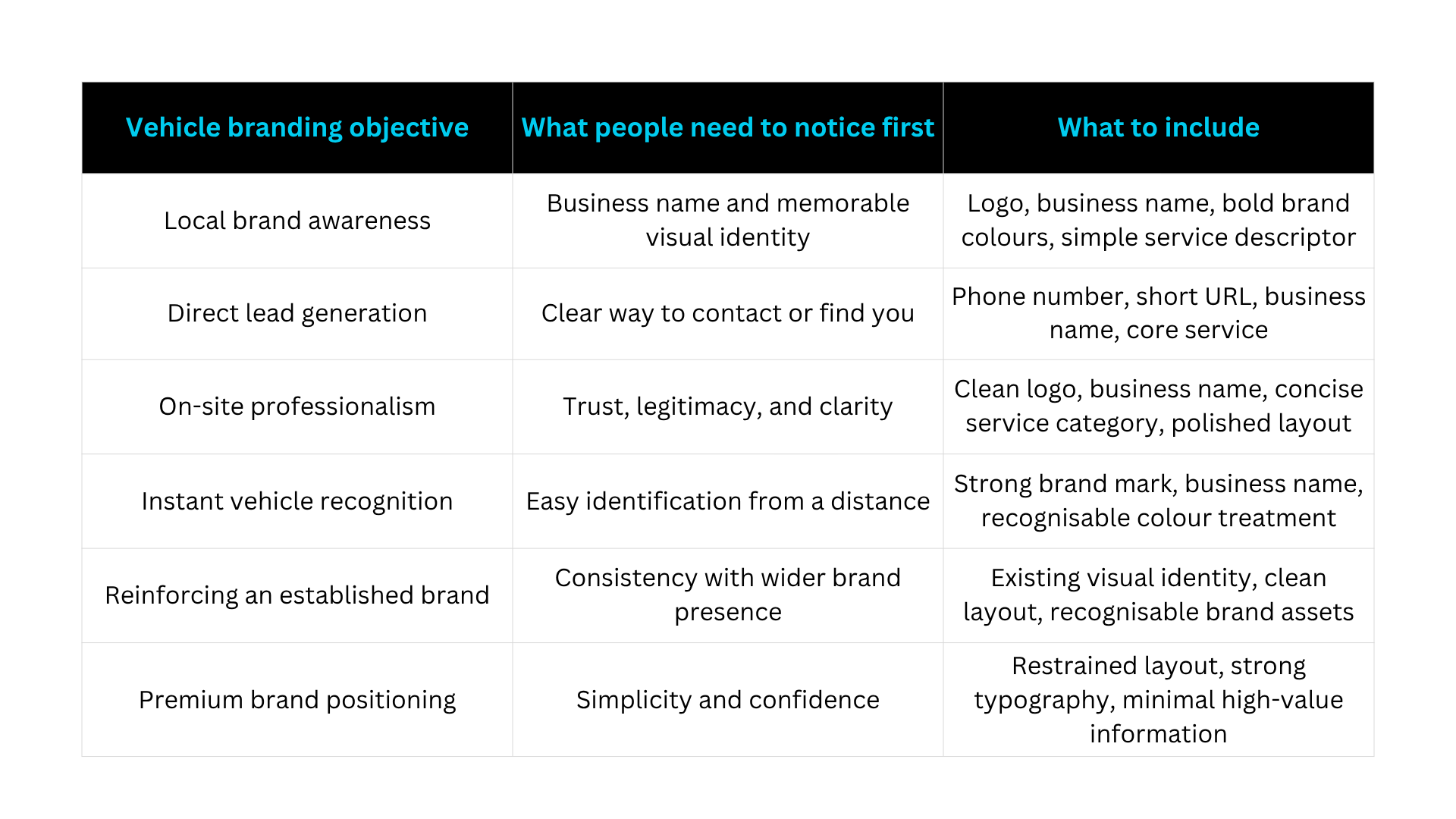
What is the vehicle meant to do for the business? The answer to this dictates everything else. A branded car might build local awareness, generate leads, create trust on site, or help customers recognise the right vehicle straight away. If that role is unclear, the design usually tries to do too much.
Different goals need different priorities. A vehicle built for awareness should make the business name and overall look easy to remember. One focused on enquiries may need a phone number or short website to stand out. Trade and service vehicles usually need trust and instant recognition, while premium brands often work better with cleaner, more restrained layouts. In most cases, the strongest branding pushes one message first and lets everything else support it.
The setting matters too. A vehicle moving through heavy traffic is experienced differently from one parked in a suburban street for hours. Some people will see the brand for the first time. Others will recognise it from earlier exposure. Existing customers may just want quick confirmation that the right team has arrived. That is why good vehicle branding usually comes down to one practical question –
What should people notice first, and what do they not need to know right now?
Where Branding Should Be Placed on a Car
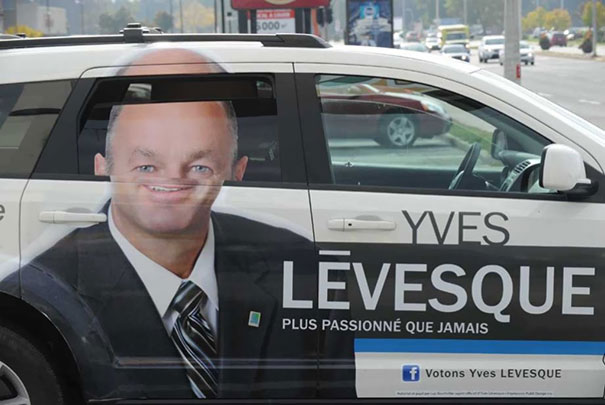
From our design experience in this field, a car is not a flat canvas. It has doors, seams, handles, windows, wheel arches, and curves that can either help the design flow or break it apart. That is why placement matters so much. A layout can look great in a mockup, then fail once the business name is split by a door gap or the contact detail bends around an awkward panel.
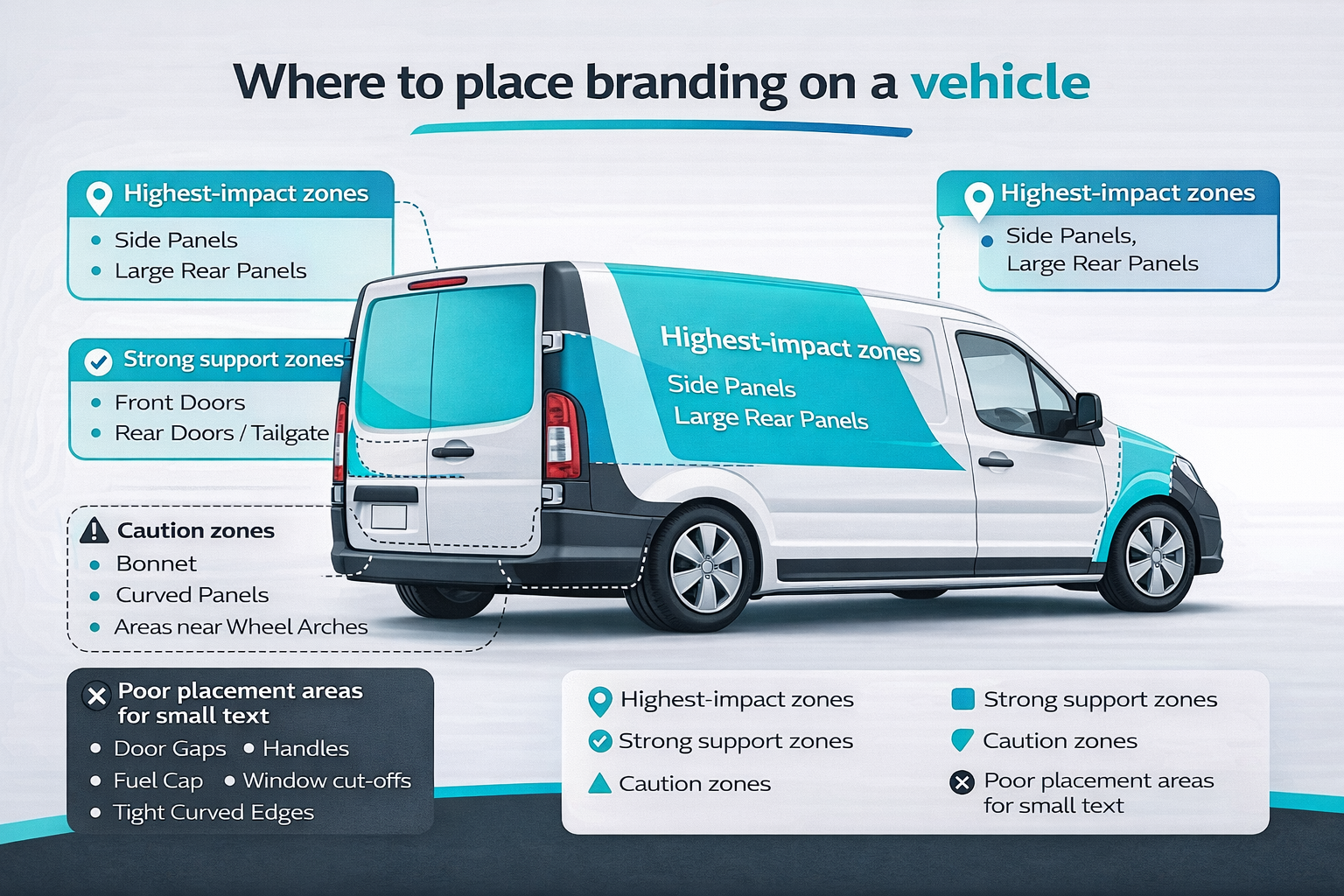
The shape of the vehicle should guide the branding. In most cases, the side panels do the heavy lifting because they offer the biggest uninterrupted branding space. The rear is also valuable, especially for contact details, since people often have more time to read there in traffic. The bonnet usually works better as a supporting brand touch, while front doors can either carry the main message or support it depending on the vehicle size and layout.
Placement should also match how people scan. That usually means left to right, so the design should feel easy to follow. Important details should stay clear of door seams, handles, fuel caps, and window cut-offs. Small text near awkward panel breaks tends to disappear quickly. Partial wraps can work well for clean recognition, while fuller wraps can help with memorability. In both cases, the real win comes from using the strongest zones well.
Also consider the legal limits of car advertising, as certain placements, sizes, and window coverage may be restricted depending on local regulations.
Design Rules That Make Branding on Cars Actually Work
A branded car is read quickly. Even when it is parked, most people just scan it and move on. That is why the best vehicle branding looks simple from a distance and deliberate up close. Strong contrast, larger type, clean spacing, and a small number of focal points help the message land fast.
Typography matters more than you would think. Thin or decorative fonts can look good on screen and fail on the road. Tight, condensed text also gets harder to read in motion, especially over patterns or curved panels. The same goes for service lists. A short, grouped list can add clarity, but once it gets too long or crowded, it starts to feel like clutter.
The logo needs enough size and space to register quickly. Colour should guide attention, not just decorate the vehicle. Patterns, icons, and illustrations can add character, but they should support the brand rather than compete with it. A good final test is simple: if a stranger sees the car once, can they tell who you are and what you do?
10 design rules for better car branding
- Make the business name easy to spot first.
- Use strong contrast between text and background.
- Choose font sizes that can be read from a distance.
- Stick to one main message and a small number of support elements.
- Keep service descriptions short and grouped logically.
- Give the logo enough size and clear space.
- Use brand colours with purpose, not just decoration.
- Let patterns, icons, and illustrations support the message, not crowd it.
- Match the vehicle branding to the wider brand identity.
- Test the design with one question: can someone understand it in one glance?
Good vs Bad Branding on Cars
A lot of vehicle branding goes wrong in familiar ways. The business tries to fit in every service, every phone number, every design idea, and every selling point, hoping more detail will make the car work harder. Usually, it does the opposite. The message gets buried, the layout feels busy, and the brand becomes harder to remember.
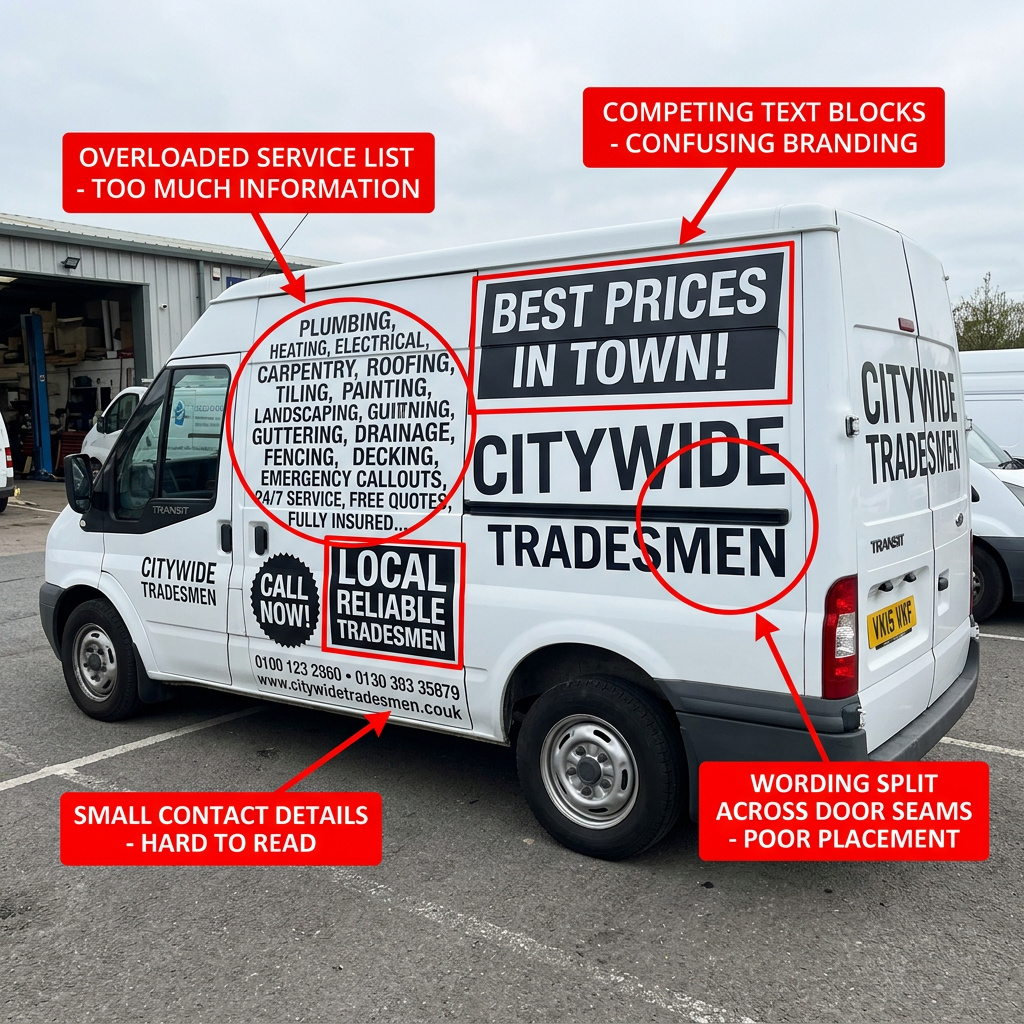
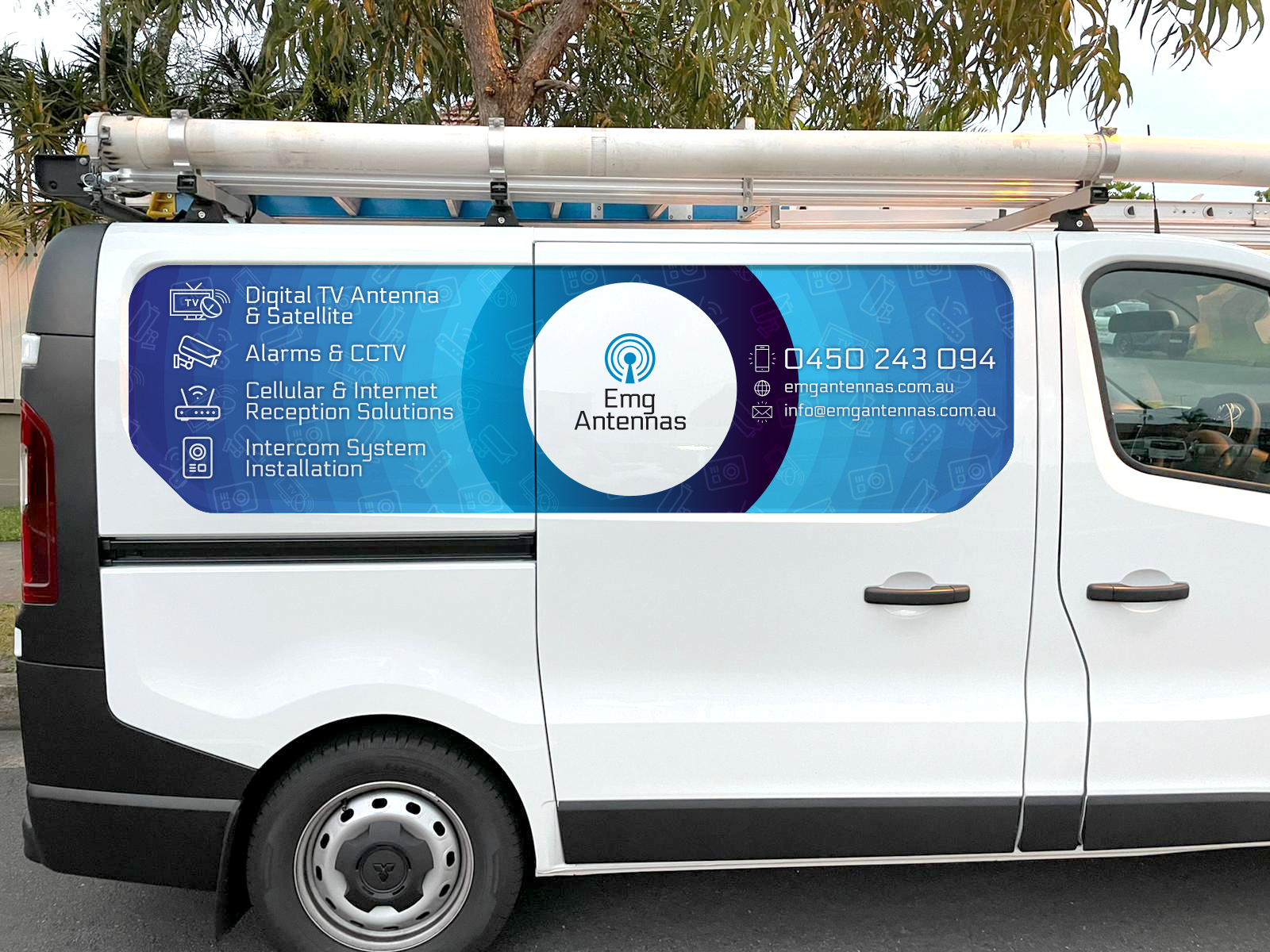
Good branding on cars tends to succeed for the opposite reason. It is clear, focused, and easy to take in from a glance. It usually gets the basics right. The hierarchy is clear, so the business name lands first, the service comes through quickly, and the contact path is easy to spot if it needs to be there. The layout feels balanced, the text is readable from a distance, and the brand stands out without confusion.
With EMG Antennas, the challenge we had was fitting several service categories onto the van without turning it into visual noise. The stronger direction used a clear split in hierarchy – services grouped neatly on one side, brand and contact details given a stronger identity block on the other. That made the van easier to scan, easier to remember, and far more readable from a distance. Instead of making every detail fight for attention, the layout gave each message a job.
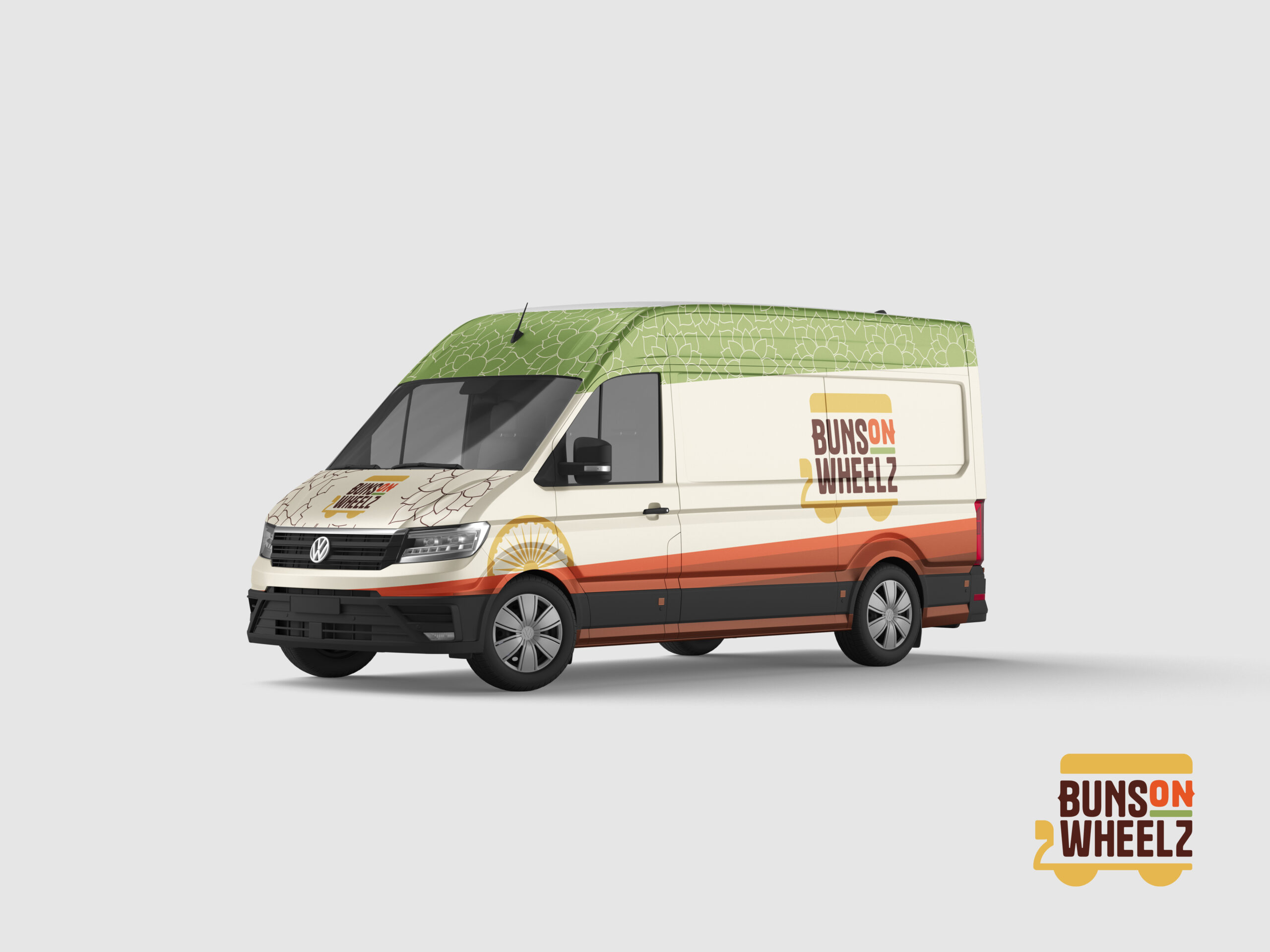
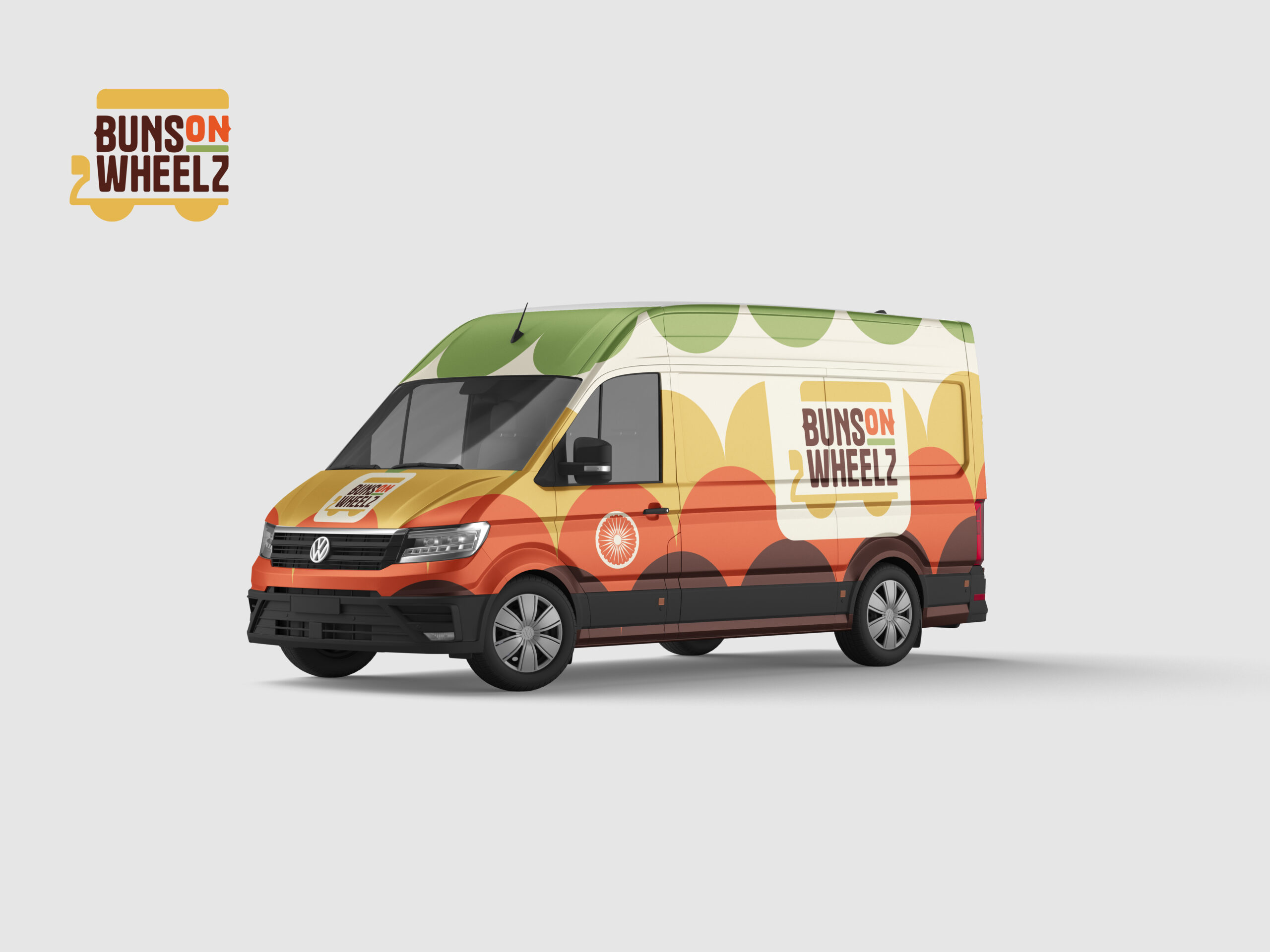
With Buns on Wheelz, the goal was different. This was a food brand, so the vehicle needed more personality and visual flavour. Even so, the strongest concepts still worked because the branding stayed anchored. The graphics added character, but the logo remained clear, the composition felt controlled, and the design avoided losing the brand inside decoration. That is the balance good vehicle branding needs. You can be expressive, but the business still has to register first.
Together, these examples show that good branding on cars is not about forcing every vehicle into the same formula. It is about applying the right principles to the right business. A service van may need sharper hierarchy and cleaner information flow. A food vehicle may need stronger visual identity and memorability. In both cases, the branding works when people can quickly understand who the business is, what it does, and what they should remember after the vehicle has passed.
A quick self-audit makes the problem easier to spot. After seeing the car once, what would someone actually remember? Could they say the business name correctly? Could they tell what the business does? Could they find a way to contact the brand later? If those answers feel unclear, the design probably needs tightening. The difference between good and bad vehicle branding is rarely about style alone. It comes down to whether the message lands fast and stays memorable.
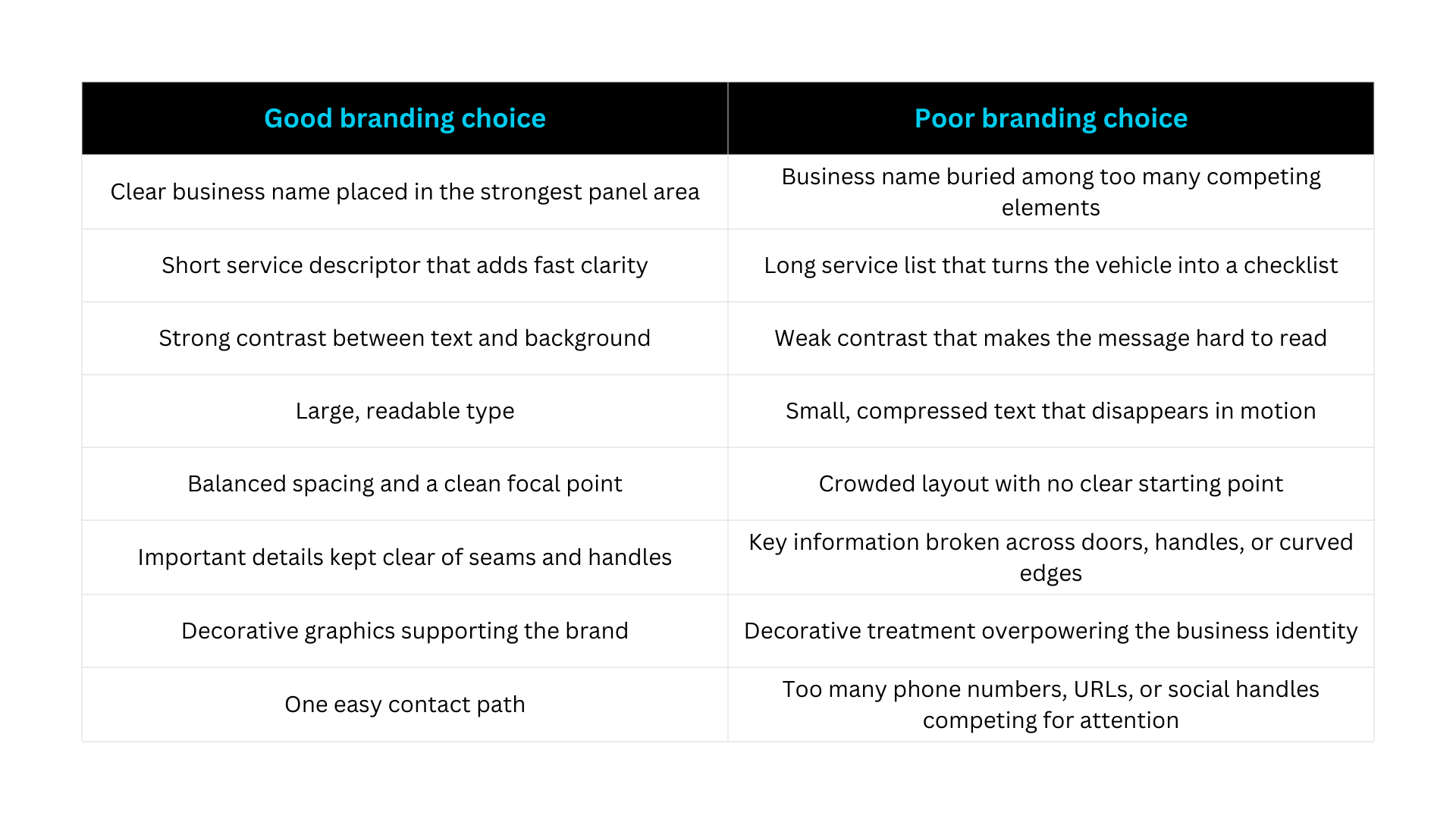
Good vs poor branding choices on cars
Final Checks Before You Print and Wrap
Before anything goes to print, run through a quick but disciplined review. This is where small mistakes can turn into expensive ones, so it pays to be thorough.
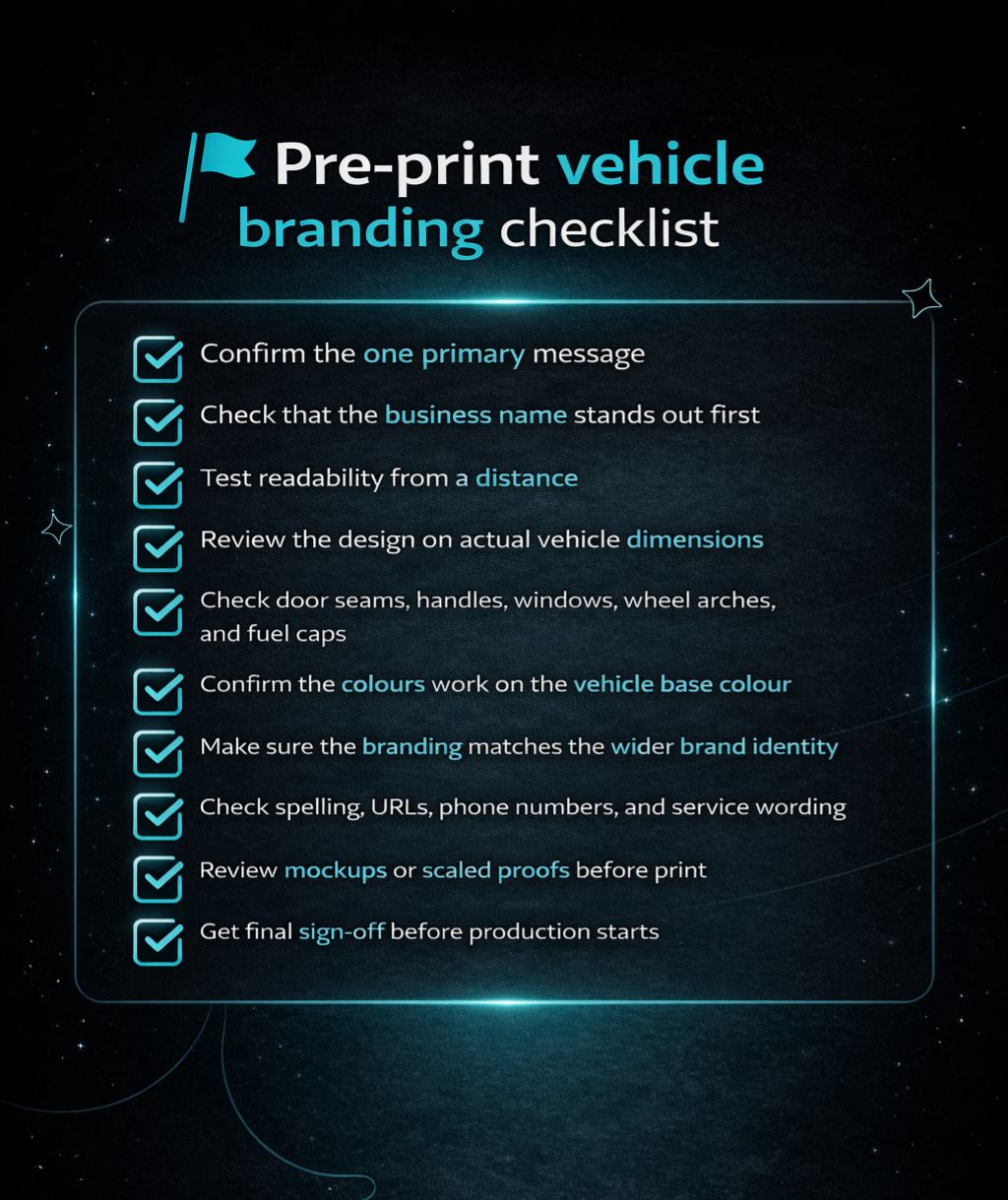
A strong concept can still fall apart if the final review is rushed. This is where details like a single wrong digit, awkward logo placement, or undersized text start to cause real problems. What looks clean on a screen can behave very differently once it is applied to a real vehicle.
Keep the review practical. Make sure the main message is obvious at a glance. Check how the design reads from a distance, not just up close. Test how it sits across panels, especially around doors and curved surfaces. Then go back to the basics and confirm everything is accurate and consistent.
If you want help refining your vehicle branding with a marketing expert before it goes to print, contact Mindesigns.