Marketers & Business Owners

What happens when advertising on ChatGPT goes live? Millions of people now turn to ChatGPT for answers instead of search engines or social feeds, and that attention will inevitably need to be monetised. After all, platforms can’t keep the lights on forever offering free services. For marketers, that shift brings both opportunity and risk. But more about that shortly.
Traditional ad channels like Google and Facebook rely on structure. Search lines up results, social scatters promotions through feeds, and display fills predictable slots. Chat works differently. It unfolds as a single conversation where timing, tone, and context decide whether an ad feels helpful or intrusive.
This environment rewards precision. Users arrive with clear intent and fewer distractions, so the right message can have strong impact. But chat also feels personal. So, success relies on thoughtful formats and clear policies that preserve trust while introducing commercial moments.
These changes are forcing marketers to rethink ad creatives. Understanding how chat diverges from traditional channels is the first step toward building effective strategies in this new landscape.
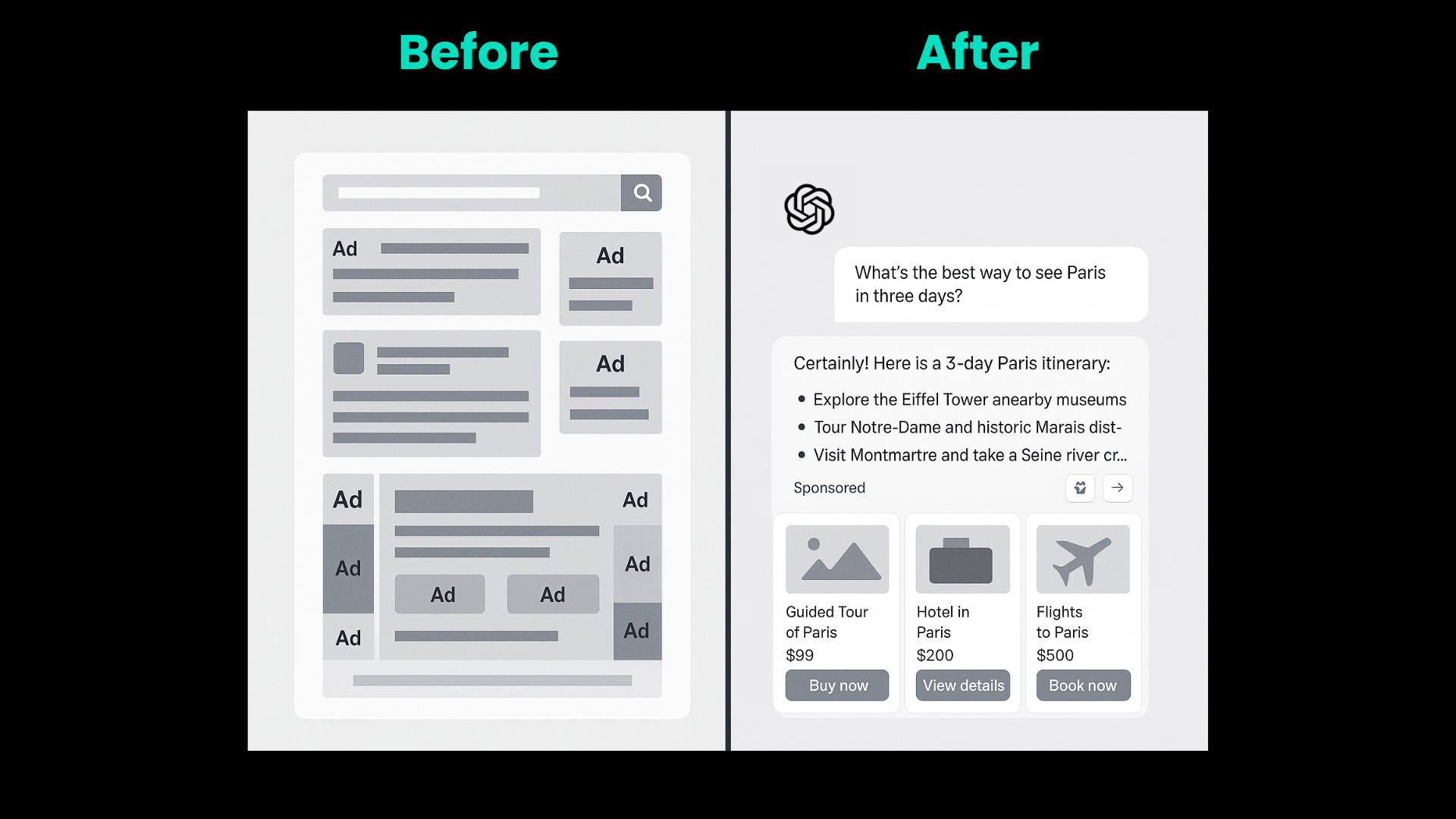
Why Advertising on ChatGPT Is Fundamentally Different
Advertising on ChatGPT shifts marketing into trusted, high-intent conversations, creating powerful opportunities and serious responsibilities for advertisers, tech teams, and regulators.
AI has already disrupted long-standing strategies like SGE SEO, where search experiences are being rebuilt around intelligent systems. Advertising on ChatGPT follows the same trajectory, demanding fresh approaches to visibility, messaging, and user trust.
Advertisers who move early can gain a clear edge. Conversational environments reward concise, helpful creatives and smooth landing flows. Strong compliance with disclosure and targeting rules will be essential to keep trust intact while driving performance. The brands that prepare early will lead when these opportunities become reality.
To understand why this shift matters, it helps to step back and compare chat with the channels marketers already know. Search, social, and display advertising each follow their own familiar rules. ChatGPT native ads, however, live inside a completely different interaction model. The structure of the conversation, the mindset of the user, and the sensitivity of the context all reshape how ads need to work.
Here is a clear side-by-side look at the differences –
| Factor | Search Ads | Social Ads | ChatGPT Native Ads |
| Format | Multiple links | Feed posts | Conversational turns |
| User mindset | Task-focused | Browsing | Seeking direct help |
| Trust level | Moderate | Low | High |
| Targeting model | Keyword & profile | Behavioural | Contextual intent |
| Regulation sensitivity | Medium | High | Very High |
These differences explain why advertisers cannot simply copy existing formats into a chat window. The structure, expectations, targeting rules, and legal frameworks force a fresh approach. That is why the earliest and strongest opportunities will cluster around specific industries that match this high-intent, trust-based environment.
Where the First Ad Dollars Will Flow in Advertising on ChatGPT
When new ad channels launch, early adopters often enjoy a cost advantage. Prices typically start lower than on mature platforms, creating a window where businesses can secure high-quality traffic for a fraction of the usual cost. Those who move quickly can reap the rewards before competition drives prices up to market levels.
Advertising on ChatGPT will likely follow the same early-stage dynamic seen with other major ad platforms. Costs start low, and the earliest budgets flow toward the most conversion-ready moments. In practical terms, that means the first wave of spend will focus on high-intent conversations, where a well-timed sponsored suggestion can directly trigger a purchase, booking, or sign-up.
E-commerce and retail will likely lead. Users asking for laptop recommendations, skincare products, or gift ideas are already close to buying, making sponsored cards or inline suggestions a natural fit.
Travel and hospitality will follow closely. ChatGPT is increasingly used for itinerary planning, flight searches, and accommodation comparisons, opening space for sponsored deals and booking tools.
Local services will also benefit from location-based queries such as “best Italian restaurant in Brisbane” or “reliable plumber nearby,” where relevant placements feel helpful rather than intrusive.
SaaS and education brands are well positioned too. Their products often solve problems surfaced in the conversation, making quick sign-up modules and sponsored tools highly relevant.
Finally, lead-generation sectors like insurance, finance, real estate, and universities can leverage conversational signals to offer quotes, calculators, or consultations right at key decision points.
The underlying business models will mirror familiar pricing structures but adapt them to conversational flows:
- CPC (cost per click): Pay for each user click on a sponsored answer or card
- CPA (cost per action): Pay for actions like form submissions or app installs
- Revenue share: Pay a percentage of transactions completed inside ChatGPT
These industries align perfectly with the high-intent, low-distraction strengths of conversational interfaces. For early movers, the combination of lower ad costs and precise targeting creates a rare window to achieve outsized returns before the market matures.
Predicted Ad Formats and How They Will Appear in Advertising on ChatGPT
Advertising on ChatGPT will rely on formats that fit smoothly into the flow of a conversation. Instead of sitting on the edges of a page, these ads appear where attention is sharpest: inside the exchange itself or right beside it. Three formats are likely to shape the first wave of monetisation. Each brings its own role, strengths, and challenges.
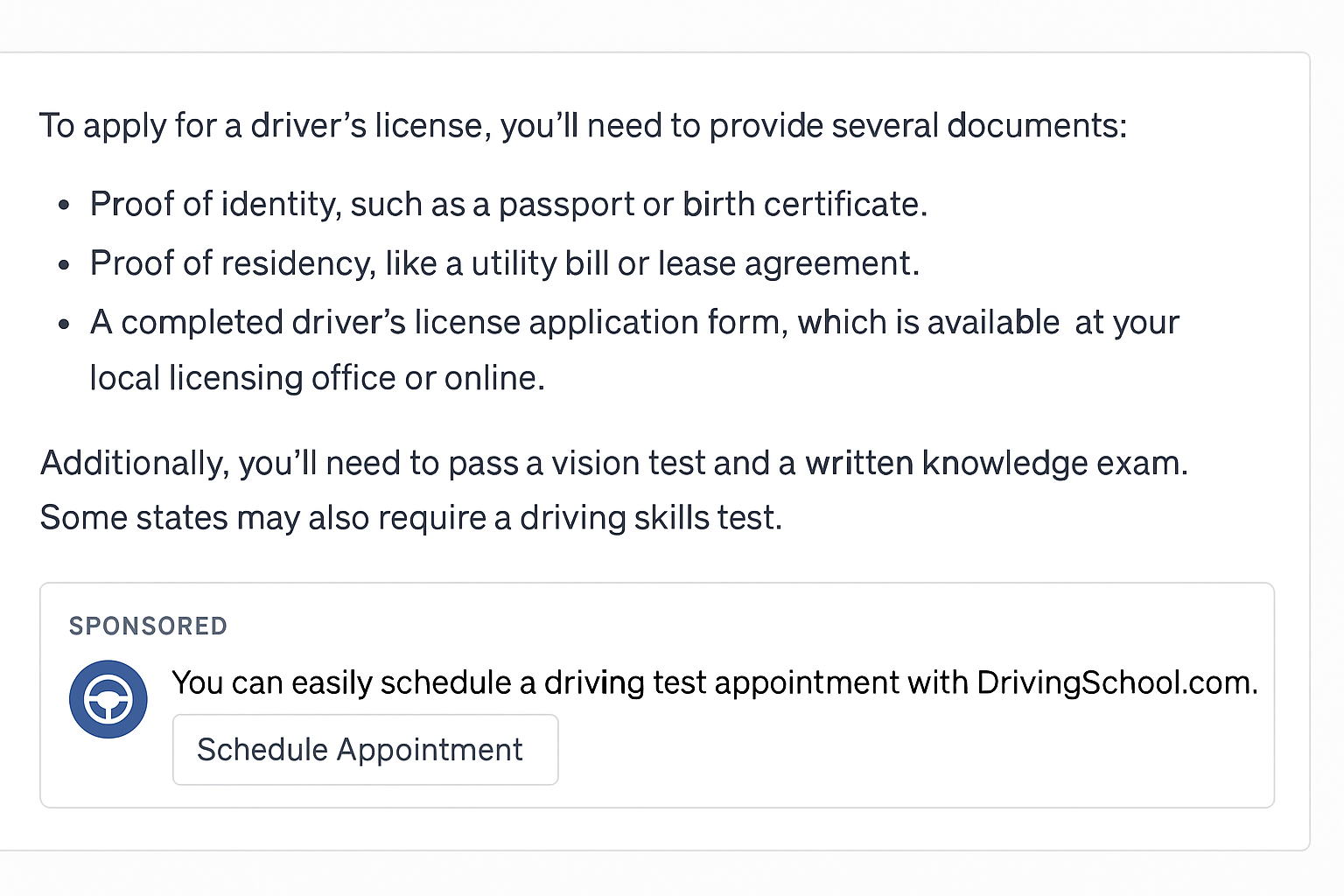
Inline Sponsored Answers
These appear as part of ChatGPT’s written response, usually at the end of an answer. A clear “Sponsored” label distinguishes them from the main content. Their strength lies in timing and relevance. If the recommendation matches the user’s intent, it can feel like a natural extension of the advice. The risk is trust sensitivity. A poorly placed suggestion can feel jarring for customers.
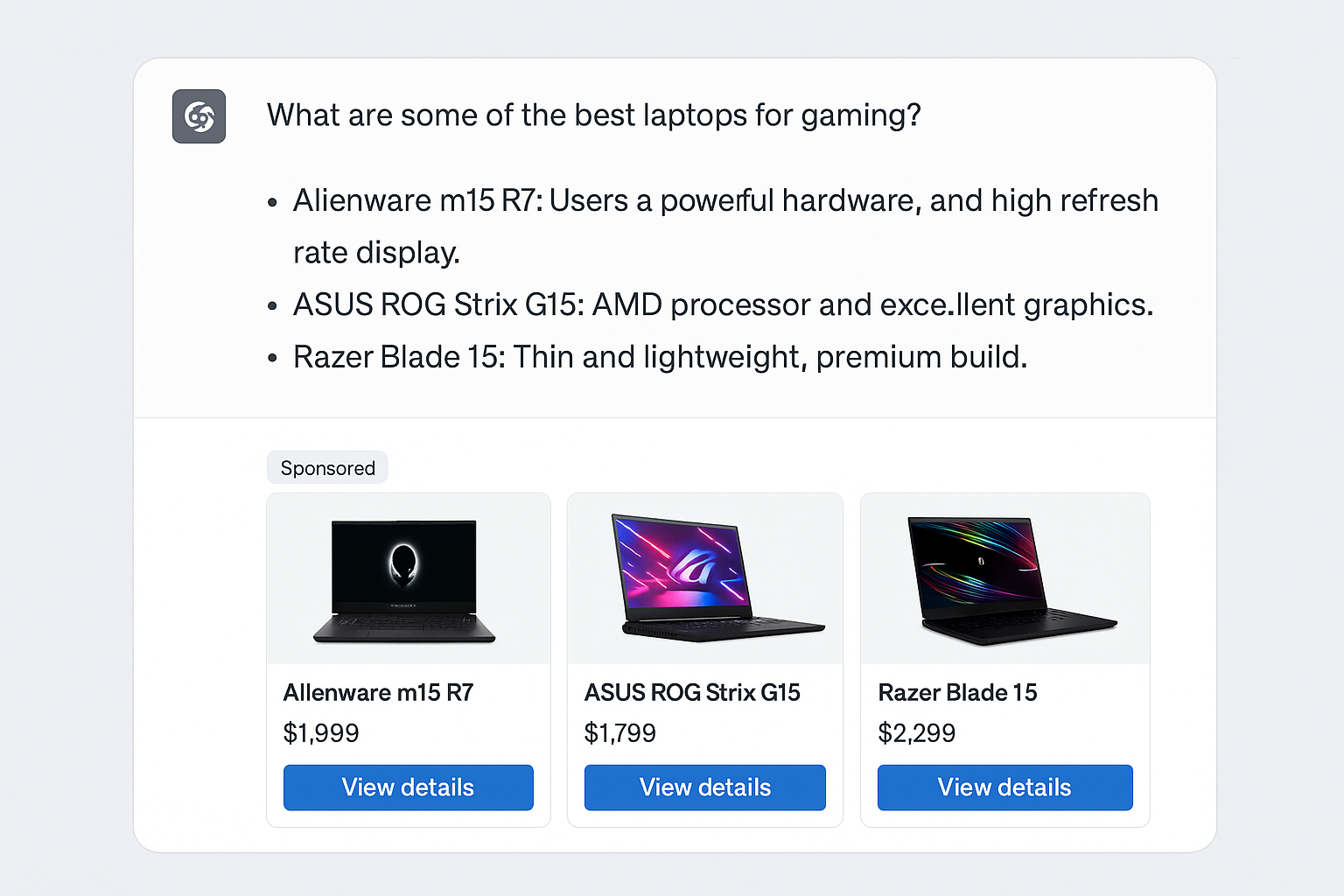
Sponsored Result Carousels
Carousels sit below an answer and display several visual cards with images, prices, and buttons. Each card carries a badge to signal sponsorship. This format works well for e-commerce and travel because users can scan options quickly without leaving the chat. The challenge is avoiding clutter, especially on mobile.
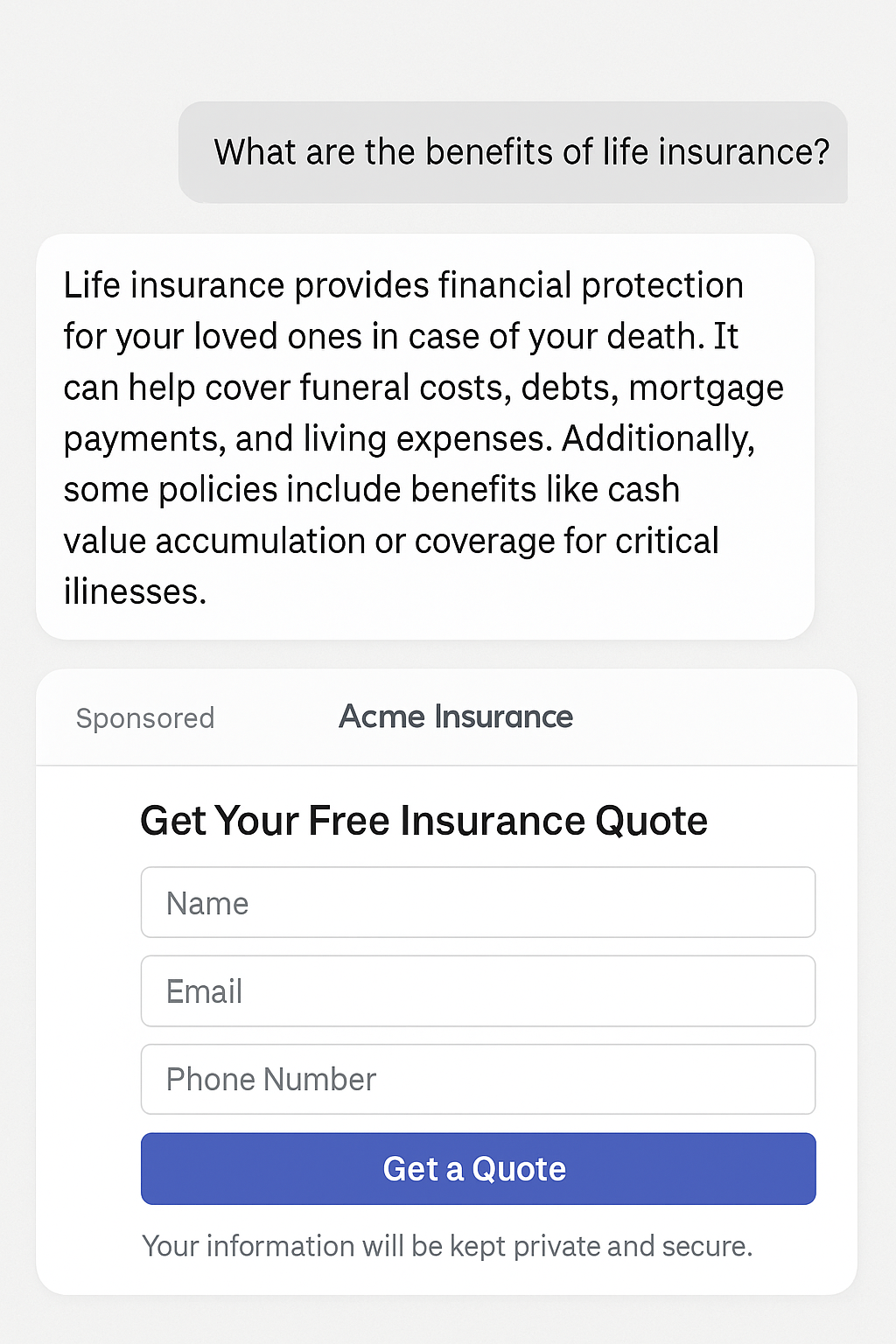
Lead-Gen Modules
These introduce small, branded forms inside the chat, usually after an answer about services like finance or insurance. Users can submit details for quotes or consultations without switching tabs. They suit high-value verticals but require strong privacy controls and careful placement to avoid interrupting the flow.
These early formats hint at how native advertising will blend into conversations.
Who Will Control ChatGPT Ads and How Will Pricing Work?
A key concern for marketers is how much control they will have once advertising on ChatGPT launches. Unlike search or social platforms where advertisers manage placements directly, a conversational interface relies on the assistant to decide when and where an ad fits without breaking the flow. This means advertisers will likely influence campaigns at a strategic level, while ChatGPT handles real-time delivery.
Advertisers will still shape outcomes through targeting choices, bidding strategies, and creative assets, but the platform will control the moment-to-moment placements. Fine-grained controls, such as selecting exact ad positions, are unlikely because the assistant must prioritise user experience. Instead, marketers will focus on clarity, relevance, and timing rather than micromanagement.
Pricing will not mirror existing channels exactly. Costs will vary by intent strength, industry, and format. For example, a sponsored answer shown during a high-intent query could cost more than a sidebar card. Some formats may use CPC or CPA, while others might adopt hybrid or revenue-share models. Over time, competitive pricing will reward advertisers who offer precise, helpful experiences.
ChatGPT’s competitive edge will come from its ability to deliver ads during high-trust, high-intent moments. A well-placed ad can reach users at the exact point of decision, often with less distraction than other channels. This creates potential advantages such as:
- Reaching users when they are most ready to act
- Operating in a trusted, low-clutter environment
- Justifying premium prices for high-value conversions
In short, advertisers may give up some control, but they gain access to moments that few platforms can replicate.
Strategic Implications and Next Steps for Advertising on ChatGPT
Advertising on ChatGPT is opening a new chapter in how brands, platforms, and regulators approach digital interactions. It is not just another placement channel. It changes how marketing fits into moments of intent, trust, and conversation. This shift creates both clear opportunities and new responsibilities for everyone involved.
Advertisers who adapt early can gain an edge. Conversational environments reward clear, concise, and genuinely helpful creatives. Brands need messages that feel like part of the solution, not interruptions. Landing flows should be seamless, whether that means enabling direct purchases inside the chat or guiding users smoothly to external pages. Compliance with disclosure and targeting rules will be non-negotiable, so getting this right from the start will protect both reputation and performance.
This is the moment to position ahead of the curve. If you want to align your current marketing strategy with how conversational environments are evolving, reach out for tailored guidance. The brands that prepare early will be ready when these opportunities move from prediction to reality.