For Marketing Leaders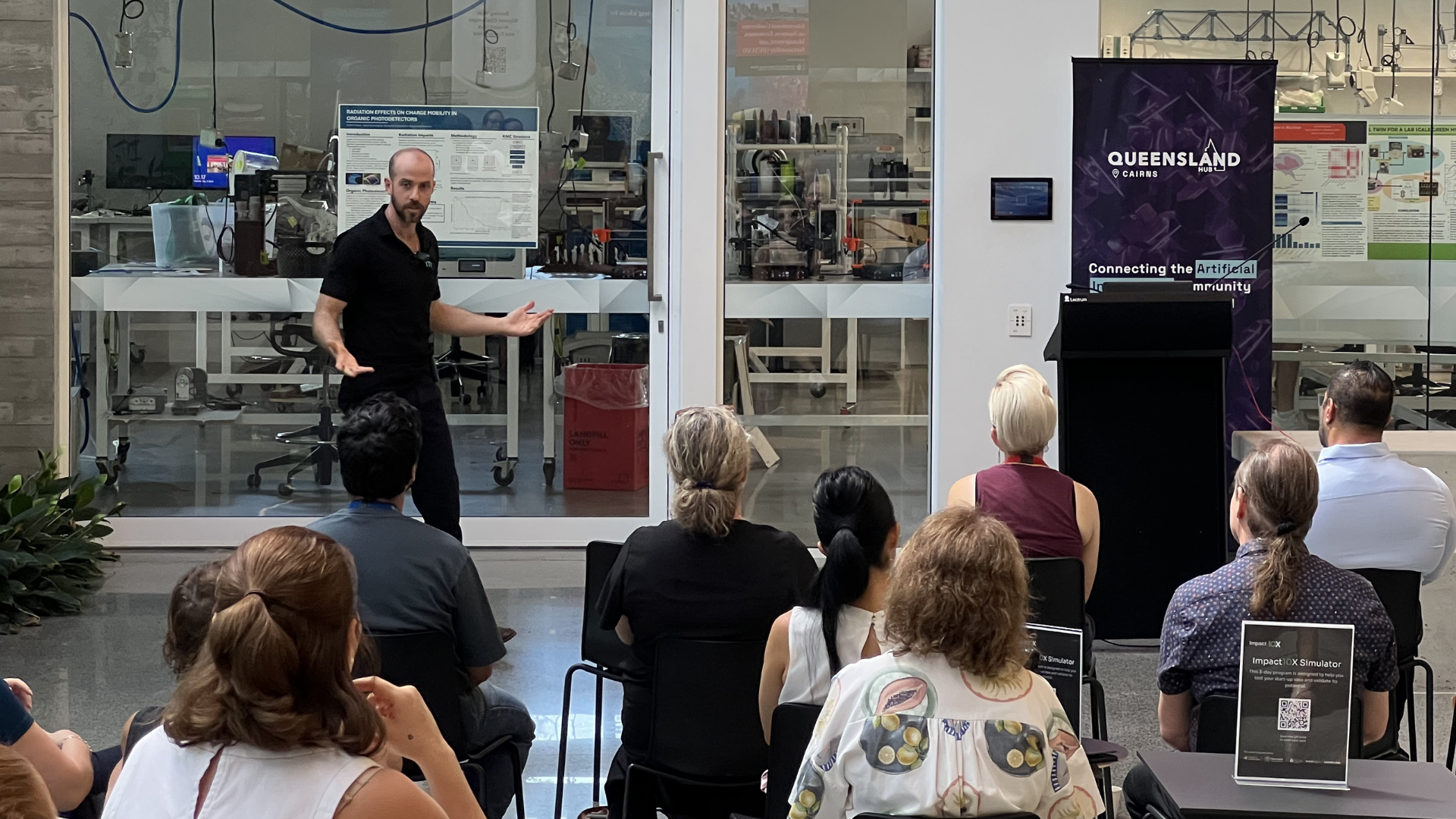
What happens when buyers no longer need your sales team to make a decision? That is the reality most B2B businesses are operating in today, with 81% of B2B buyers already having a preferred vendor before they ever speak to a sales representative. With AI accelerating research, this is one of the defining future marketing trends heading into 2026.
So how have B2B teams responded to this new trend? In most cases, with more of the same. More content, more events, and more AI tools bolted onto existing marketing workflows.
But from what we have seen, more activity is no longer enough. What matters now is how well your marketing aligns with how buyers actually make decisions, answering their key questions, building trust, and reducing uncertainty at each stage.
To understand where this shift is happening, we need to break down the key changes shaping modern B2B marketing.
Mega Trends Shaping B2B Marketing
From our experience working with many B2B clients in Australia, a few trends point back to fundamental shifts. To see how this impacts execution, we start with how marketing now influences buying decisions.
Marketing Is Now the Frontline of Sales
Traditionally, marketing and sales operated on a handoff model. Marketing generated leads, then passed them to sales to qualify and close.
Now, it is very different. With 97% of buyers open to purchases above $50,000 without speaking to sales, many are comfortable researching, comparing options, and even submitting enquiries or booking demos on their own.
This changes how both teams operate. The shift is from handoff to alignment. Marketing builds trust early, and better filters prospects, so sales engage more informed buyers, and both work as one system to influence and close the same opportunities.
This is where Account-Based Marketing (ABM) becomes critical. Instead of targeting broad audiences, ABM focuses on high-value accounts with tailored messaging across touchpoints. Instead of casting a wide net, marketing and sales align around accounts that fit the ideal customer profile, ensuring every interaction is relevant and tailored to the buyer’s stage.
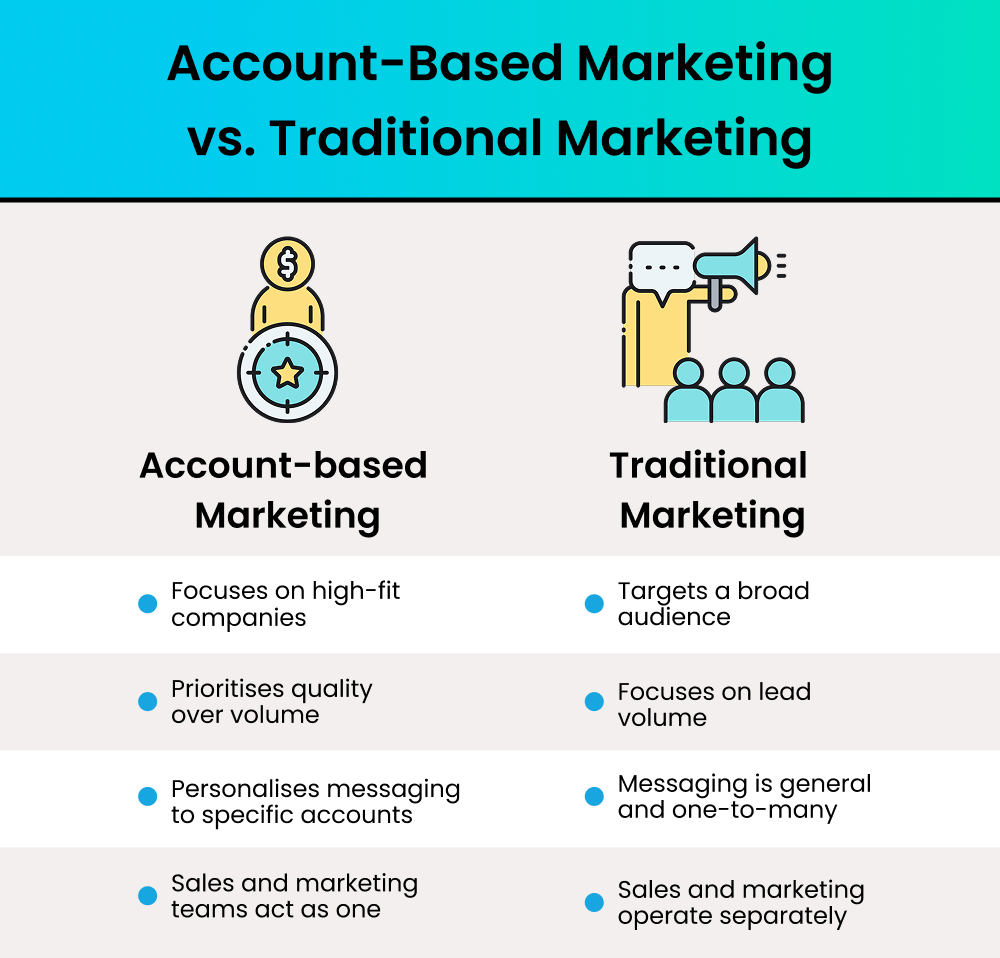
From our experience, effective ABM comes down to how well you understand and address the specific pain points of each account. This means answering key questions through different pieces of content (case studies, white papers, detailed service pages, etc.), clearly explaining your process to help buyers validate decisions before reaching out.
The Funnel Has Turned into a Web
The traditional B2B funnel assumes a linear path from awareness to decision, but that model no longer reflects how B2B online marketing works today.
Buyers now move across multiple touchpoints, from search and peer content to communities and AI-driven tools, often validating brands before ever visiting a website. Many businesses respond by creating more content for each channel, which quickly becomes ineffective. What works better is repurposing. One strong insight can be adapted across formats to maintain visibility, messaging, and scale output without increasing workload.
Take Semrush, for example. They published their State of Search 2025 report under Datos, then spun a single insight, zero-click searches, into multiple formats, including an SEO-driven blog, LinkedIn content, and even a webinar.
One piece of research becomes multiple touchpoints across the buyer journey. This is how they maximise reach without constantly creating from scratch, turning one insight into sustained visibility, engagement, and authority.
Trust and Authenticity Is a Commodity
With generative AI lowering the barrier to content creation, what stands out now is not volume, but authenticity. Buyers are drawn to content that reflects real experience and signals genuine expertise from subject matter experts, driving a shift toward people-led visibility.
This is especially visible on LinkedIn, but what performs best is practical content. Webinars allow businesses to demonstrate expertise in real time. Our client Sekuro does this well, running sessions focused on current challenges that deliver immediate, actionable value.
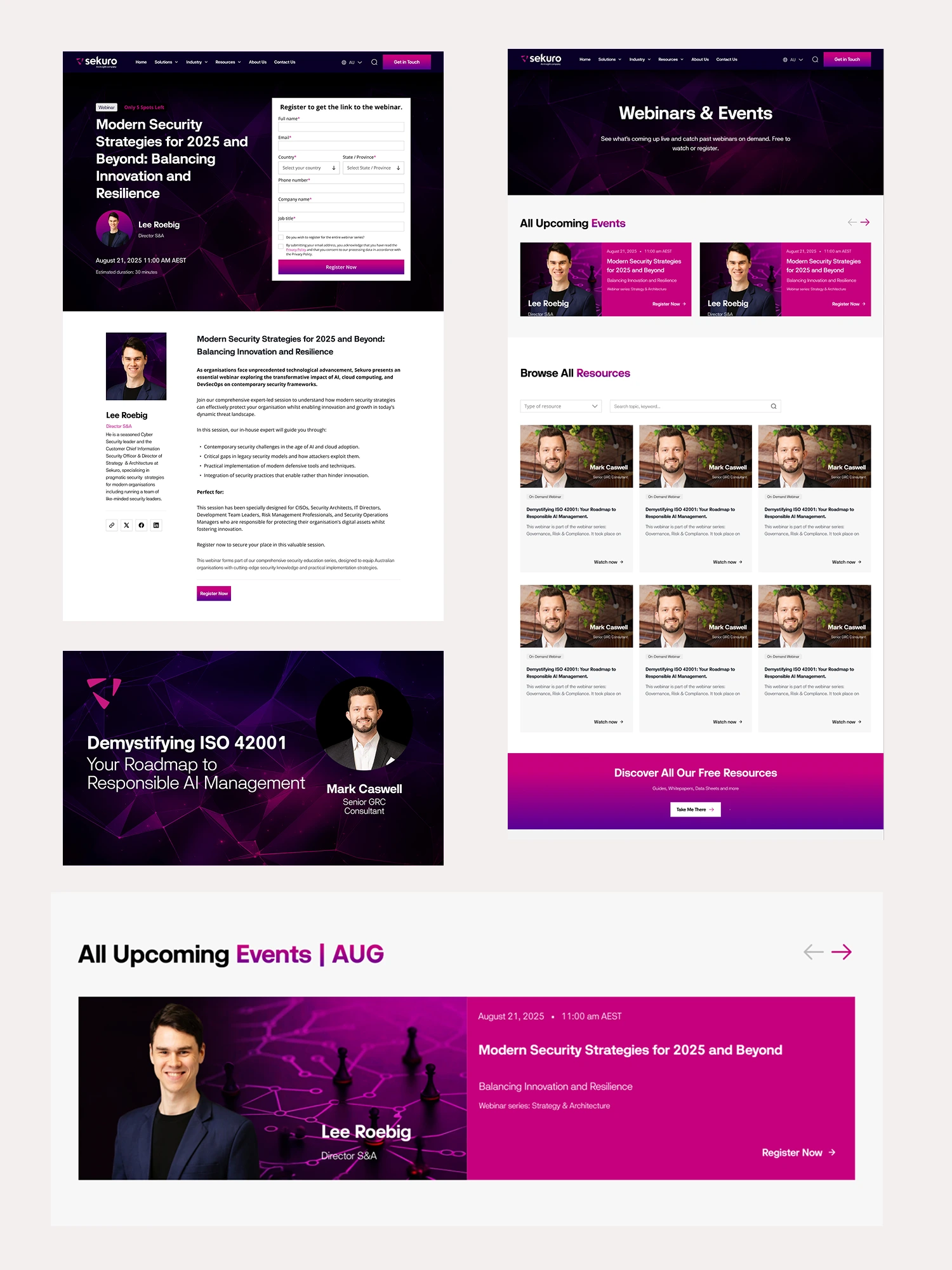
There are other ways to demonstrate your expertise and authority on your website and socials. Peer validation, strategic collaborations, and visible engagement all contribute to credibility. This can be reinforced through targeted case studies, real client outcomes, and content that reflects actual work rather than general insights. This is also a great indicator for LLMs to contextually understand what your company is all about.
The New Technologies Shaping B2B Marketing
While buyer behaviour is driving much of the change in B2B marketing, technology is accelerating how quickly teams can respond. The difference is no longer access to tools, but how they are integrated into workflows to support scalable execution. This is where AI is having the biggest impact.
AI as a System, and Not a Tool
The biggest mistake we see with AI adoption is that B2B teams are still using them as one-off tools, and not embedded across the entire marketing function.
This is how we approached AI early on. Like most teams, we used tools like ChatGPT for ideas, outlines, and drafting, followed by heavy human editing. While this improved efficiency, it did not fully leverage what AI could do.
Now, our approach is more systemised. Instead of using AI for isolated tasks, we have built it into our workflows and are creating custom GPTs tailored to specific functions. For example, we use AI to generate and refine video scripts, improve hooks, and provide structured feedback based on performance criteria.
AI is being integrated in more steps of our processes in a way that optimises quality and delivery, while offering more control.The difference is consistency. AI is no longer used occasionally. It is embedded into repeatable processes that scale execution without increasing resources.
The Rise of AI Agents in Marketing
AI is evolving beyond tools into AI agents that can handle multi-step marketing processes. Instead of supporting isolated tasks, they are beginning to take on entire execution layers across B2B marketing. As our marketing expert Omer Bernstein highlights, the opportunity sits in “the middle, the messy, repetitive execution layer,” where speed and consistency can be scaled.
This is where AI agents deliver the most value. They are particularly effective in areas that involve continuous data processing and repeated execution, such as analysing buyer intent, lead scoring, and optimisation. Rather than executing one step at a time, they enable workflows where each stage feeds into the next with minimal friction.
Strategy and final output remain human. The teams that benefit most are those building structured systems today, while preparing for a more scalable, AI-driven execution layer.
Events and Webinars: From Tactics to Strategic Assets
Events and webinars have long been part of the B2B marketing mix, but their role is changing. What were once standalone tactics are now becoming strategic assets for content that influences multiple stages of the buyer journey. Here is what we are seeing.
Webinars Shift to Practical Formats
Webinars have shifted from presentation-led formats to practical, outcome-driven sessions. In fact, around 30% of attendees prefer instructional webinars that teach specific tasks and deliver immediate value.
From our experience, the best-performing webinars are designed as a working session. This means front-loading value within the first few minutes, focusing on one clear outcome, and structuring the session around live application or real examples. The goal is not to cover everything, but to solve something specific.
We see this in our work with Impact10X, a program delivered in partnership with JCU and the Queensland Government. Instead of broad, high-level discussions, sessions are built around practical insights and real use cases. Currently, the formats we’ve seen work best are:
- Live walkthroughs
- Real-time audits
- Case-based discussion
One way to approach this is to take your usual webinar topic, narrow it down to one specific problem, and solve it live instead of trying to cover everything.
Hybrid Becomes Standard
B2B events were once split between in-person and fully remote formats. Today, hybrid has become the standard, with over 70% of B2B marketers investing in hybrid event strategies.
This shift is driven by efficiency and reach. Once a live event is in place, extending it digitally by adding a livestream setup requires minimal effort but significantly increases return.
We see this in our work with Impact10X Connectivity Cafes. Rather than treating the event as a one-time interaction, sessions are captured, repurposed, and distributed across channels. This not only expands reach but also creates a pipeline of content that supports ongoing campaigns and engagement long after the event ends.
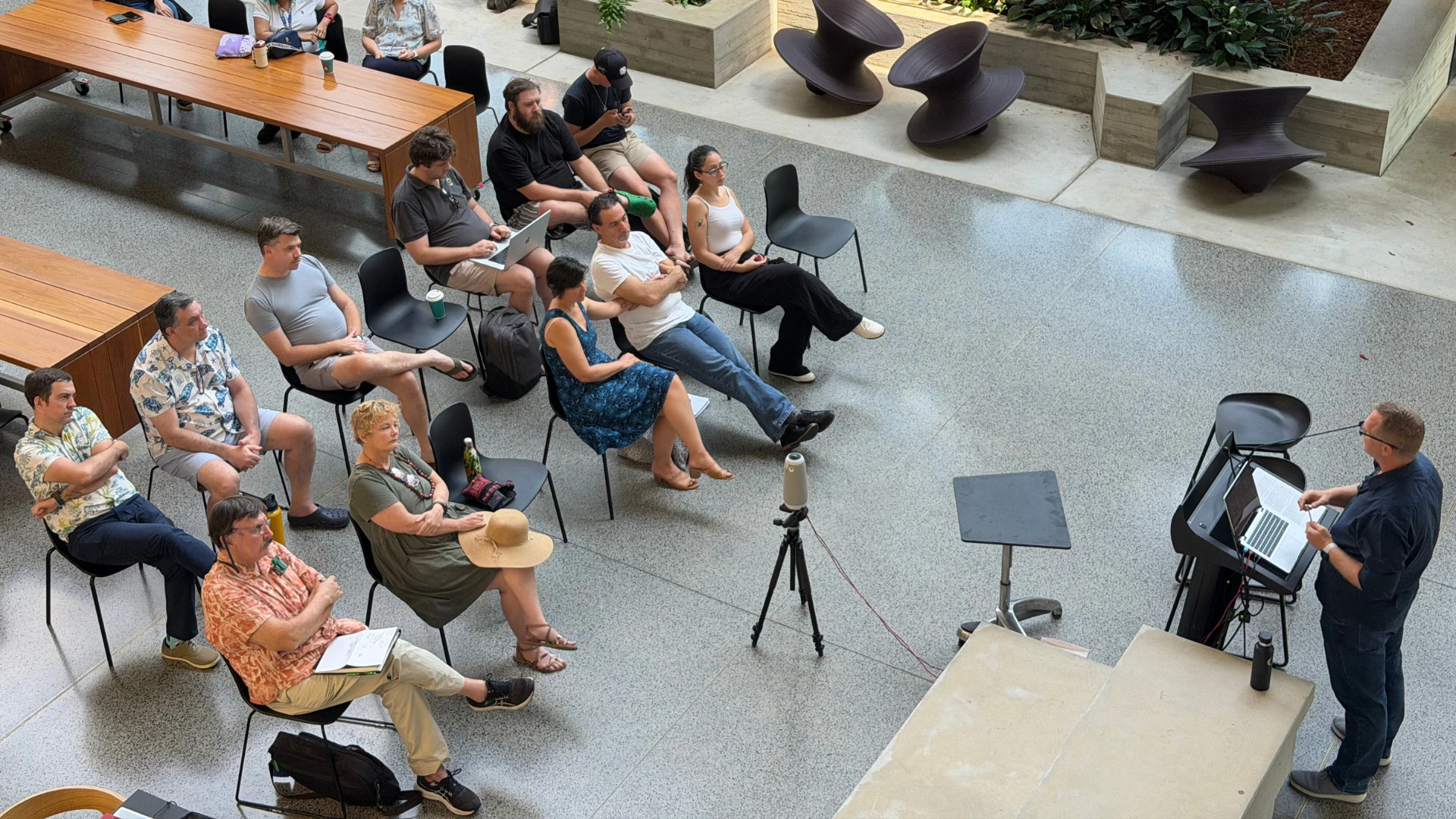
The opportunity is straightforward. If you are already investing in an event, design it for both physical and digital from the outset to maximise reach, engagement, and long-term value.
The Shift Toward Systems
Across these trends, a clear pattern emerges. The future of B2B marketing is not defined by more tactics, but by systems that connect strategy, execution, and outcomes.
Channels will continue to evolve, but how buyers decide remains constant. They want clarity on what you do and confidence it will deliver results.
This is where systems matter. A structured approach keeps positioning clear, messaging consistent, and channels aligned around the same narrative.
At Mindesigns, this is how we work. We focus on building marketing systems that align strategy with execution for our clients Ensuring every element contributes to measurable growth. If you are looking to build a more structured and scalable B2B marketing approach, get in touch with our team.
Reviewed by Santiago Parra Suarez