For Marketing Leaders
Across many B2B organisations, AI has gradually become embedded in day-to-day workflows, forming part of a broader push towards business growth strategies. You may already be using AI to generate content, accelerate research, and automate small tasks across marketing and sales.
Yet, for most businesses, this is where progress stalls. According to a McKinsey report, around two-thirds of organisations are still in the experimentation or pilot stage of AI adoption. We found ourselves in this exact position a few years ago. AI initially helped Mindesigns streamline smaller tasks, but it did not fundamentally change how we generated pipeline or drove results. It functioned as a helper, and not a driver of growth.
Over time, that became the focus. We made a conscious move to test, refine, and embed AI tools into our broader workflows, not as isolated solutions, but as important cogs in our marketing process.
It’s not just us. Across our B2B clients, experimentation is turning into action. We’ve helped actively push for AI integration into their systems, not just use it as a tool. But while the shift has started, most are still in the early stages of turning that effort into real, revenue-driving outcomes.
To understand where this gap comes from, it helps to break AI adoption into three distinct stages.
The Three Layers of AI-Driven B2B Growth
Implementing systemic AI changes can feel overwhelming. The progression from using AI as a tool to embedding it into how your company grows is not something that happens all at once. That is why it is helpful to think about it in stages.
Most organisations can be grouped into three layers based on how they utilise AI. Each layer represents a step forward in maturity, but more importantly, a shift in how AI contributes to growth.
Layer 1: Task Automation
At this stage, AI is applied at the task level.
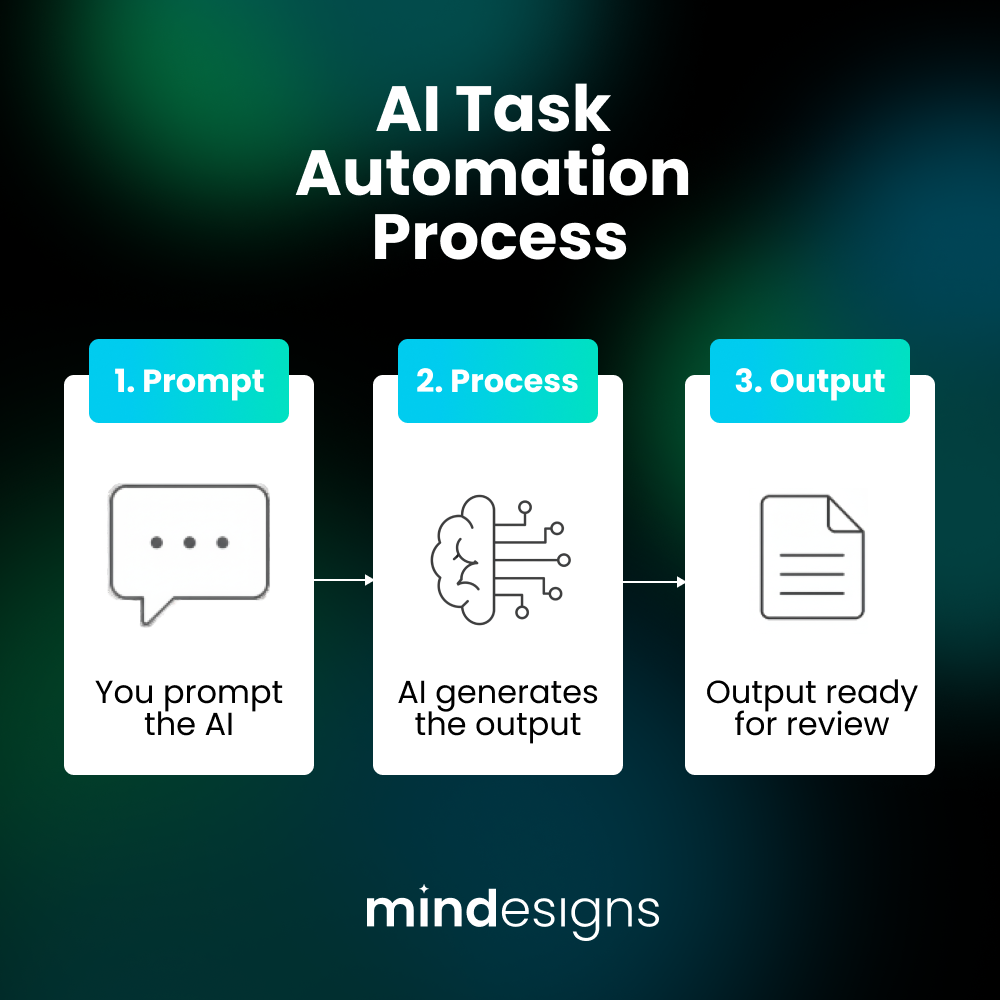
These applications are valuable and often deliver immediate gains. For example, in one client project with Crowd Control Systems, we used AI-generated imagery to visualise their product. This reduced the time and cost associated with traditional photoshoots, such as sourcing models and locations, while still producing high-quality visual assets.
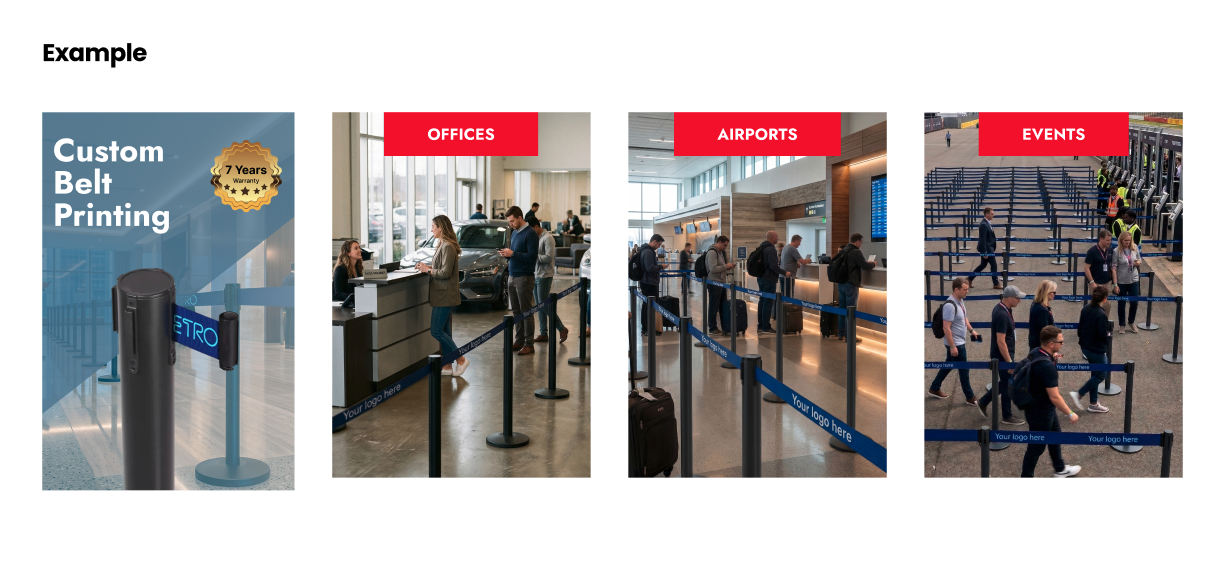
However, these activities often remain disconnected from the broader marketing process. Content is created faster, but it is not always linked to how leads are nurtured, tracked, or converted. As a result, while AI improves output and efficiency, it is not yet being used in a way that meaningfully impacts the sales pipeline or business outcomes.
Layer 2: Workflow Integration
At this stage, AI begins to connect individual actions into structured workflows. Instead of isolated tasks, there is now a system that responds to behaviour in real time.
When a prospect downloads a resource, visits a key page, or engages with an email, those signals trigger the next step automatically. Messaging becomes more relevant, timing improves, and leads are guided forward based on actual intent rather than fixed sequences.
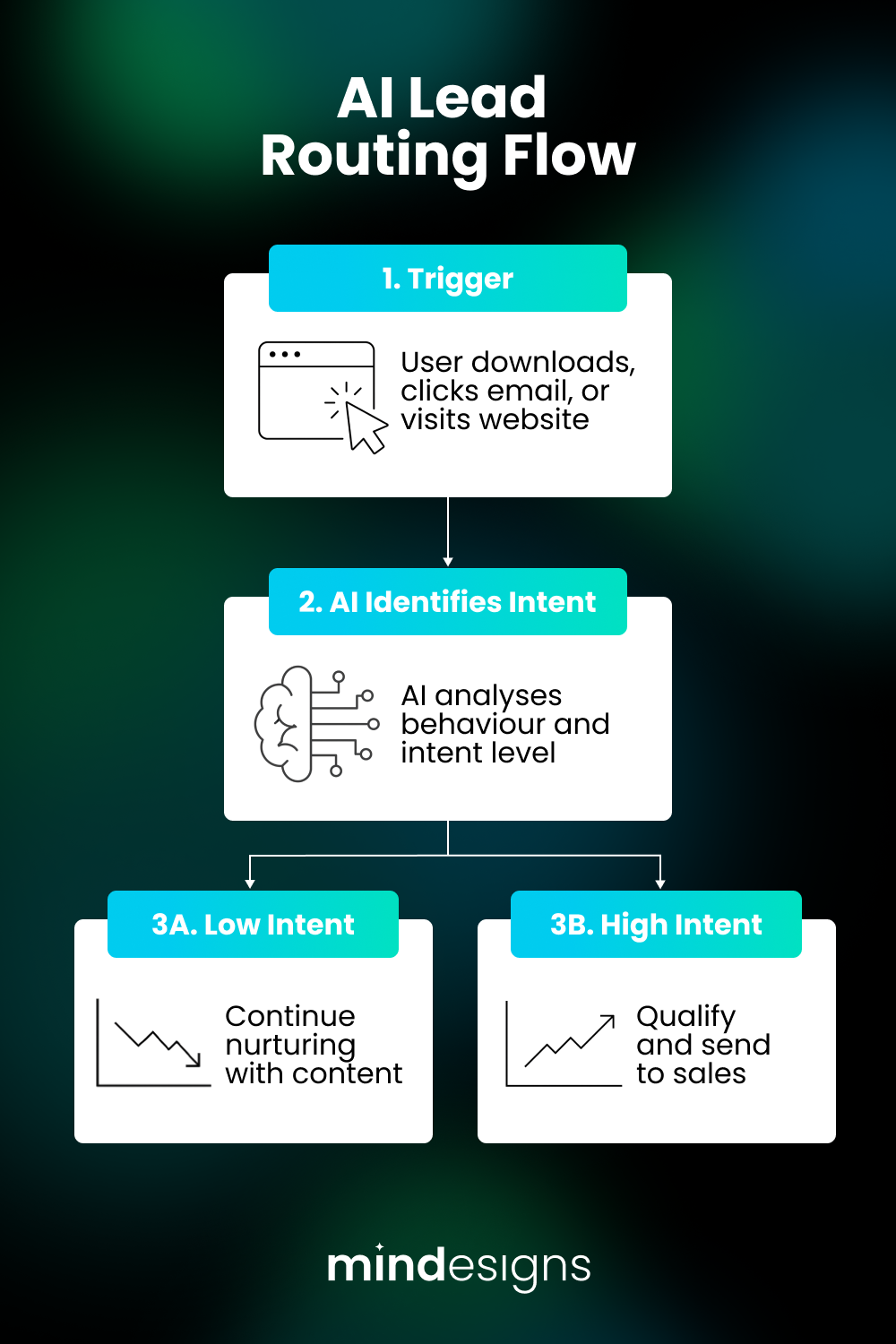
This is where marketing, sales, and CRM platforms start to work together, with data flowing between systems to create a clearer picture of each prospect. This is where AI starts to play a more meaningful role in how leads progress through the pipeline, making the overall process more efficient and aligned. Consequently, making the most of every lead generated.
With that said, most workflows are still predefined and require manual optimisation. The system can respond, but it does not yet learn or improve on its own, leaving further opportunity to unlock.
Layer 3: System Orchestration
At this stage, AI evolves from workflows into a network of AI agents that actively manage and optimise the growth system. Instead of following predefined rules, these agents monitor behaviour, interpret signals, and take action in real time across the customer journey. Every interaction feeds into the system, where AI agents continuously analyse performance and adjust content, timing, and pathways in real time.
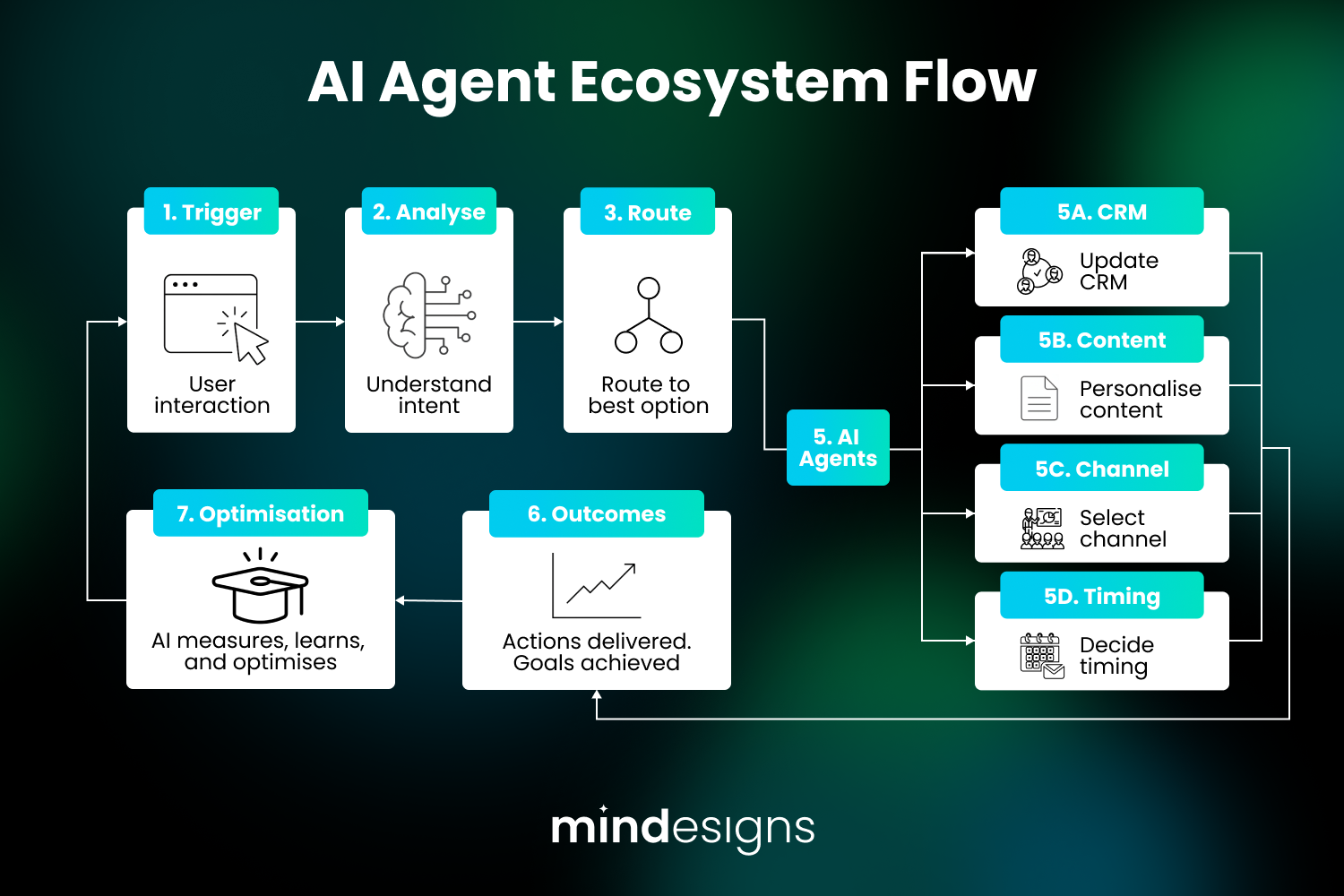
This reflects the rise of data agents that track market signals like competitor activity and keyword trends, with platforms like HubSpot introducing these capabilities, and as a HubSpot partner, we are actively exploring how to apply them in practice. Each agent plays a specific role, from analysing engagement to adjusting messaging and routing high-intent leads. Together, they create a system that responds dynamically rather than following fixed pathways.
These systems do not appear overnight. They are built step by step. The key is knowing where AI will create the most immediate impact.
Where to Apply AI for Maximum Strategic Impact in B2B Growth
Reaching system-level AI is the goal, but most businesses do not need to start there. The fastest way to see results is by applying AI where it has the most direct impact on the pipeline and revenue.
Streamline Lead Nurturing with AI-Powered Marketing Workflows
Lead nurturing should be a priority because most B2B buyers require multiple touchpoints before making a decision. Without a structured system, leads go cold, opportunities are missed, and the pipeline becomes unpredictable. HubSpot addresses this by turning initial interest into ongoing engagement.
In practice, this combines behaviour tracking, workflow automation, and lead scoring. Actions like email clicks or page visits trigger the next step, whether that is sending tailored content or notifying sales. Leading CRMs essentially help scale the action needed to better engage with potential prospects.
The result is a connected system where leads are guided forward based on real behaviour, not slow manual follow-ups.
Scale Content Distribution with AI Content Repurposing Systems
Content remains central to B2B growth, but the way it is used has evolved. A major future marketing trend we’re seeing is that the focus will no longer be on producing more content, but on extracting more value from each asset. AI enables this by making it easier to repurpose content across multiple formats and channels fast, turning single pieces into scalable distribution systems.
Instead of treating a blog post or webinar as a one-off deliverable, businesses now use it as the starting point for broader distribution. A single long-form piece can be broken down into LinkedIn posts, email campaigns, short-form videos, and key insight snippets. Each format is adapted for a different channel, allowing one idea to generate multiple touchpoints across the buyer’s journey.
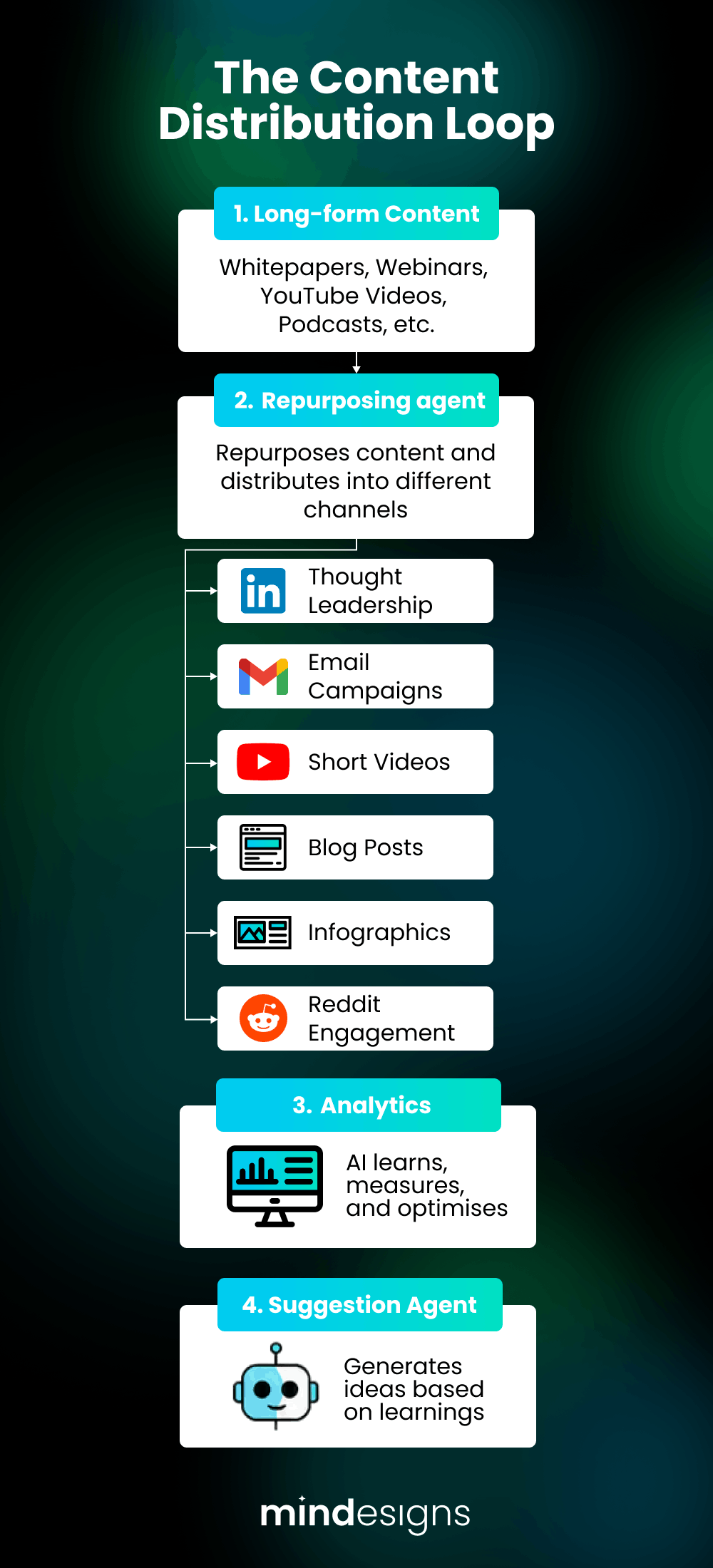
We recently applied this approach during Omer’s webinar, How to Scale Your Sales and Marketing Using AI at Impact10X. Using Claude, we analysed the transcript, identified high-impact moments, and generated hooks for short-form video. These were then repurposed into YouTube Shorts and LinkedIn clips, aligned with platform-specific best practices.
The goal is not just more content, but better distribution across channels where our audience is already active.
Accelerate Prototyping and Validation
Most businesses use LLMs to generate ideas or analyse competitors, but these insights often stay theoretical. A more effective approach is using AI to move quickly from ideas to validation through rapid prototyping and real user feedback.
For example, in a recent project at Mindesigns, we used Claude and Figma to rapidly design and test a prototype for Rent My Billboard, a new platform we are currently developing. AI-enabled early validation, reducing typical prototype costs while accelerating time to feedback.
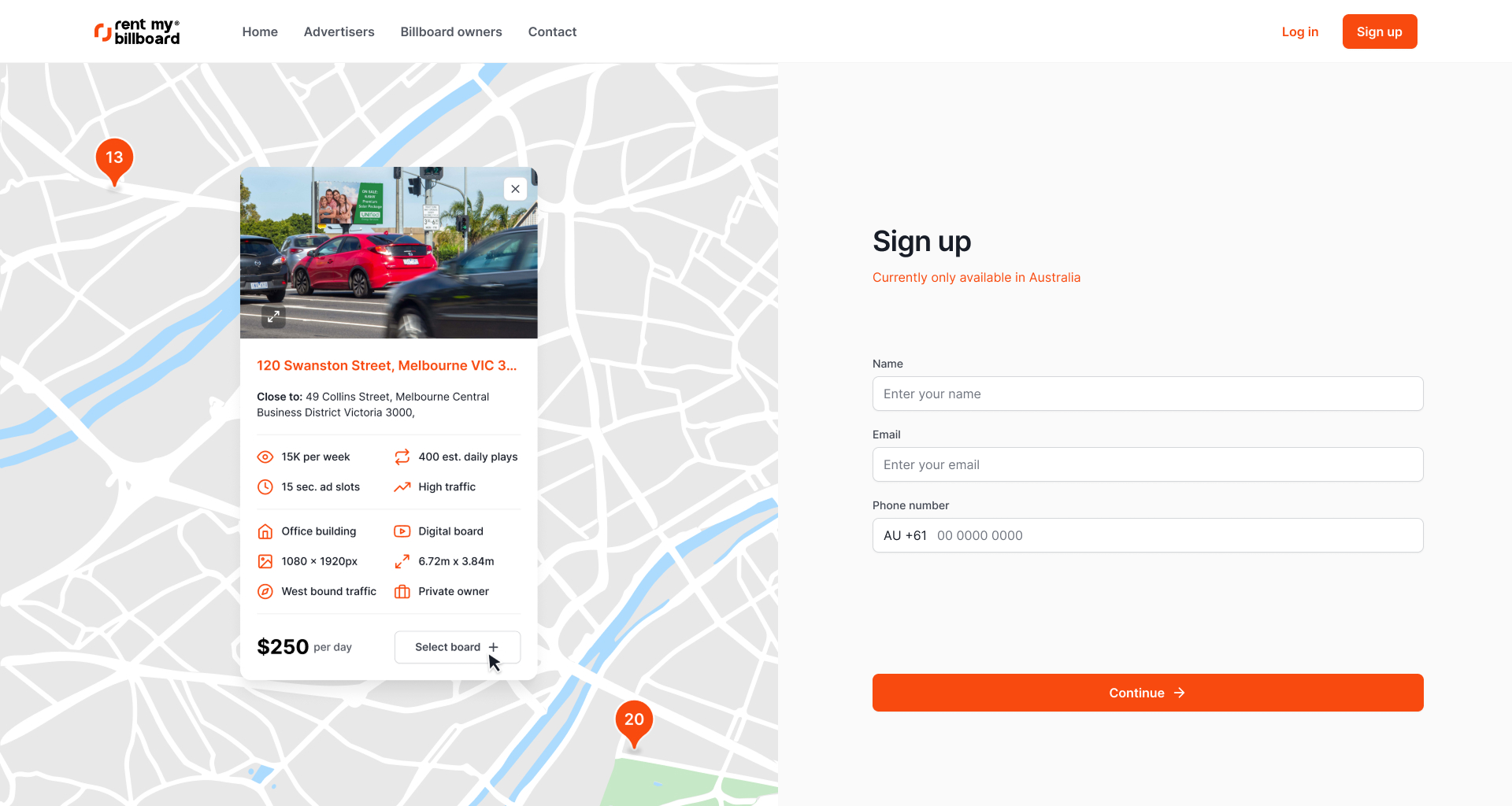
Through fast iterations, we were able to identify what worked and what didn’t without committing full resources upfront. The result is a working prototype that can be tested and improved continuously. While many elements are still subject to change, we now have something tangible to validate, leading to faster and more informed decisions based on real user feedback rather than assumptions.
AI in B2B Belongs in Systems, Not Tools
AI is no longer a future consideration for B2B marketing. It is already shaping how businesses generate pipeline, engage prospects, and drive growth. The difference is not whether AI is being used, but how it is structured across your systems.
At Mindesigns, we actively experiment with a range of AI tools to understand how they can be applied across different parts of the revenue journey. From core platforms like HubSpot and Claude or automation, agent-based systems, and sales intelligence tools, each plays a distinct role in building a more connected and scalable growth engine.
| Tool | Category | What It Does Best |
| Claude & ChatGPT | AI Engine | Content generation, research, and workflow support |
| HubSpot | CRM & Automation | Connects marketing, sales, and data into one system |
| n8n | Automation | Executes predefined workflows and connects systems |
| Relevance AI | AI Agents | Handles dynamic, decision-based tasks across workflows |
| Gong AI | Sales Intelligence | Analyses conversations and improves sales performance |
| Your Atlas | Sales Execution | Automates calling and lead qualification at scale |
In practice, this is how we integrate AI into our own workflows and apply the same thinking for our clients. Essentially, when you partner with us, you gain access to a tried, tested, and continuously improving system that helps you do more with less while driving more consistent marketing results.
If your B2B marketing is generating activity but not consistent pipeline, it may be time to rethink how AI is being applied. Get in touch with our team at Mindesigns to explore how we can help you systemise your marketing and drive measurable growth.
Reviewed by Santiago Parra Suarez