For Marketing Leaders

Parents are no longer waiting for open days to decide whether a school feels right.
Traditionally, open days served as one of the primary opportunities for prospective families to visit a school, meet staff, tour the campus, and learn more about the school’s culture and values. For many schools, they were the centrepiece of the enrolment process.
That is no longer the case today. Through our work with schools and education providers such as The Federation College and Via Education, we’ve seen a significant change in how families evaluate schools. By the time a family contacts your school, they have often visited your website, explored your social media channels, read reviews, and compared you against several alternatives. The enrolment journey now begins long before a parent speaks with admissions.
The challenge for schools is no longer generating visibility. It is creating a year-round, connected enrolment system that supports parents from their first interaction through to enrolment and beyond.
At Mindesigns, we often refer to this as the School Enrolment Engine. Rather than relying on a single open day or enrolment campaign, the schools generating the strongest enrolment outcomes are supporting families through every stage of the decision-making journey.
The School Enrolment Engine
Before looking at specific channels, it’s important to understand how modern families move through the enrolment journey.
The schools generating the strongest enrolment outcomes start by mapping the parent journey. They identify how families discover the school, what information they need at each stage, what questions or concerns they may have, and what actions are most likely to move them forward.
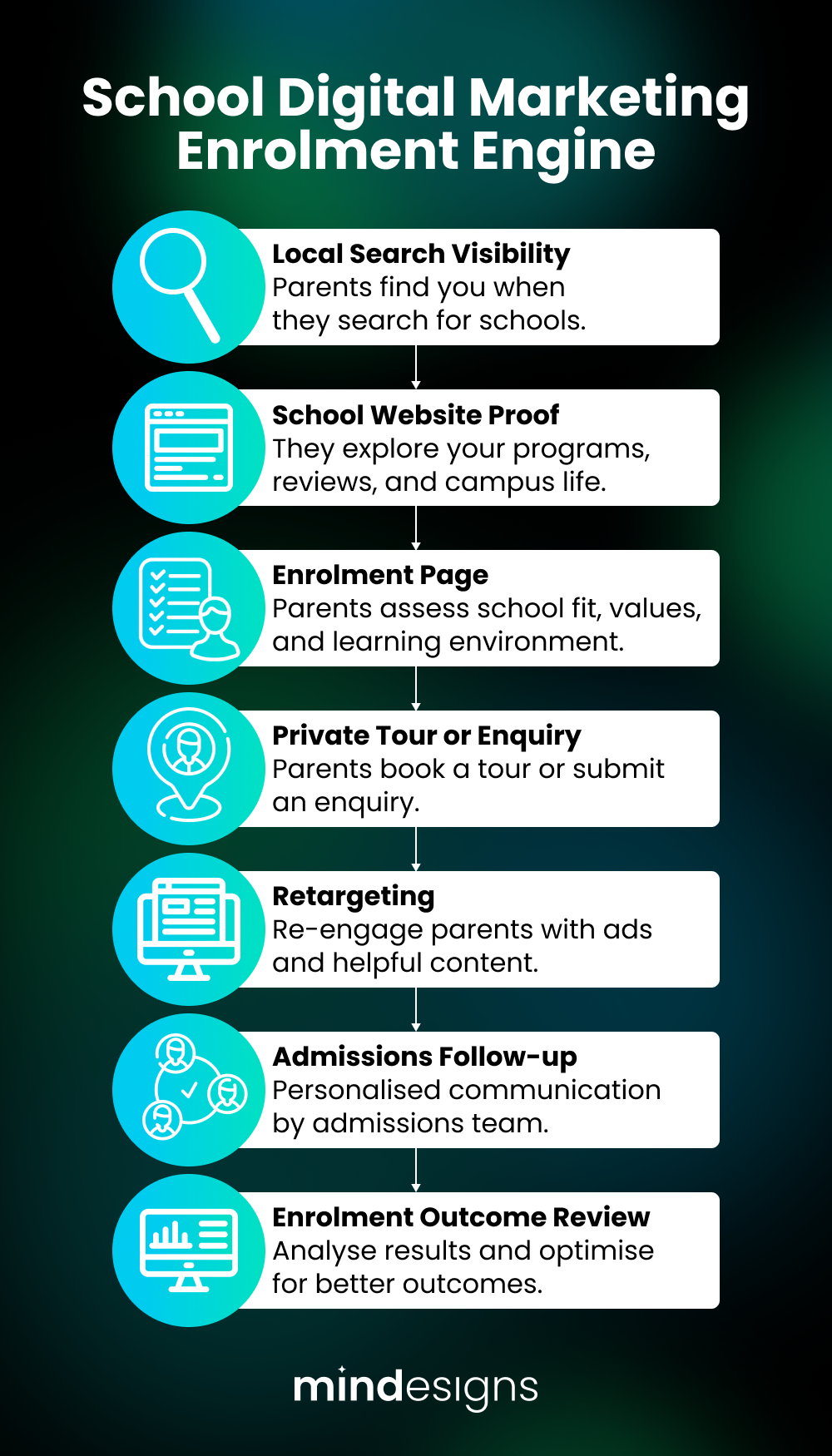
When viewed this way, enrolment becomes less about individual campaigns and more about guiding families through a series of decisions and interactions. For Federation College, the strategy we formulated looked like this:
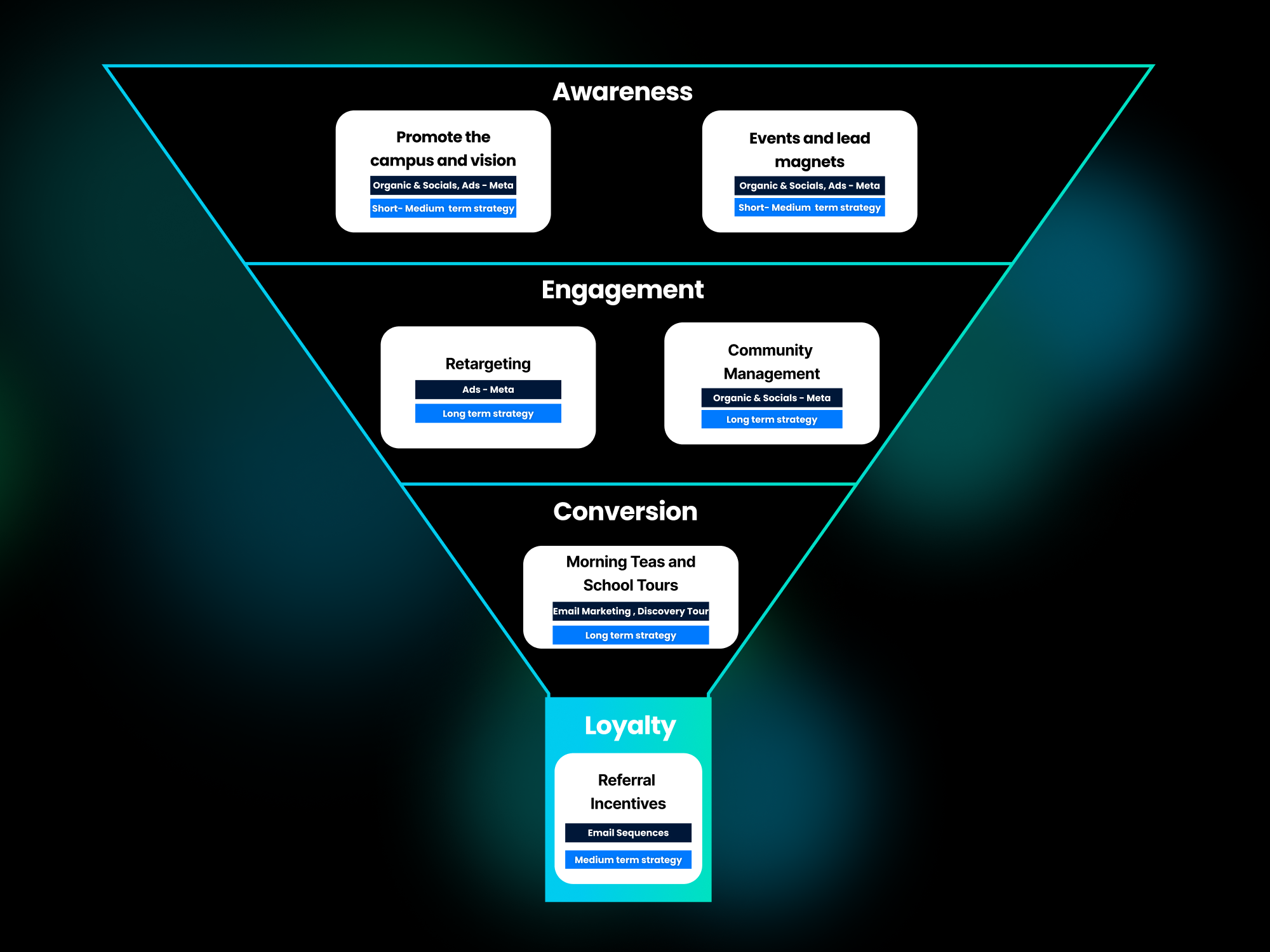
With this “always-on” system, we continuously nurtured local families throughout the year, rather than relying on a single enrolment campaign or open day to generate results.
The challenge is that no single tactic can influence the entire journey on its own. Some strategies are designed to generate immediate visibility and enquiries, while others focus on building long-term trust and credibility. This is where schools need to balance both paid and organic marketing approaches.
Paid And Organic Marketing Serve Different Roles
Most school marketing activities fall into one of two categories.
Let’s start with paid marketing and how schools can use it to attract prospective families who are already researching their options.
Paid Marketing That Generates Enrolment Enquiries
Paid advertising remains one of the fastest ways to increase visibility among prospective families. However, one of the most common mistakes we see schools make is treating paid campaigns as standalone lead generation tools rather than as part of a broader enrolment strategy.
Generating enquiries is only one stage of the enrolment journey. Parents still need time to research, compare options, attend events, and build confidence in their decision. Schools that focus solely on lead volume often overlook the trust-building activities that happen before and after an enquiry is submitted.
The most effective paid campaigns support the entire enrolment process. They help schools create awareness, encourage engagement, generate enquiries, and re-engage families as they move closer to making a decision. Here’s how we do it for our clients.
Google Ads Capture Existing Demand
When parents search terms such as “private school near me”, “independent school Brisbane”, or “Year 7 enrolment”, they are often already evaluating their options.
Google Ads allow schools to appear at the exact moment families are actively researching schools.
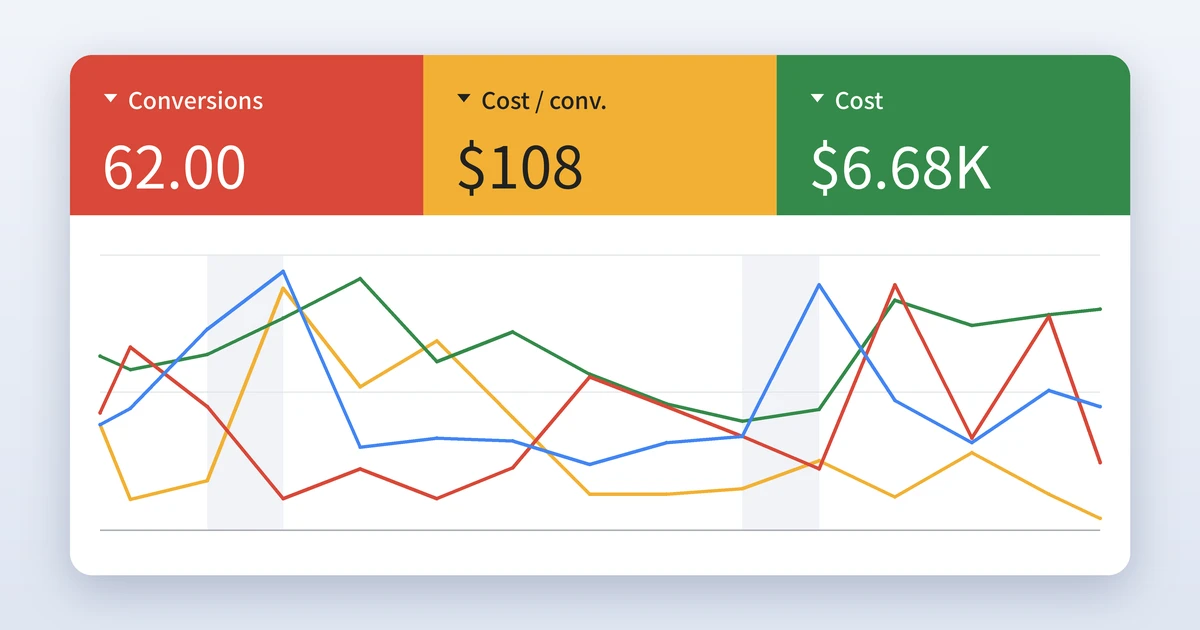
At 30-60 dollars per lead, this was one of the strongest lead generation channels for The Federation College. As a new school entering a competitive market, Google Search campaigns helped generate direct enquiries from families already looking for alternatives in the local area.
While Google Ads often generate higher-quality enquiries, schools should focus on measuring outcomes beyond cost per lead. Metrics such as cost per tour, cost per application, and cost per enrolled student provide a more accurate picture of campaign performance.
Meta Ads Build Awareness And Engagement
If Google Ads capture demand, Meta Ads help create it.
For schools, Meta campaigns are often most effective when promoting engagement opportunities such as open days, discovery tours, principal meet-and-greets, and community events.
One of the most common mistakes I’ve seen with clients across industries is that they think that meta ads are only just about boosting one-and-done posts. What we recommend for school Meta campaigns is to structure them as a sequence rather than a single ad.
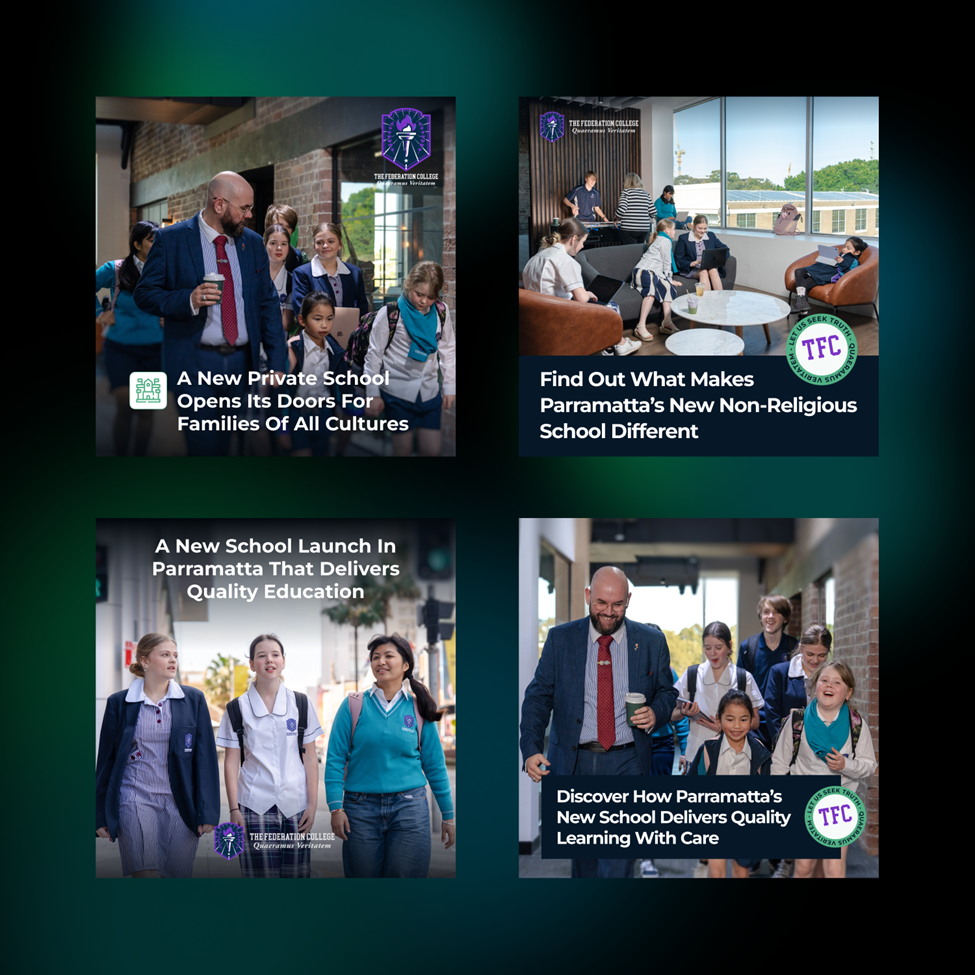
Keep in mind that parents at different stages need different information, so targetting is key. Someone casually exploring schools may respond to a social media post or community event, while families closer to making a decision often need more detailed information about enrolment, support services, and school life.
Retargeting Supports Decision-Making
Most parents do not choose a school after a single interaction. They may visit a website, engage with social media content, attend an event, and continue comparing schools before making a decision.
Retargeting helps schools stay visible throughout this process by re-engaging people who have already shown interest.
Rather than constantly trying to find new audiences, schools can continue building trust with families already familiar with their brand.
Organic Marketing Builds Trust Before Parents Enquire
While paid campaigns generate visibility, organic marketing helps families understand who your school is and why it may be the right fit for their child.
Many parents spend weeks or months researching schools before they make contact. During this period, your website, content, and social media presence often shape first impressions.
Use Your Website To Remove Enrolment Hesitation
One of the most common issues we see on school websites is that they function more like digital brochures than decision-making tools.
Parents are looking for answers to practical and emotional questions.
- Will my child fit in here?
- What support is available?
- What makes this school different?
- What happens after I enquire?
The best school websites reduce uncertainty and help parents quickly determine whether the school aligns with their needs and values.
For The Federation College, one of the most effective website improvements was introducing a clear statement explaining who the school was designed for and what families could expect from the learning experience.
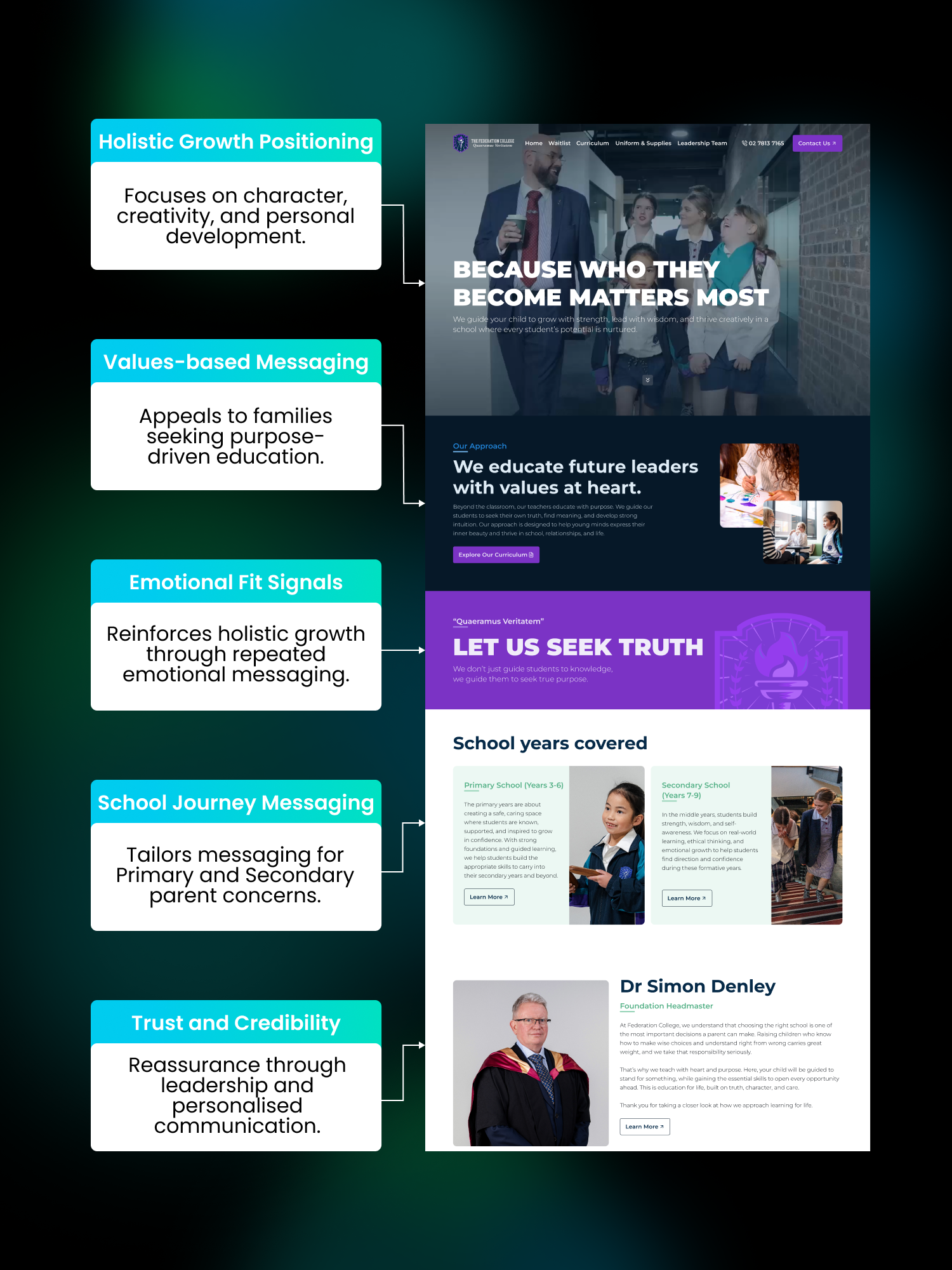
Messaging around TFC’s non-religious environment, inclusive values, creative learning culture, and personalised education model helped parents quickly self-identify whether the school aligned with what they were looking for.
Build Trust Through Organic Content
In our experience, enrolment promotions are rarely the most effective type of content for organic marketing. Most parents are not ready to enquire every time they see a social media post.
@via.edu.au Our campus is located right in the middle of the CBD in Sydney. The perfect location for all your needs 🏙️ #sydneyliving #sydney #studyinsydney
As part of our work with VIA Education, we produced a series of short-form school tour videos to give prospective families an authentic glimpse into life on campus. Rather than relying solely on enrolment promotions, these videos showcase the learning environment, facilities, and student experience in a way that helps parents build familiarity and trust over time.
@via.edu.au Here our Kitchen Management and Hospitality students hone the skills they’ll need for their careers! #hospitality #kitchenmanagement #studyinsidney
The schools performing well on their website social media consistently create content that helps parents understand their culture, values, and educational approach. Rather than constantly promoting enrolments, they focus on four key content pillars: curriculum, leadership and staff, school experience, and parent education.
Curriculum
Parents want to understand how a school approaches learning and what makes its educational offering different. Rather than simply describing your curriculum, effective schools show families what learning looks like in practice.
For example, The Federation College highlights its inquiry-based learning approach, values-driven education model, and personalised support systems throughout its website and content. Rather than focusing solely on academic outcomes, the school explains how students are encouraged to explore their interests, develop confidence, and build critical thinking skills.
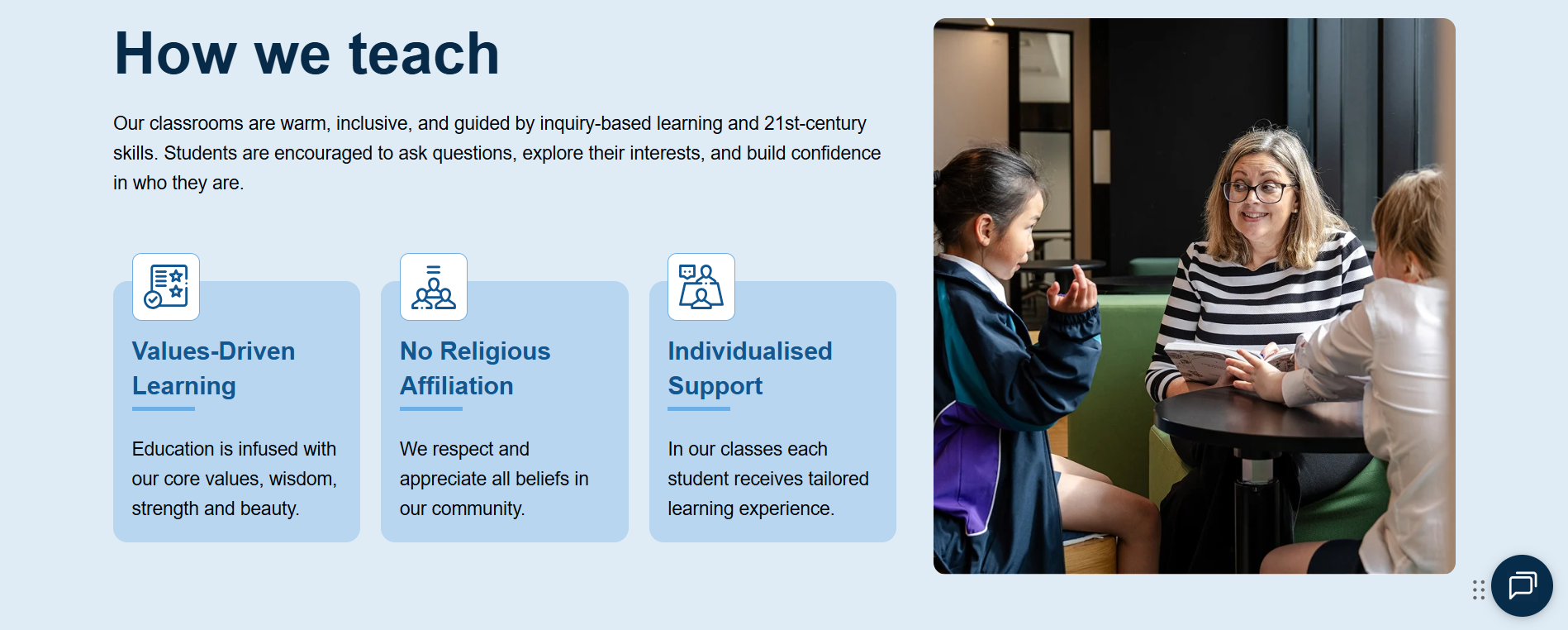
Content that showcases learning programs, classroom activities, teaching philosophies, and student experiences helps parents understand what makes a school different and whether that approach aligns with their child’s needs.
Leadership And Staff
Trust plays a major role in school selection.
Parents are not simply evaluating a school’s facilities or curriculum. They are evaluating the people who will support, teach, and guide their child throughout their education.
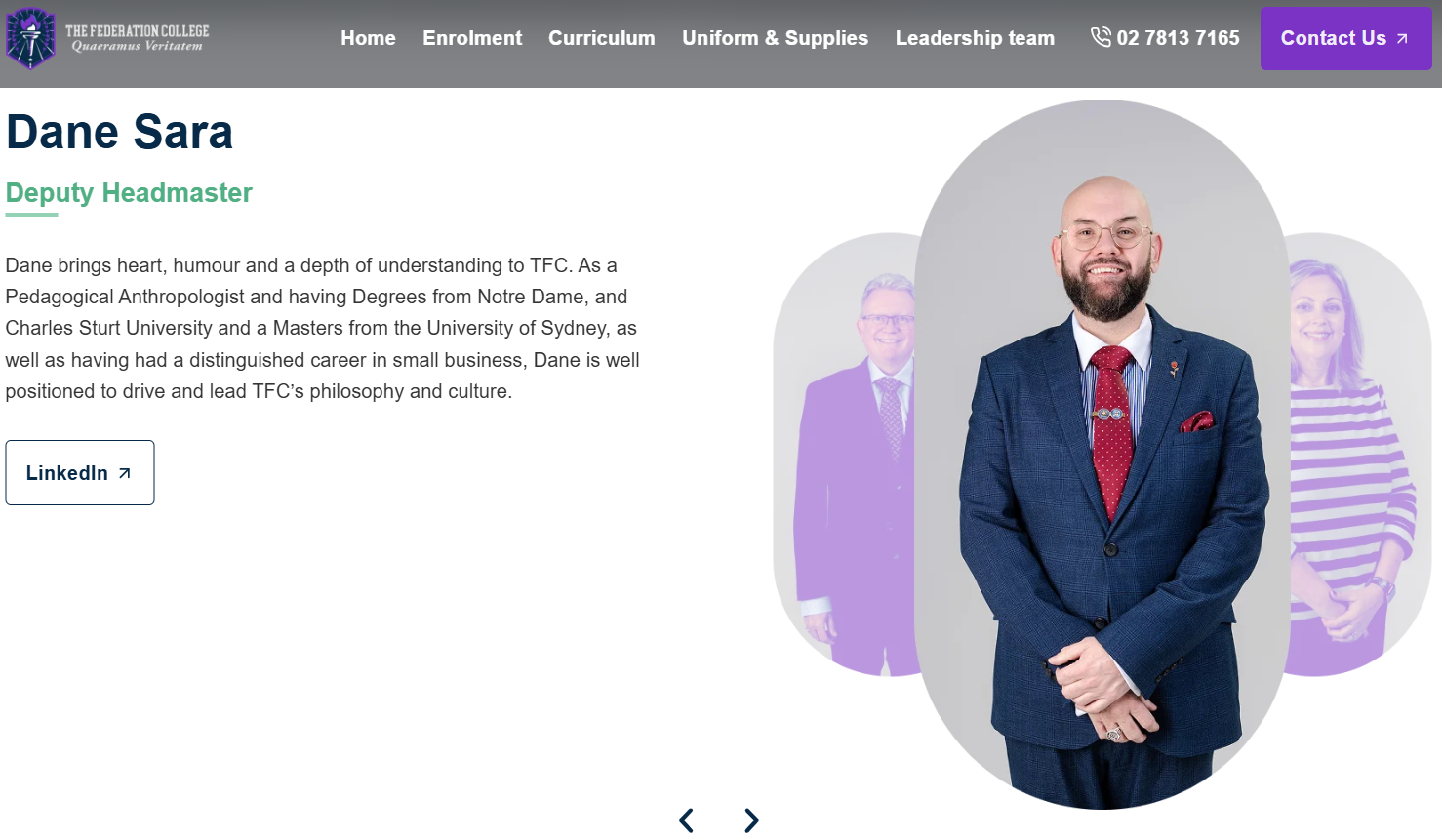
Importantly, this type of content should not be limited to a single leadership page. Schools should regularly introduce staff, share leadership insights, highlight teacher achievements, and feature team members throughout their website, social media channels, newsletters, and enrolment materials.
School Experience
Parents and students are not simply evaluating academic outcomes. They are trying to understand what everyday life will look like within the learning environment.
VIA Education provides a strong example of this through its social media content. Rather than focusing solely on courses, it regularly showcases practical learning experiences, student activities, cultural events, and industry training. This helps prospective students visualise what their experience could look like before making an enquiry.
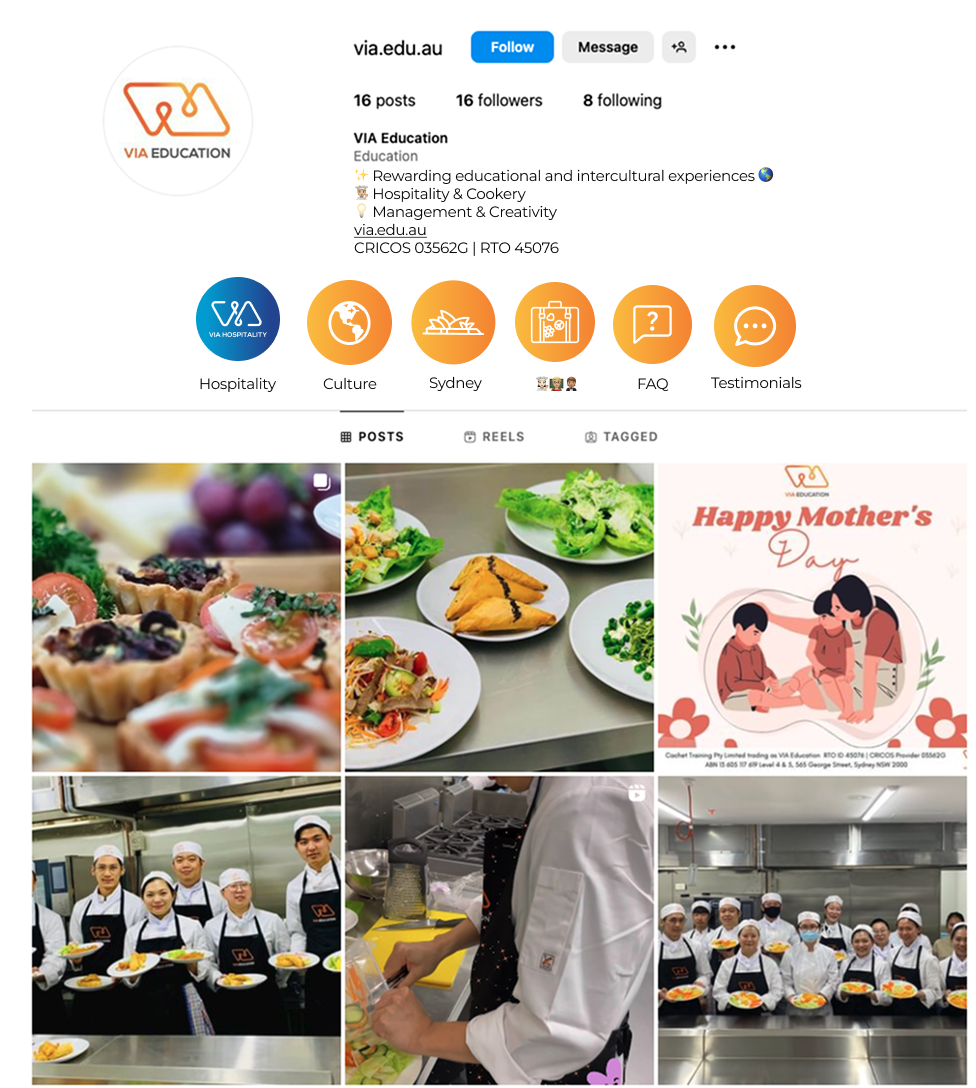
Student stories, classroom activities, events, and day-in-the-life content help prospective families build an emotional connection with a school. The easier it is for someone to picture themselves or their child within that environment, the more confident they become in taking the next step.
Parent Education
Many schools overlook the opportunity to educate parents.
Content about school readiness, student wellbeing, learning support, and transitions between year levels can provide genuine value while positioning the school as a trusted source of information. Rather than focusing solely on enrolment messages, schools can answer the questions parents are already asking throughout their child’s educational journey.
This type of content can also support SEO by helping schools appear when parents search for answers online. For The Federation College, one of the opportunities identified within the content strategy was to create educational articles around topics such as classroom learning, student wellbeing, school facilities, and extracurricular opportunities, then repurpose that content into social media posts, carousels, videos, and newsletters. This approach helps schools provide ongoing value while remaining visible throughout the parent decision-making process.
Marketing Cannot Fix A Weak Admissions Process
One of the most valuable lessons we’ve learned from working with schools is that generating enquiries and generating enrolments are two very different things.
A successful campaign may increase tours, enquiries, and applications, but these results only matter if the admissions process is prepared to convert interest into enrolments.
Parents attending a discovery tour are often asking themselves one question:
“Can I picture my child being happy here?”
The campus environment, the reception experience, the quality of the tour, and the responsiveness of the admissions team all influence that decision.
We’ve seen schools generate strong enquiry numbers only to struggle with enrolment conversion because the experience delivered after the enquiry did not match the expectations created by the marketing.
Technology platforms such as HubSpot can help automate communication and support admissions teams, but they cannot replace a strong enrolment process.
Before increasing marketing spend, schools should evaluate whether their tours, follow-up systems, and admissions experience are capable of converting the additional demand being generated.
Build The System, Not Just The Campaign
The biggest lesson from modern school marketing is that enrolment growth is rarely driven by a single campaign, platform, or event. Modern enrolment journeys are built through repeated moments of trust across search, social media, websites, tours, and admissions conversations.
If you’re looking to improve enrolment outcomes, start by examining the journey parents take before they ever contact your school. If you’d like a fresh perspective on your current enrolment strategy, reach out to the team at Mindesigns. We can help you identify gaps, uncover opportunities, and build a more effective enrolment engine for your school.
Reviewed by Santiago Parra Suarez