For Marketing Leaders
Like many of you, our agency and its clients were hit by a Google algorithm update, and it took months to recover. The frustrating part was that we weren’t cutting corners. We were following what had been considered SEO best practice throughout the 2020–2024 era. Our content was organised into topic clusters and pillar pages. Metadata was optimised, and most importantly, our articles were researched, written, and reviewed by real people with genuine expertise.
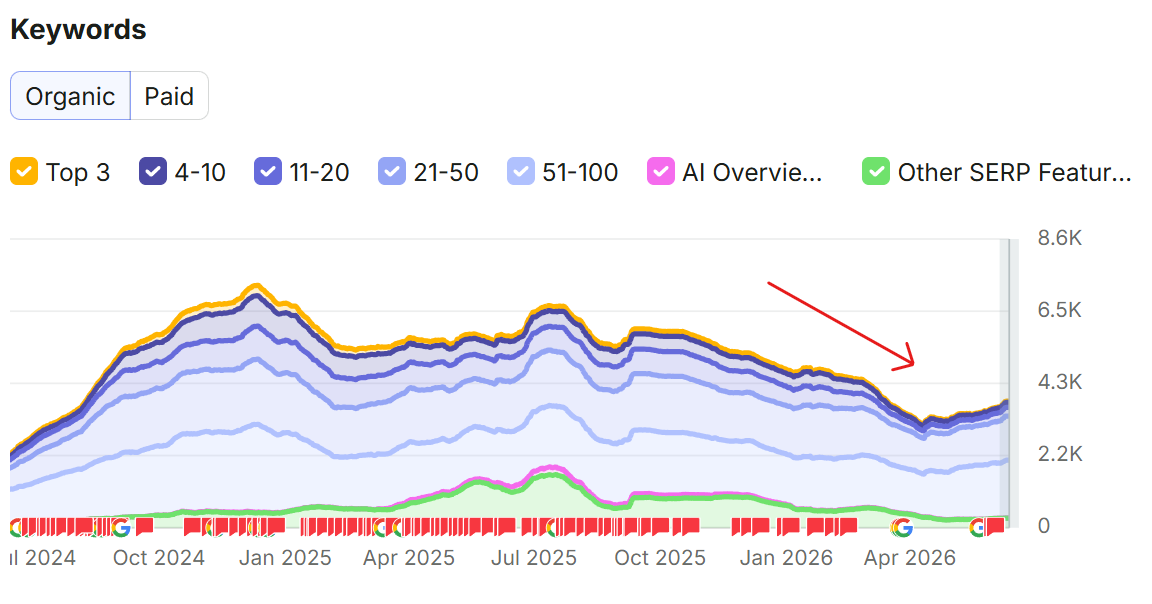
On paper, we were doing everything right. Yet our visibility declined, and many of the tactics that had previously delivered results simply weren’t working the way they once had. That experience forced us to rethink our assumptions about the future of SEO and fundamentally change how we approach content strategy.
Here’s what we’ve changed, and what we found to be obsolete.
Context-First Content Will Beat Keyword-First Articles in the Future of SEO
If your SEO strategy still starts with a keyword list, you’re probably optimising for the wrong thing.
Most marketing teams still plan content around search demand. They identify keywords, prioritise opportunities by volume, assign topics to writers, and publish pages designed to rank. That approach made sense when search engines were primarily matching queries with pages. But the challenge today is that visibility is increasingly driven by context rather than keywords.
AI-powered search experiences are creating a world where search engines and AI systems are not simply matching phrases, but are attempting to understand intent, credibility, expertise, and usefulness. They are trying to determine not only whether a page answers a question, but whether it deserves to be part of the answer.
This is one of the reasons many organisations are finding it harder to achieve meaningful differentiation through content alone. When every competitor can identify the same keywords and generate a reasonably well-written article, ranking becomes less about matching search terms and more about demonstrating relevance and authority.
This is where E-E-A-T becomes increasingly important, as businesses need to demonstrate genuine experience, credible expertise and real-world proof that competitors cannot easily replicate with AI.
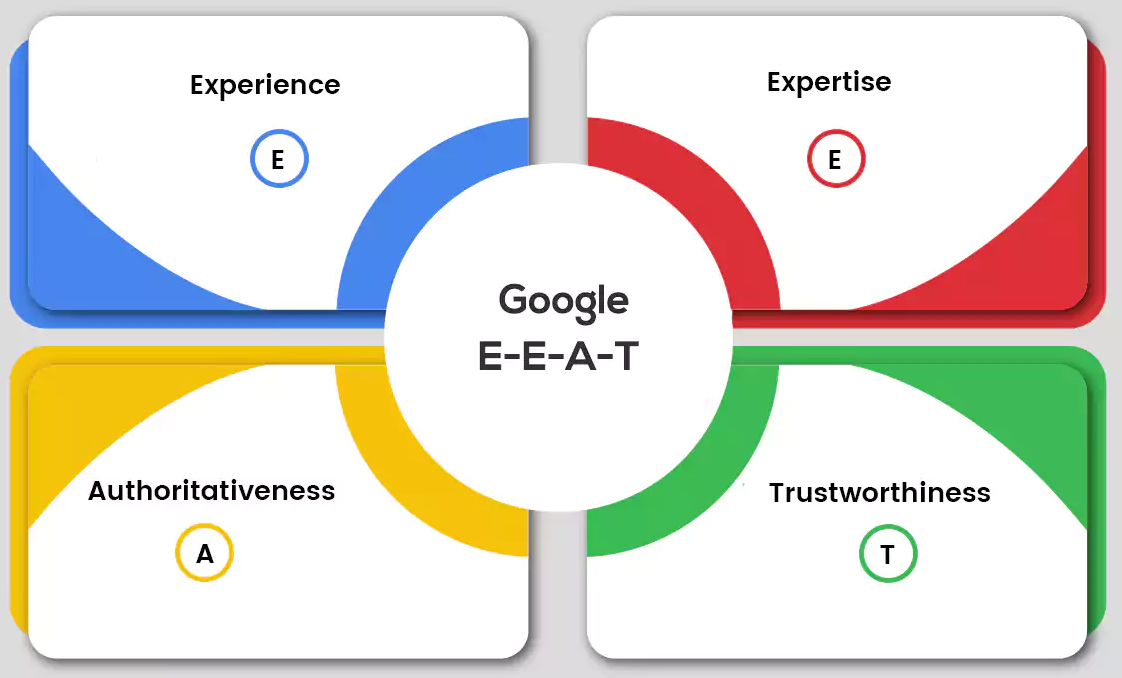
This is why activities that were once considered brand-building exercises are increasingly becoming SEO activities.
Digital PR is a good example. Expert commentary, podcast appearances, webinars, original research, community participation, and strategic partnerships all contribute signals that help both people and AI systems understand what a brand is known for.
We’re already seeing this become an increasingly important part of how visibility is built at Mindesigns. Rather than treating SEO as something that happens exclusively on our website, we’re investing in activities that help establish expertise across the platforms where buyers consume information and form opinions.
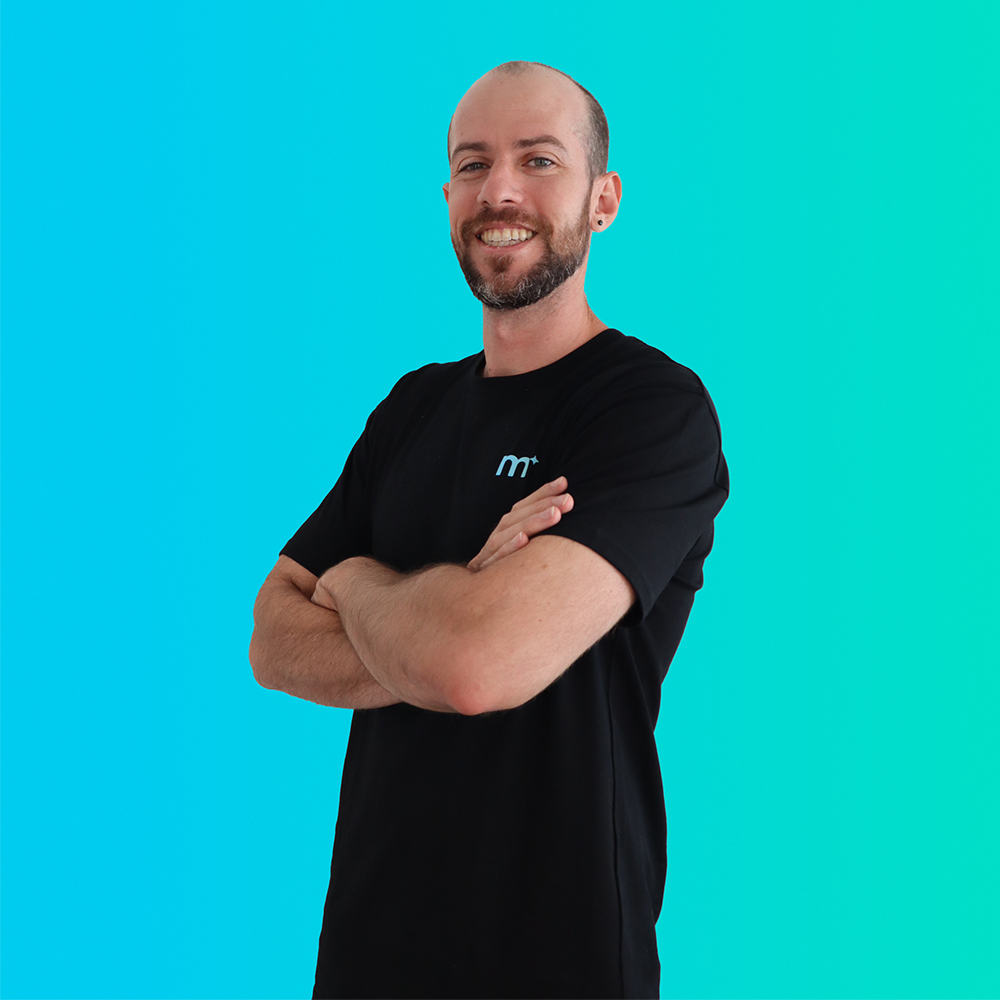
For example, Omer, our Head of Marketing and Sales, has recently hosted a webinar for Impact10X exploring the practical implications of AI and modern marketing strategy.
Alongside this, he has been consistently publishing thought leadership content on LinkedIn, sharing observations and perspectives on marketing, SEO, AI, and business growth. These conversations help build authority in places where decision-makers are already spending time.
That same principle extends to podcasts. Omer recently joined Shaun Craike’s podcast to discuss the local business landscape and major projects in Cairns.
Individually, none of these activities looks like traditional SEO. Collectively, however, they create a network of signals that reinforce expertise, increase brand visibility, and make it easier for both people and AI systems to understand what Mindesigns is known for.
The content that performs best in AI-era search tends to make several things immediately clear. At Mindesigns, we refer to this as the Reader-AI Fit Framework:
- Who is this content for?
- What problem does it help solve?
- What decision is the reader trying to make?
- What expertise sits behind the advice?
- What action should the reader take next?
These questions help create content that works not only for human readers but also for AI systems attempting to understand and recommend useful information.
Generic Content Will Be Replaced by Experience-Led Proof
One of the less discussed consequences of generative AI is that expertise has become easier to imitate.
Almost every organisation can now produce content that appears knowledgeable, well-structured, and authoritative. As a result, buyers are becoming less impressed by content that simply explains a topic well and more interested in evidence that the organisation behind it has actually done the work.
A useful example can be seen in advertising. Ever wondered why so many brands release behind-the-scenes videos showing how an ad was developed, filmed, and produced? It’s because the finished advertisement can be dismissed as “Made with AI”, but the process behind it demonstrates that it came from real human hands and minds.
The same principle increasingly applies to SEO content.
Buyers can ask ChatGPT how SEO works or what makes a successful content strategy. What AI struggles to replicate are the observations, lessons, trade-offs, and practical insights that come from real-world experience.
At Mindesigns, we refer to this as the Experience Proof Layer. Every significant content asset should go beyond explaining a topic and answer questions such as:
- What have we seen happen in practice?
- What mistakes do organisations repeatedly make?
- What changed our thinking on this topic?
- What trade-offs should decision-makers understand?
These experience-driven insights create stronger authority signals because they are difficult to replicate. Authority increasingly comes from showing how you think, not just what you know.
|
Authority Signal |
How to Present It |
|
Campaign learnings |
Share results, key decisions, and lessons learned |
|
Client insights |
Highlight recurring challenges, objections, or buying behaviours |
|
Proprietary frameworks |
Include diagrams, visual models, or step-by-step explanations |
|
Expert opinions |
Explain your reasoning and the trade-offs considered |
|
Original research |
Publish findings, data summaries, and key takeaways |
|
Practical experience |
Use screenshots, workflows, process maps, or implementation examples |
|
Contrarian viewpoints |
Challenge common assumptions and explain why you disagree |
The obsolete approach is publishing AI-written pages that summarise existing information. The replacement is practitioner-led content where AI helps organise ideas, while humans contribute the observations, decisions, and lessons that only come from real-world experience.
Traffic-Only Reporting Will Become Too Shallow for AI-Era Search
If visibility is no longer confined to Google, then measuring SEO purely through rankings and traffic no longer makes much sense either. The challenge is that many of those interactions don’t show up neatly in an SEO report.
A reader might first encounter your brand through an AI-generated response, read a LinkedIn post a few weeks later, watch a webinar, and only then search for your company by name. SEO influenced the outcome, but it didn’t receive credit in a rankings or traffic report.
That’s why marketing leaders need to think beyond clicks and sessions. This doesn’t mean traditional SEO metrics should be ignored. Rankings, traffic, and click-through rates still provide useful signals. The problem is treating them as the primary measure of success.
|
Traditional SEO Metrics |
Broader Visibility Metrics |
Tools |
|
Rankings |
AI citations and AI Overview presence |
Semrush AI Visibility Toolkit |
|
Organic traffic |
Branded search growth |
Google Search Console |
|
Click-through rate |
Share of voice and brand mentions |
Semrush, Ahrefs |
|
Sessions |
Assisted conversions |
GA4, CRM attribution |
|
Keyword positions |
Enquiry quality and sales feedback |
CRM + sales team insights |
That doesn’t require perfect attribution. It starts with asking better questions. Are branded searches increasing? Are prospects mentioning your content during sales conversations? Are enquiries arriving with a stronger understanding of your services? Are more buyers discovering your brand before they enter your pipeline?
The brands that understand this shift will make better decisions about what they measure, what they create, and where they invest their marketing resources.
Standalone Blog Posts Will Give Way to Connected Authority Systems
The immediate reaction many marketing leaders have when they hear this is that they need to publish more content. That’s only half correct. The answer isn’t necessarily more content, but better-connected content.
At Mindesigns, we use what we call a Context Cluster Strategy. Instead of creating isolated articles, we build content around the way buyers actually evaluate services.
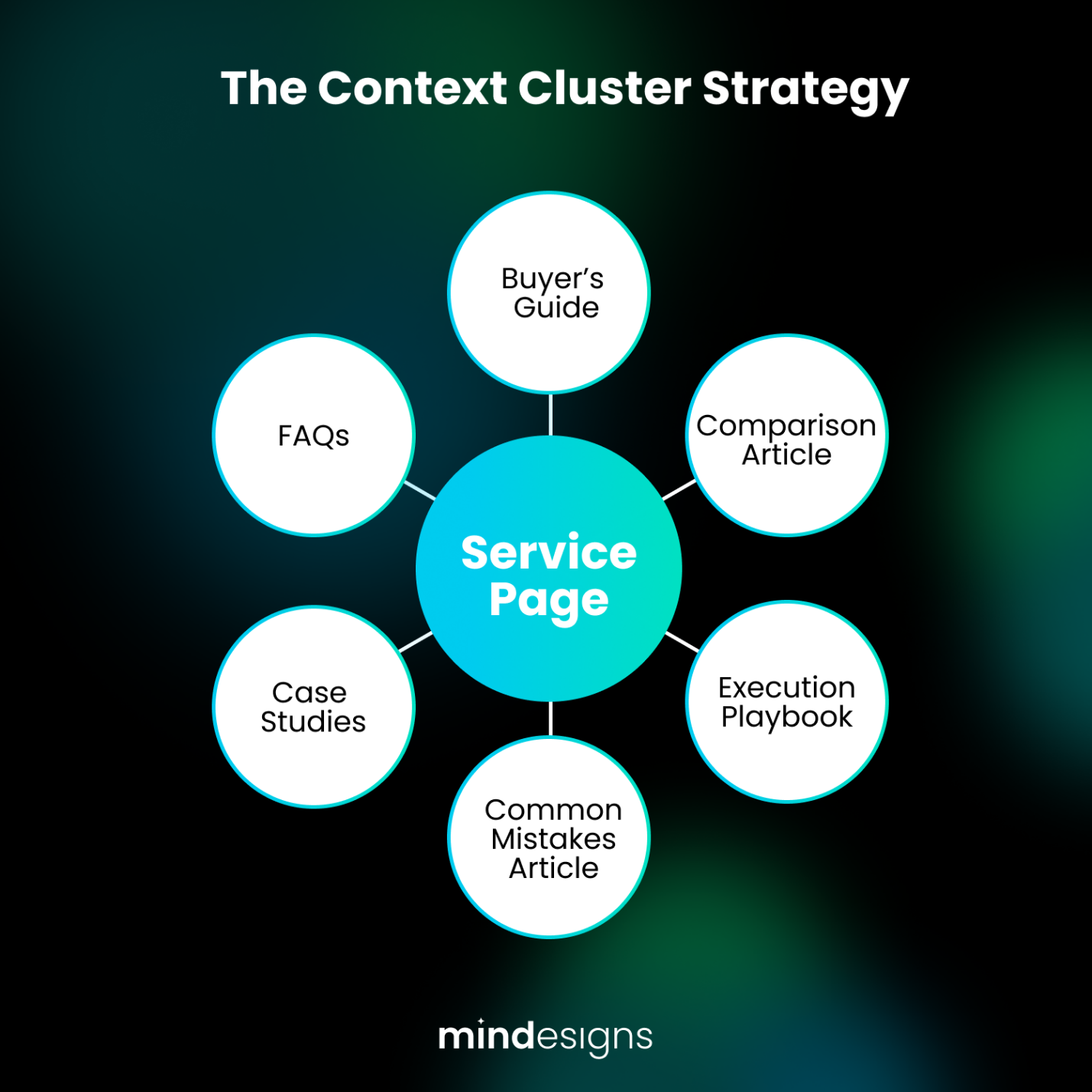
Each asset answers a different question in the buyer’s decision-making process while reinforcing the others.
The goal is not simply to target more keywords. The goal is to create enough context for both buyers and AI systems to understand the depth of expertise behind a brand.
For example, an SEO cluster shouldn’t just contain articles about SEO. It should connect topics such as:
- AI search visibility
- Obsolete SEO tactics
- Content operations
- Technical SEO
- SEO reporting
Together, these assets create a stronger signal that this website is an authority in SEO. They help buyers understand the full breadth of your expertise while giving search engines and AI systems the context they need to understand what your brand is known for.
The Future of SEO is Human-Led, Not Automation
As AI becomes more accessible, content production itself becomes less of a differentiator. The advantage shifts to how effectively organisations turn expertise into useful, trustworthy, and well-structured content.
Our own workflow reflects this. AI is useful for research, structuring a brief, and generating draft outlines. Basically, it handles the scaffolding that the piece will be based on. The expertise, the POV, the real examples, and the quality check- those stay with the people who have done the work.
This philosophy is reflected in our Human-Led AI SEO Workflow:
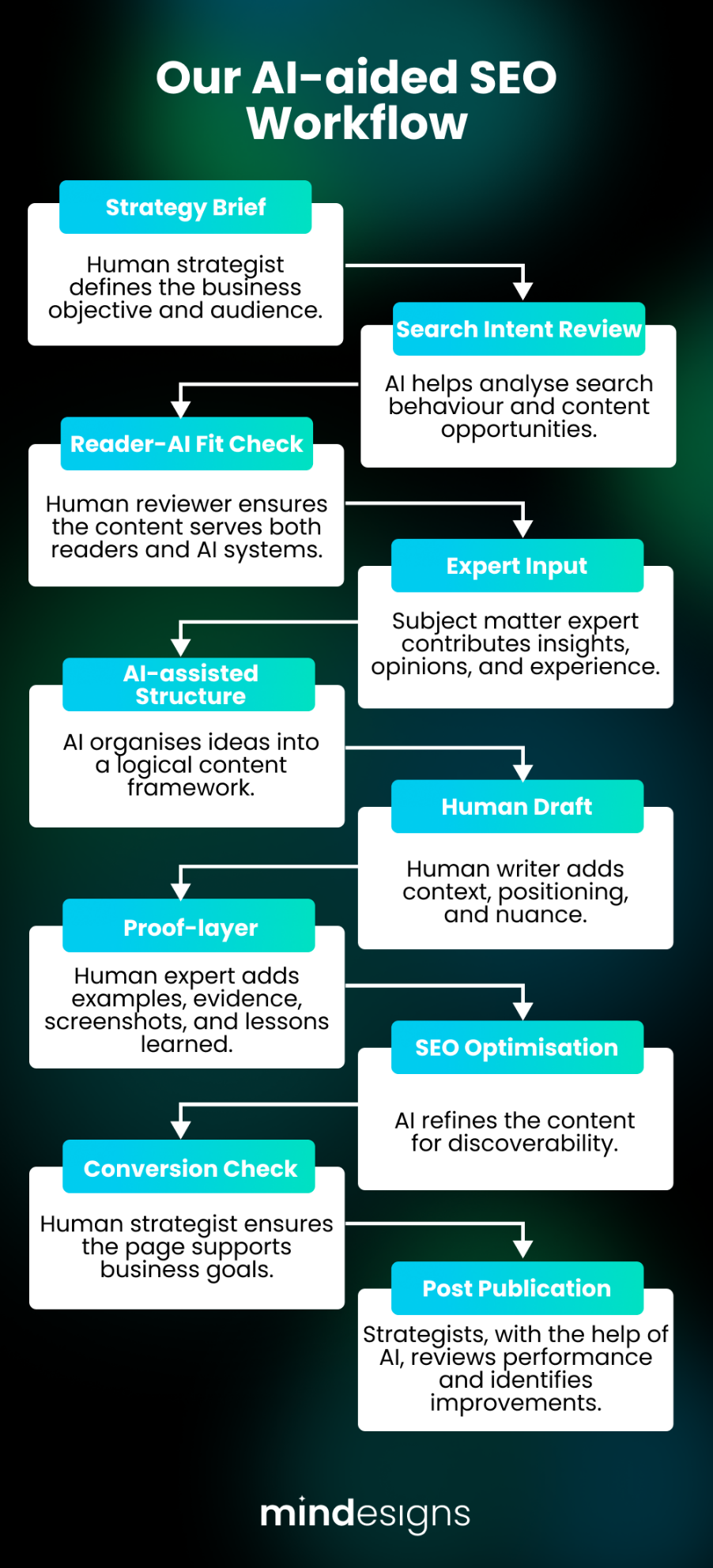
One of the most useful additions to this process is a simple question asked before any content is created: Why does this page deserve to exist?
If the answer is simply “because the keyword has search volume”, the page either needs to become part of a stronger asset or be removed from the plan altogether.
This is also the thinking behind our Content Cascade approach.
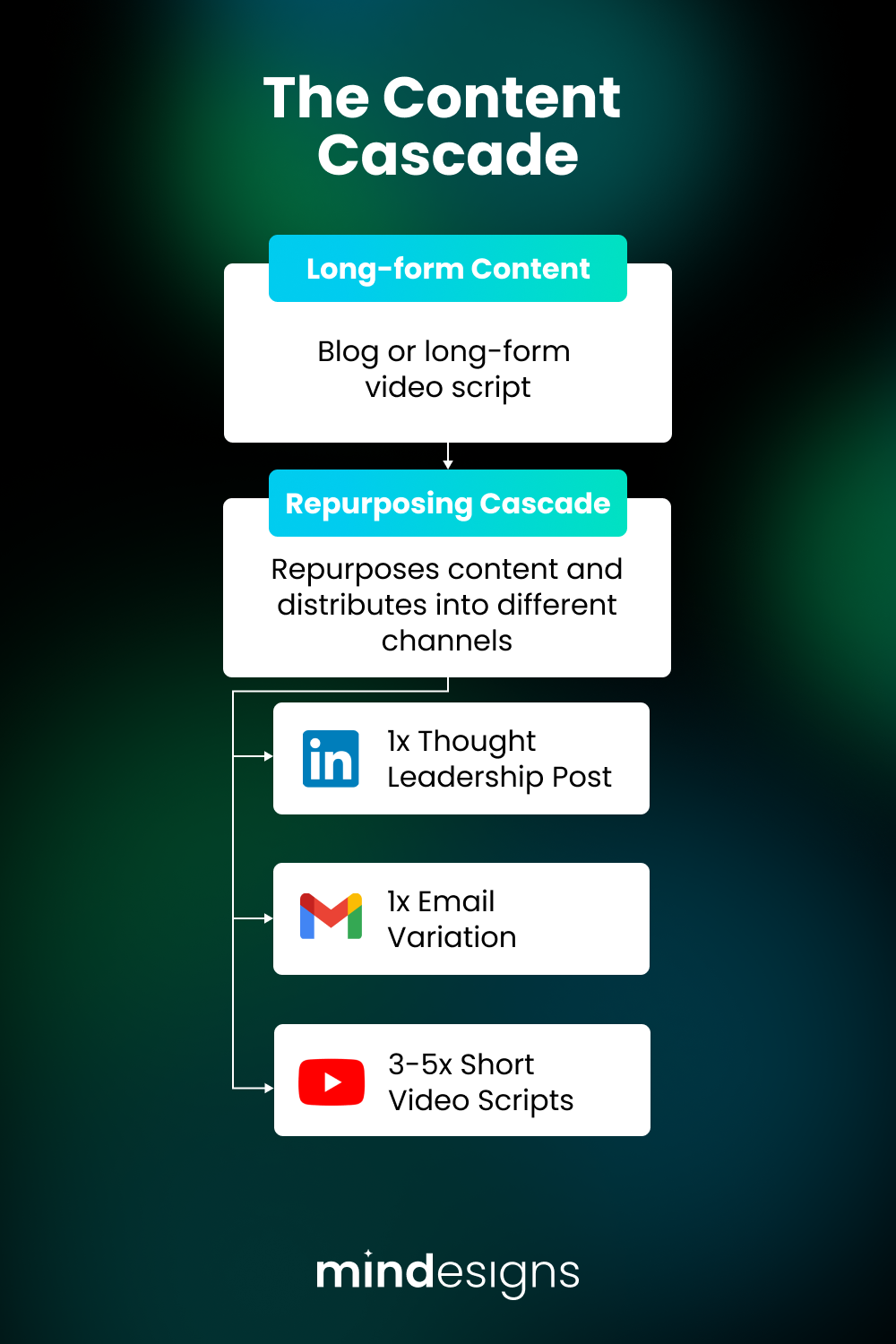
Instead of treating every piece of content as a separate project, we start with a substantial piece of content built around genuine expertise and then adapt it into multiple formats.
Each asset is adapted for the platform and audience it’s intended for rather than simply copied and pasted. A LinkedIn post should feel native to LinkedIn. A short-form video should work without requiring someone to read a 2,000-word article first.
The goal is not to produce more content for the sake of volume. It’s to maximise the value of the expertise that already exists while creating a connected ecosystem of content around a central idea. Every asset reinforces the others, creating stronger visibility, stronger authority, and more opportunities for buyers to encounter the brand across different channels.
It’s Not Just SEO Anymore, it’s Novelty
If there’s one thing that this has made clear, it’s that search optimisation now has three distinct but overlapping dimensions.
|
Approach |
Primary Goal |
|
SEO |
Helping people find your content through traditional search results. |
|
AEO |
Helping AI answer engines understand and surface your content. |
|
GEO |
Helping AI assistants recognise, reference, and recommend your brand. |
The mistake many organisations will make is treating these as separate strategies.
In reality, the same fundamentals drive success across all three: genuine expertise, real-world proof, helpful content, strong authority signals, and content systems that make it easy for both buyers and AI systems to understand what your brand is known for.
If you’re navigating this shift and want to build a content and SEO strategy that works across traditional search, AI search, and the wider buyer journey, we’d be happy to help. Speak with Mindesigns about creating a future-ready visibility strategy built around authority, not just rankings.